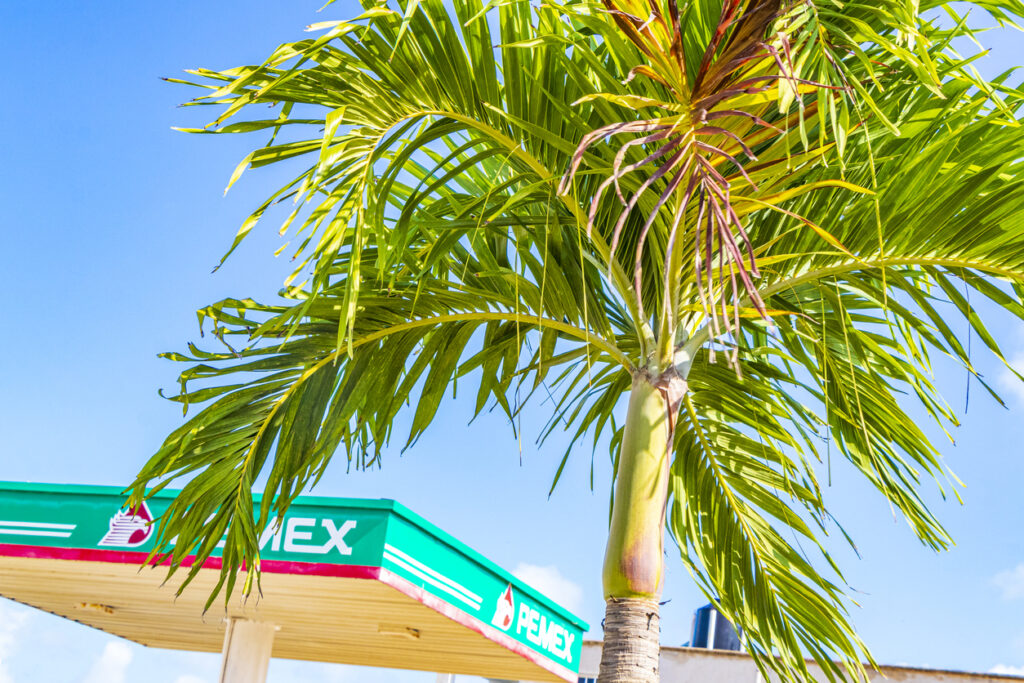
Petróleos Mexicanos (Pemex), the state-owned oil giant, is once again at the forefront of investor attention with a significant $10 billion bond buyback offer, directly backed by the Mexican government. This move, targeting 11 series of its global bonds due between 2026 and 2029, underscores the persistent financial challenges facing the world’s most indebted oil company and the unwavering commitment of the sovereign to prevent a default. For energy investors, this development is not merely a debt restructuring exercise; it’s a critical indicator of emerging market risk, the long-term viability of national oil companies, and the delicate balance between financial engineering and operational reality in a volatile crude market.
Sovereign Backing: A Deep Dive into the Pemex Buyback
The $10 billion bond repurchase, facilitated by direct government financing, is the latest in a series of interventions designed to stabilize Pemex’s precarious financial position. This follows a substantial $12 billion in pre-capitalized securities sold by Mexico in July, a transaction that notably earned the junk-rated driller a double-notch upgrade from Fitch Ratings, citing an enhanced relationship with the sovereign. The current offer strategically prioritizes bonds maturing in 2026, aiming to alleviate a significant portion of the company’s $19 billion maturity wall for that year. Furthermore, Pemex faces approximately $5.1 billion in bonds due in the latter half of 2025 and an additional $20 billion owed to its service providers, highlighting the sheer scale of its financial obligations. While these buybacks provide crucial breathing room, they also reinforce the perception that Pemex’s solvency remains deeply intertwined with the government’s fiscal capacity, raising questions about the sustainability of this model in the long run.
Navigating Market Volatility and Investor Concerns
The timing of Pemex’s financial maneuvers occurs amidst a dynamic and often unpredictable global energy market. As of today, Brent crude trades at $90.38, reflecting a 9.07% decline within the day, with its range spanning $86.08 to $98.97. Similarly, WTI crude stands at $82.59, down 9.41%, having traded between $78.97 and $90.34. This significant intra-day volatility is part of a broader trend, as Brent has witnessed a notable drop from $112.78 on March 30th to $91.87 on April 17th, representing an 18.5% decrease over 14 days. Such price swings directly impact the revenue streams of oil producers like Pemex, making their path to self-sufficiency more challenging. Investors are keenly focused on these macro trends; our proprietary intent data reveals many are currently asking about the predicted price of oil per barrel by the end of 2026. This ongoing market uncertainty, coupled with questions about OPEC+ current production quotas, underscores the critical need for Pemex to demonstrate sustained operational improvements, not just financial restructuring, to instill long-term confidence in its credit profile and overall value proposition.
Operational Hurdles vs. Future Outlook
While the immediate financial support is undeniable, the underlying operational challenges facing Pemex remain substantial. The company grapples with aging oil fields, a bloated workforce, and a concerning track record of accidents, factors that have led many ESG-minded investors to divest. The recently published business plan outlines an ambitious path towards financial self-sufficiency by 2027 and aims to attract private partners to boost oil and gas production, which has slumped to a 15-year low. This plan is complemented by a $13.3 billion investment vehicle backed by local development and commercial banks. However, achieving these goals in the current market environment requires more than just capital injection. The upcoming OPEC+ Joint Ministerial Monitoring Committee (JMMC) and full Ministerial meetings on April 18th and 19th, respectively, will be crucial in shaping the global supply landscape. Their decisions on production quotas will directly influence crude prices, impacting Pemex’s ability to generate the necessary cash flow from operations to fund its investments and service its massive debt. Furthermore, weekly indicators like the API and EIA crude inventory reports (due April 21st, 22nd, 28th, and 29th) and the Baker Hughes Rig Count (April 24th, May 1st) will provide continuous insights into market fundamentals, influencing the viability of Pemex’s production targets and its attractiveness to potential private partners.
The Road Ahead: Sustainability and Investor Confidence
The $10 billion buyback, set to expire on September 30th, is a powerful signal of the Mexican government’s continued commitment to Pemex, acting as a critical guarantor for the company’s debt. This intervention provides short-term relief, addressing immediate maturity pressures and potentially warding off further downgrades from rating agencies. Investment analysts widely acknowledge that such massive levels of sovereign support are “great news for Pemex debt,” but the fundamental question of long-term sustainability persists. The company’s goal of achieving financial self-sufficiency by 2027 hinges not just on successful debt management but on a radical transformation of its operational efficiency, production capabilities, and cost structure. For investors, while the government’s deep pockets offer a certain level of security for bondholders in the near term, a truly compelling investment thesis for Pemex will require concrete evidence of improved production, reduced operational incidents, and a clear path to generating sufficient free cash flow without constant reliance on treasury funds. Until then, Pemex remains a unique and complex proposition, where sovereign support continues to outweigh, but not erase, deep-seated operational challenges.