

The Republican Party’s economic policy direction, particularly as the nation eyes a potential second Trump administration, is reaching a critical inflection point. This internal debate within the GOP carries significant implications for energy markets and investor sentiment, creating an environment ripe with both uncertainty and potential opportunity for the discerning oil and gas investor.
At its core, the Republican Party is grappling with fundamental questions that could reshape the American economic landscape. Will it champion traditional free-market principles, emphasizing deregulation and lower taxes, or pivot towards a 21st-century populism that prioritizes domestic industries and potentially imposes protectionist measures? The long-standing “no new taxes” orthodoxy faces challenges from suggestions by former President Donald Trump himself, who has floated the idea of taxing the wealthy. Furthermore, the future of Obama-era healthcare expansions and President Joe Biden’s substantial green energy investments hangs in the balance, alongside the crucial decision of whether to tackle the nation’s soaring $36 trillion debt or potentially allow it to balloon further.
Shaping the Next Fiscal Blueprint
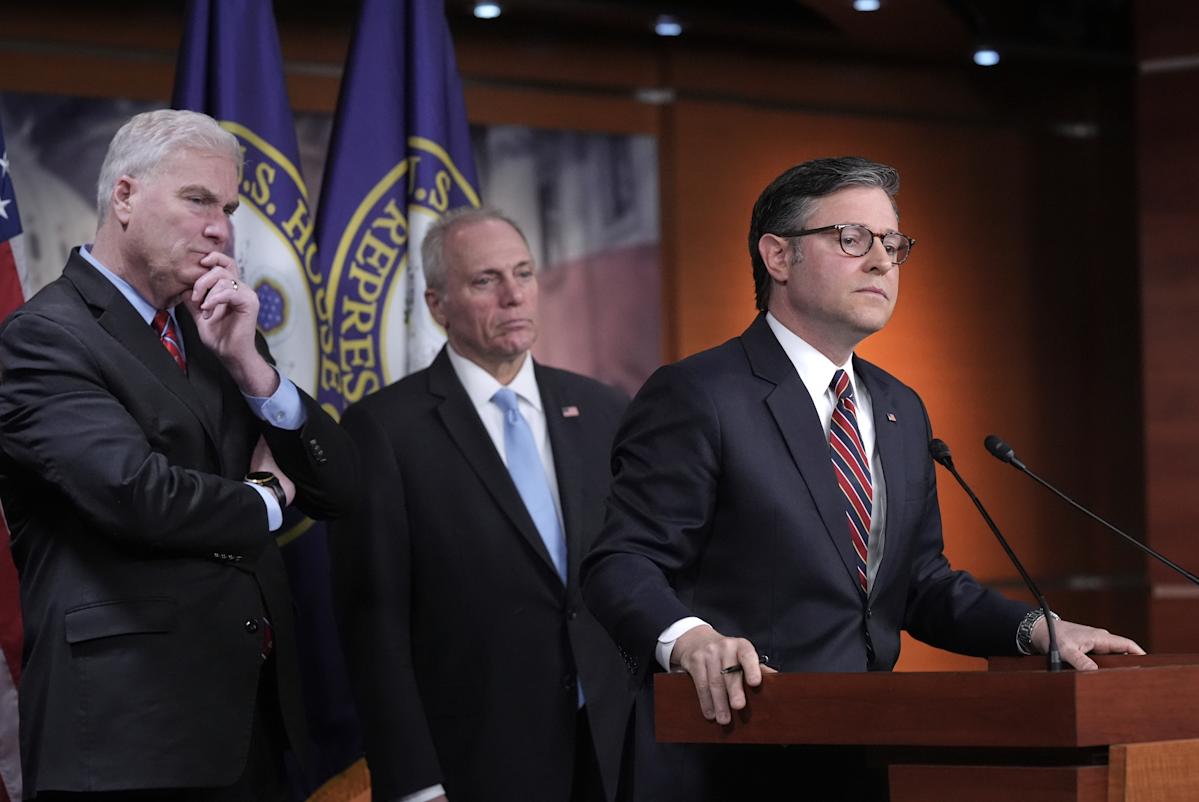
Currently, House Speaker Mike Johnson, a Republican from Louisiana, is leading efforts to draft what has been termed a “big, beautiful bill.” This ambitious legislative package reportedly includes $4.5 trillion in tax reductions coupled with $1.5 trillion in spending cuts. The final form of this proposal will undeniably chart a defining course for the party, impacting everything from federal investment flows to the overall macroeconomic environment that underpins energy demand and supply.
“The very idea of the American dream, where we stand as the world’s leading nation – which I firmly believe we are – could be jeopardized if we fail to act decisively now,” observed Representative Rich McCormick, a Republican from Georgia. “Everyone acknowledges the need for action, yet few are willing to articulate the difficult choices required.” This sentiment underscores the profound internal struggle as the GOP’s economic priorities evolve, shifting from a historical emphasis on fiscal conservatism and limited government towards a stance more attuned to the working-class coalition that has become central to its political base.
The Ideological Divide and Energy Implications
This ideological chasm within the Republican Party presents a complex picture for energy investors. On one side are the traditional conservative stalwarts, proponents of trickle-down economics and minimal government intervention. Figures like former House Speaker Newt Gingrich and anti-tax advocate Grover Norquist, who famously labeled tax increases as “stupid, destructive,” represent this faction. The influential Club for Growth, a major political donor, also aligns with this perspective, advocating for policies that would generally favor reduced regulatory burdens and lower corporate taxes for the energy sector.
However, a rising neo-populist current, closely associated with former President Trump and figures like Steve Bannon, is gaining significant traction. This group often critiques traditional economic models, proposing policies aimed at directly benefiting American workers and industries. For the oil and gas sector, this could translate into strong domestic production support, but also potentially disruptive trade policies, such as tariffs, that could impact global energy flows and the cost of imported components for energy infrastructure projects.
Regulatory Environment: A Key Investment Lever
A central battleground in this policy debate is the future of the regulatory environment, particularly concerning energy. A Republican administration, potentially led by Trump, would likely seek to roll back many of President Biden’s green energy initiatives. This could translate into reduced subsidies for renewable projects, potentially slowing the growth of wind, solar, and electric vehicle infrastructure, while simultaneously easing environmental regulations on traditional oil and gas exploration, drilling, and pipeline construction.
For investors in upstream and midstream oil and gas, such a shift could unlock new opportunities by streamlining permitting processes and reducing compliance costs. Conversely, companies heavily invested in renewable energy or those reliant on federal clean energy incentives might face headwinds. The potential dismantling of specific climate-focused regulations could also impact the broader energy transition narrative, influencing corporate ESG strategies and capital allocation decisions across the energy spectrum.
Fiscal Policy and Commodity Volatility
The proposed $4.5 trillion in tax cuts could provide a significant stimulus to the economy, potentially boosting overall energy demand. Lower corporate tax rates could also free up capital for energy companies, encouraging increased investment in exploration, production, and infrastructure. However, the accompanying $1.5 trillion in spending cuts would need careful examination to understand their specific impact on federal programs that might indirectly affect energy markets or infrastructure development.
The looming shadow of the $36 trillion national debt also cannot be ignored. Should the proposed tax cuts and spending adjustments lead to an even greater debt load, it could fuel inflation, impacting the cost of capital for energy projects and potentially driving up commodity prices. Furthermore, the debate over free trade versus tariffs, a cornerstone of Trump’s economic platform, could introduce volatility into global oil and gas markets, disrupting supply chains and altering the competitiveness of U.S. energy exports.
Capitol Hill Dynamics and Investor Vigilance
Despite holding a majority on Capitol Hill, the Republican Party faces immense pressure to bridge its internal divides. House Speaker Johnson has reportedly set a Memorial Day deadline for consensus, underscoring the urgency to present a unified economic vision. This legislative push is proceeding even as Democratic objections are being bypassed, signaling a determined effort to shape the economic agenda.
“This is a generational piece of legislation,” stated Representative August Pfluger, a Republican from Texas and chairman of the influential Republican Study Committee. His comments highlight the profound belief within the party that these policy decisions will have lasting consequences, shaping the economic trajectory for decades to come. For energy investors, this means the outcome of this debate is not merely political theater but a direct driver of future market conditions.
As these fiscal policy discussions unfold in Washington, investors in the oil and gas sector must remain acutely vigilant. The potential shifts in tax policy, regulatory frameworks, trade relations, and broader economic stimuli could dramatically alter the risk-reward profiles of energy assets. Understanding the nuances of this evolving Republican platform is crucial for strategically positioning portfolios and capitalizing on the opportunities, or mitigating the risks, that lie ahead in the dynamic energy market.
