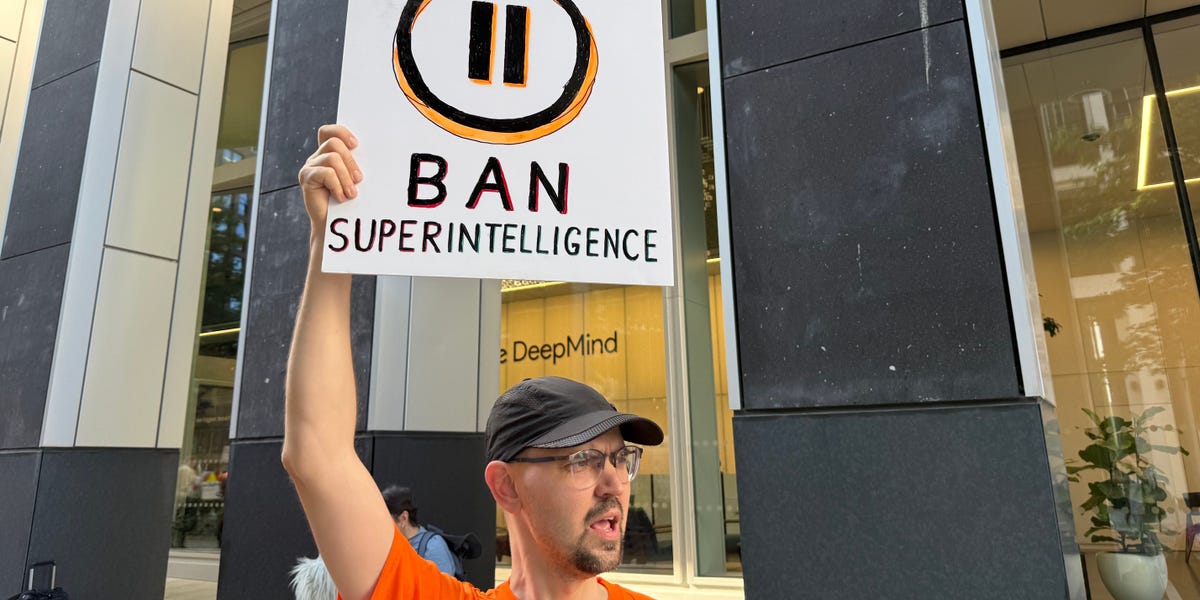
The recent public spectacle in London, where activists from PauseAI staged a mock trial against Google over alleged breaches of its AI safety commitments, might seem distant from the rugged world of oil and gas. Yet, for discerning energy investors, this event signals a growing regulatory and reputational risk in the burgeoning artificial intelligence sector—a risk that could surprisingly ripple into the energy complex. As technology companies face increasing scrutiny for their rapid deployment of advanced AI models, the precedents set in Silicon Valley concerning transparency, external evaluation, and accountability could, in time, shape the operational and investment landscape for energy firms increasingly reliant on AI for efficiency, exploration, and decarbonization efforts. Ignoring these developments would be a strategic oversight for those evaluating long-term capital allocation.
The Regulatory Ripple Effect: From Silicon Valley to the Oil Patch
PauseAI’s central contention, that Google failed to honor its promise to allow external evaluations and publish details of third-party involvement in assessing its Gemini 2.5 Pro model, highlights a burgeoning demand for greater AI governance. The activists’ stark comparison that “AI companies are less regulated than sandwich shops” underscores the current vacuum. This lack of clear oversight in a rapidly advancing field presents a systemic risk that regulators globally are beginning to address. For energy investors, the implications are two-fold. First, if a regulatory framework gains traction for AI development in the tech sector, it is highly probable that similar principles—such as mandatory safety checks, transparency in model development, and external audits—will eventually extend to other industries, including oil and gas. Energy companies are integrating AI across their value chains, from optimizing drilling operations and predictive maintenance on pipelines to enhancing seismic data analysis and managing smart grids. Future AI deployments in these critical areas could face more stringent compliance requirements, potentially increasing development costs and project timelines. Second, a perceived lack of safety or responsible deployment in AI, leading to high-profile failures or ethical dilemmas, could sour public and political sentiment towards AI adoption across all sectors, indirectly impacting energy companies’ ability to leverage these transformative technologies.
Navigating Market Volatility Amidst Emerging Tech Headwinds
While the long-term regulatory trajectory for AI remains uncertain, immediate market dynamics continue to drive investor decisions in the energy sector. As of today, Brent crude trades at $95.57, reflecting a +0.82% daily gain, while WTI sits at $92.08, up +0.88%. Gasoline prices have also seen an uptick, reaching $3.01, a +1.35% increase within the day’s range. This positive daily movement comes after a challenging two-week period where Brent saw an 8.8% decline, moving from $102.22 on March 25th to $93.22 on April 14th. This recent volatility underscores the sensitivity of energy markets to geopolitical events and supply-demand fundamentals. However, looking ahead, investors must also factor in broader macroeconomic shifts, including potential investment reallocations. If the tech sector, currently a darling of capital markets, faces significant regulatory headwinds, fines, or operational restrictions due to AI safety concerns, a portion of institutional capital might seek refuge in sectors perceived as more stable or less exposed to these new, unquantified risks. While the energy sector has its own set of environmental, social, and governance (ESG) pressures, a robust regulatory push against AI in tech could indirectly benefit energy by rebalancing capital flows.
Forward-Looking Catalysts: Energy Fundamentals vs. Tech-Induced Uncertainty
The immediate outlook for crude prices and energy markets remains heavily influenced by traditional supply-demand fundamentals and geopolitical developments, rather than nascent AI regulatory risks. For investors asking for a base-case Brent price forecast for the next quarter or the consensus 2026 Brent forecast, upcoming calendar events are paramount. This week presents several critical data points and meetings. On April 17th, the Baker Hughes Rig Count will offer insights into North American drilling activity. More significantly, the OPEC+ Joint Ministerial Monitoring Committee (JMMC) meets on April 18th, followed by the full OPEC+ Ministerial Meeting on April 20th. These gatherings are crucial for assessing the group’s production policy and will likely dictate short-to-medium term price direction. Following these, the API Weekly Crude Inventory on April 21st and the EIA Weekly Petroleum Status Report on April 22nd will provide fresh data on U.S. inventory levels, a key indicator of demand strength. Further updates from the Baker Hughes Rig Count on April 24th and subsequent API/EIA reports on April 28th and 29th will continue to shape market sentiment. While these fundamental drivers form the bedrock of any credible forecast, the emerging tech regulatory landscape adds a qualitative layer of uncertainty. A severe disruption or a significant policy shift in the tech sector, even if indirect, could contribute to broader market risk aversion, potentially dampening overall economic activity and, by extension, global energy demand. Investors should monitor both the immediate energy catalysts and the evolving regulatory environment for cutting-edge technologies.
Investor Sentiment and Capital Allocation: A Shifting Landscape?
The questions our readers are posing this week, particularly those surrounding base-case Brent price forecasts for the next quarter and consensus 2026 outlooks, underscore a pervasive desire for clarity in an increasingly complex global economy. While these forecasts are primarily built on traditional supply-demand models, geopolitical stability, and economic growth projections, the burgeoning debate around AI safety introduces a new qualitative factor for capital allocation. Investors, particularly those with broad portfolios, are naturally concerned about systemic risks. If the narrative around AI shifts from unbridled innovation to one dominated by regulatory oversight, ethical dilemmas, and potential liabilities, it could impact investor confidence in technology-heavy sectors. This re-evaluation might lead to a recalibration of risk premiums and, consequently, a reallocation of capital. Energy, despite its own long-standing regulatory and environmental challenges, might be perceived as a more mature and predictable investment in comparison to a technology sector facing an entirely new and potentially disruptive wave of regulation. The capital that has flowed into tech could, in part, seek out sectors with more established regulatory frameworks and clearer risk profiles. This isn’t to say energy will become a safe haven, but rather that the relative attractiveness of different sectors could shift as the implications of unbridled AI development become clearer and regulators step in to define the boundaries of responsible innovation.


