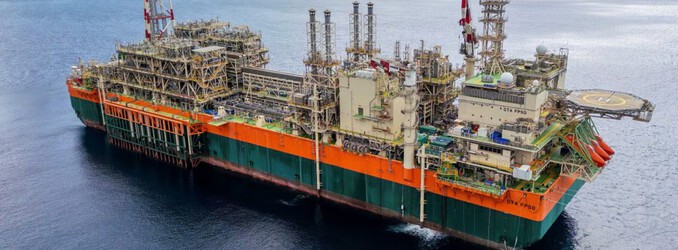
Golar LNG De-risks Greater Tortue Ahmeyim Project
Golar LNG has officially achieved a critical milestone, announcing the Commercial Operations Date (COD) for its FLNG Gimi, dedicated to the Greater Tortue Ahmeyim (GTA) project offshore Mauritania and Senegal. This achievement is not merely an operational update; it marks the commencement of a robust 20-year lease and operate agreement, effectively unlocking an estimated $3 billion in adjusted EBITDA backlog attributable to Golar’s share. For investors, this represents a significant de-risking of a major capital project and cements a long-term, predictable revenue stream in a global energy market that often grapples with volatility. The GTA project’s successful launch firmly establishes Mauritania and Senegal as new players in the global LNG export arena, a development with profound implications for regional energy security and international supply dynamics.
Securing Cash Flows: The $3 Billion Backlog and Operational Certainty
The activation of FLNG Gimi’s 20-year lease is a pivotal moment, transforming a significant development effort into a tangible, long-duration revenue generator. The $3 billion in adjusted EBITDA backlog over the contract’s life provides an exceptional level of financial visibility, a rare commodity in the energy sector. This robust contractual framework, underpinning the deepwater GTA development, offers investors a compelling combination of de-risked asset monetization and stable cash flow generation. The long-term nature of the agreement, spanning two decades, largely insulates Golar from short-term commodity price fluctuations, a key differentiator for assets like floating LNG (FLNG) units which are often underpinned by take-or-pay or capacity-based contracts. This certainty is particularly attractive for investors seeking defensive plays within the energy complex, providing a strong foundation upon which to build future growth initiatives.
Navigating Market Currents: LNG’s Resilience Amidst Crude Volatility
While Golar’s contractual revenues are secured, the broader energy market continues to present a mixed picture. As of today, Brent crude has experienced a notable downtrend, trading at $93.22 per barrel, reflecting an 8.8% decline from its $102.22 peak recorded just twenty days prior. This recent softening in crude prices naturally prompts questions from investors, with many asking for a base-case Brent price forecast for the next quarter, and the consensus 2026 Brent outlook. However, it’s crucial to distinguish between the dynamics of crude oil and the specific, often insulated, nature of long-term LNG contracts. While crude volatility can signal broader macroeconomic concerns, the demand for LNG is driven by distinct factors: energy security needs, the global energy transition away from coal, and the increasing industrial and residential consumption in emerging economies. The secured, long-term nature of Golar’s GTA contract means its financial performance is less susceptible to these daily and weekly swings in the crude market, offering a valuable hedge for energy portfolios.
Golar’s Strategic Expansion: Meeting Surging LNG Demand
With FLNG Gimi now operational and two additional FLNG charters in Argentina announced on May 2, 2025, Golar is aggressively accelerating its plans for future FLNG units. This strategic pivot highlights the company’s confidence in the sustained global demand for liquefied natural gas. The market’s appetite for new supply is robust, driven by geopolitical realignments and the ongoing push for cleaner burning fuels. Golar is actively engaging in commercial discussions, allowing charterer demand to guide the design choices for its fourth FLNG unit. This proactive approach includes evaluating a 3.5 MMtpa MKII option at CIMC Raffles, progressing a final engineering study for EPC pricing and delivery of a larger 5 MMtpa MKIII FLNG, and updating cost and schedule for an up to 2.7 MMtpa MKI FLNG. These multi-faceted development pathways demonstrate Golar’s commitment to expanding its fleet and capitalizing on the structural shift towards gas as a transitional and foundational energy source.
Looking Ahead: Global LNG Dynamics and Upcoming Market Catalysts
The successful launch of GTA positions Golar strongly as global LNG demand continues to intensify. Investors are keenly watching factors influencing Asian LNG spot prices this week, reflecting the critical role the region plays in absorbing new supply. While Golar’s contracted revenues offer stability, the broader market context will continue to shape investor sentiment. Upcoming events in the next two weeks, such as the Baker Hughes Rig Count reports (April 17 & 24), the critical OPEC+ Joint Ministerial Monitoring Committee (JMMC) meeting on April 18, and the subsequent Full Ministerial OPEC+ Meeting on April 20, will provide crucial insights into global crude supply management. Additionally, the weekly API and EIA crude inventory reports (April 21, 22, 28, 29) will offer a pulse check on immediate supply-demand balances in the world’s largest consumer. While these events primarily impact crude, they contribute to the overall energy investment climate. For LNG, the long-term trend remains strong, supported by the strategic necessity of diversifying energy sources and the ongoing transition away from more carbon-intensive alternatives. Golar’s successful execution at GTA, coupled with its ambitious expansion plans, places it at the forefront of this crucial energy evolution.