
Close Menu
  • Home
  • Market News
    • Crude Oil Prices
    • Brent vs WTI
    • Futures & Trading
    • OPEC Announcements
  • Company & Corporate
    • Mergers & Acquisitions
    • Earnings Reports
    • Executive Moves
    • ESG & Sustainability
  • Geopolitical & Global
    • Middle East
    • North America
    • Europe & Russia
    • Asia & China
    • Latin America
  • Supply & Disruption
    • Pipeline Disruptions
    • Refinery Outages
    • Weather Events (hurricanes, floods)
    • Labor Strikes & Protest Movements
  • Policy & Regulation
    • U.S. Energy Policy
    • EU Carbon Targets
    • Emissions Regulations
    • International Trade & Sanctions
  • Tech
    • Energy Transition
    • Hydrogen & LNG
    • Carbon Capture
    • Battery / Storage Tech
  • ESG
    • Climate Commitments
    • Greenwashing News
    • Net-Zero Tracking
    • Institutional Divestments
  • Financial
    • Interest Rates Impact on Oil
    • Inflation + Demand
    • Oil & Stock Correlation
    • Investor Sentiment

Subscribe to Updates

Subscribe to our newsletter and never miss our latest news

Subscribe my Newsletter for New Posts & tips Let's stay updated!

What's Hot

WTI Oil prices jump on fears Iran attack will lead disruption

March 1, 2026

OPEC+ Approves Modest Output Hike as Iran War Jolts Oil Markets

March 1, 2026

Oil tankers attacked near Strait of Hormuz as Iran conflict disrupts shipping

March 1, 2026
Facebook X (Twitter) Instagram Threads
Oil Market Cap – Global Oil & Energy News, Data & Analysis
  • Home
  • Market News
    • Crude Oil Prices
    • Brent vs WTI
    • Futures & Trading
    • OPEC Announcements
  • Company & Corporate
    • Mergers & Acquisitions
    • Earnings Reports
    • Executive Moves
    • ESG & Sustainability
  • Geopolitical & Global
    • Middle East
    • North America
    • Europe & Russia
    • Asia & China
    • Latin America
  • Supply & Disruption
    • Pipeline Disruptions
    • Refinery Outages
    • Weather Events (hurricanes, floods)
    • Labor Strikes & Protest Movements
  • Policy & Regulation
    • U.S. Energy Policy
    • EU Carbon Targets
    • Emissions Regulations
    • International Trade & Sanctions
  • Tech
    • Energy Transition
    • Hydrogen & LNG
    • Carbon Capture
    • Battery / Storage Tech
  • ESG
    • Climate Commitments
    • Greenwashing News
    • Net-Zero Tracking
    • Institutional Divestments
  • Financial
    • Interest Rates Impact on Oil
    • Inflation + Demand
    • Oil & Stock Correlation
    • Investor Sentiment
Oil Market Cap – Global Oil & Energy News, Data & Analysis
Home » Global warming fuels deadly wildfires in Chile and Argentina’s Patagonia
Weather Events (hurricanes, floods)

Global warming fuels deadly wildfires in Chile and Argentina’s Patagonia

omc_adminBy omc_adminFebruary 11, 2026No Comments4 Mins Read
Share
Facebook Twitter Pinterest Threads Bluesky Copy Link


BUENOS AIRES, Argentina (AP) — Human-caused climate change had an important impact on the recent ferocious wildfires that engulfed parts of Chile and Argentina’s Patagonia region, making the extremely high-risk conditions that led to widespread burning up to three times more likely than in a world without global warming, a team of researchers warned on Wednesday.

The hot, dry and gusty weather that fed last month’s deadly wildfires in central and southern Chile was made around 200% more likely by human-made greenhouse gas emissions while the high-fire-risk conditions that fueled the blazes still racing through southern Argentina were made 150% more likely, according to World Weather Attribution, a scientific initiative that investigates extreme weather events soon after they happen.

That probability will only increase as humans continue to burn fossil fuels and blanket the planet with more heat-trapping gases, researchers added.

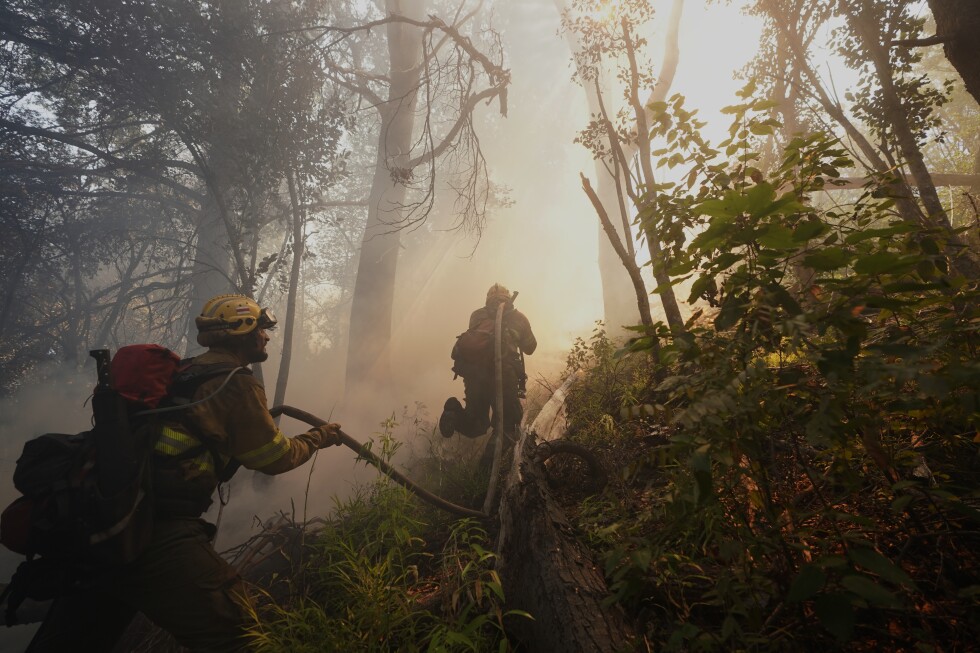
The blazes that tore through Chile’s Biobio and Ñuble regions in mid-January killed 23 people, destroyed over 1,000 houses and other structures and forced tens of thousands of people to flee their homes. All were caused by human activity, whether through arson or negligence.

In southern Argentina, the fires first ignited by lightning forced the evacuation of thousands of tourists and residents and burned through over 45,000 hectares (174 square miles) of native forest, including vast swaths of the Los Alerces National Park, a UNESCO World Heritage site home to 2,600-year-old trees.

Finding human fingerprints on disasters

The study, confirming what had been widely suspected, brings the first scientific assessment of global warming’s role in intensifying some of the most serious wildfire emergencies to grip Chile and Argentina in years.

It’s the latest in an emerging subfield of climate science known as weather attribution, which is evolving rapidly in response to a growing thirst for public information about how climate change influences natural disasters.

The World Weather Attribution report has not yet been peer-reviewed or published in a scientific journal, but it relies on widely accepted methods, including the analysis of data and computer model simulations to compare today’s climate with past weather patterns.

“Overall, we’re confident in saying that the main driver of this increased fire risk is human-caused warming,” Clair Barnes, a research associate with World Weather Attribution, said in a briefing with reporters. “These trends are projected to continue in the future as long as we continue to burn fossil fuels.”

Hot and dry forests become a tinderbox

Record droughts and scorching temperatures created conditions conducive to wildfires in Chile and Argentina, the study found, while single-species plantations of highly flammable trees like pines helped the fires spread more easily in both areas. The invasive species have replaced native, more fire-resistant ecosystems in the region, turning shrub, brush and grass into kindling.

In Argentina’s Patagonia, the town of El Bolsón recorded its highest January temperature on record — 38.4 degrees Celsius (101 degrees Fahrenheit). The town of Esquel, near Los Alerces National Park, logged 11 consecutive days of maximum temperatures in January, its second-longest heat wave in 65 years. Temperatures in Chile ahead of the fires were high but not record-breaking.

The researchers estimated that seasonal rainfall from November to January, before the peak burning period, was around 25% weaker in Chile and 20% less intense in Argentine Patagonia than it would have been without a rise in global temperatures of at least 1.3 degrees Celsius (2.3 degrees Fahrenheit) since pre-industrial times.

“This, together with higher-than-average temperatures, led to vegetation being submitted to stress, very low humidity in the soil,” said Juan Antonio Rivera, an Argentine researcher and author of the study. “Once the wildfires began … there was sufficient fuel to extend and be sustained over time.”

Fewer resources makes an impact

Chile has increased its budget for fighting wildfires by 110% in the last four years under left-wing President Gabriel Boric, improving fire forecasting and investing in new equipment.

But in Argentina, a harsh austerity program under libertarian President Javier Milei may have hobbled the country’s ability to respond to the fires, researchers said, citing budget cuts to firefighting crews, a lack of planning and deregulation of tourism activities in Patagonia’s national parks. It’s a claim echoed to The Associated Press by firefighters, park rangers and officials involved in disaster relief.

Milei, like his ally U.S. President Donald Trump, has denied that climate change is related to human presence. His office did not immediatley respond to a request for comment early Wednesday.

“Unfortunately, with a government that does not understand climate change and its connection to human activities, where nature is secondary in terms of priorities, these situations get worse and wildfires end up having greater impacts than they should,” said Rivera. “The situation is still not under control.”


Source link

Share. Facebook Twitter Pinterest Bluesky Threads Tumblr Telegram Email
omc_admin
  • Website

Related Posts

Death toll from heavy rains in southeastern Brazil reaches 64

February 27, 2026

Floods and landslides in Brazil kill at least 53

February 26, 2026

What to know about a student’s death from carbon monoxide poisoning

February 25, 2026
Add A Comment
Leave A Reply Cancel Reply

Top Posts

Federal Reserve cuts key rate for first time this year

September 17, 202513 Views

Inflation or jobs: Federal Reserve officials are divided over competing concerns

August 14, 20259 Views

Oil tanker rates to stay strong into 2026 as sanctions remove ships for hire – Oil & Gas 360

December 16, 20258 Views
Don't Miss

Oil tankers attacked near Strait of Hormuz as Iran conflict disrupts shipping

By omc_adminMarch 1, 2026

(Bloomberg) – Two tankers were attacked near the mouth of the Persian Gulf, increasing the…

OPEC+ to boost oil production 206,000 bpd as Iran conflict threatens supply

March 1, 2026

Oil markets on edge after Trump strike on Iran threatens Hormuz flows

March 1, 2026

How will strikes on Iran affect global energy flows?

February 28, 2026
Top Trending

ESG Today: Week in Review

By omc_adminMarch 1, 2026

Winter getting shorter in 80% of major US cities, new data shows | US weather

By omc_adminFebruary 27, 2026

Trump officials move to kill system that protects US from chemical disasters | US Environmental Protection Agency

By omc_adminFebruary 27, 2026
Most Popular

The 5 Best 65-Inch TVs of 2025

July 3, 202515 Views

AI’s Next Bottleneck Isn’t Just Chips — It’s the Power Grid: Goldman

November 14, 202514 Views

The Layoffs List of 2025: Meta, Microsoft, Block, and More

May 9, 202510 Views
Our Picks

PDVSA, African Energy Chamber sign MoU to boost oil and gas investment

March 1, 2026

Talos Losses Deepen | Rigzone

March 1, 2026

Tankers Halt Near Hormuz After Attacks

February 28, 2026

Subscribe to Updates

Subscribe to our newsletter and never miss our latest news

Subscribe my Newsletter for New Posts & tips Let's stay updated!

Facebook X (Twitter) Instagram Pinterest
  • Home
  • About Us
  • Advertise With Us
  • Contact Us
  • DMCA
  • Privacy Policy
  • Terms & Conditions
© 2026 oilmarketcap. Designed by oilmarketcap.

Type above and press Enter to search. Press Esc to cancel.