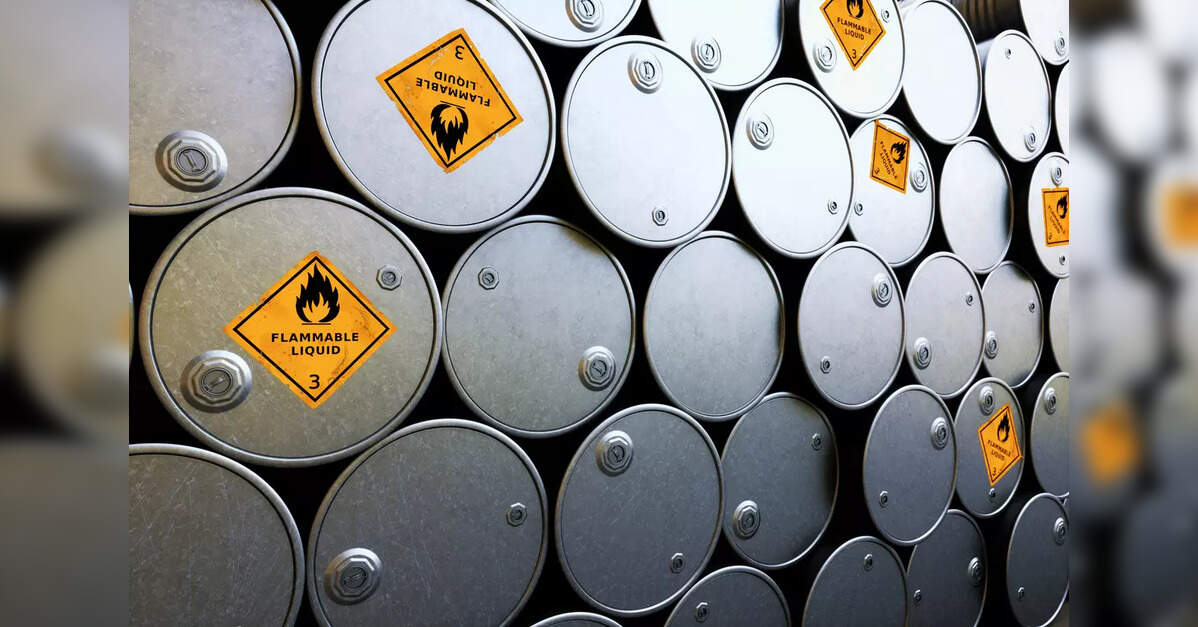
The global oil market is once again navigating treacherous waters, with the International Energy Agency (IEA) stepping in with its largest-ever emergency oil stock release to calm supply jitters. This monumental decision, making 400 million barrels available, comes in direct response to severe disruptions stemming from the ongoing West Asia conflict and the effective closure of the critical Strait of Hormuz. India, a key player and Associate Member of the IEA, has promptly endorsed this measure, signaling a unified front against market instability. For investors, this intervention marks a pivotal moment, demanding a keen eye on how this influx of supply will interact with persistent geopolitical risks and evolving demand dynamics. Our analysis leverages proprietary market data and upcoming catalysts to provide a clear investment perspective on crude’s immediate trajectory and longer-term prospects.
The IEA’s Historic Intervention and Geopolitical Bedrock
In a move reflecting the gravity of the current energy landscape, the IEA announced on March 12, 2026, the unprecedented release of 400 million barrels of emergency oil stocks. This decision, taken unanimously by IEA countries, aims to alleviate the immediate impacts of supply disruptions primarily caused by the West Asia conflict and the operational blockage of the Strait of Hormuz. IEA Executive Director Fatih Birol underscored the critical importance of resuming oil and gas transit through the Strait for long-term market stability, highlighting that the emergency release is a direct offset to the supply lost through its effective closure. India, closely monitoring the situation, swiftly welcomed the IEA’s initiative, confirming its readiness to implement appropriate measures to support global market stability. This coordinated effort between major energy consumers signals a strong commitment to preventing a full-blown energy crisis, though the underlying geopolitical tensions remain a significant variable for investors to consider.
Current Market Dynamics: A Nuanced Reaction to Supply Influx
Despite the IEA’s historic 400 million barrel release, the immediate market reaction indicates a complex interplay of factors rather than a straightforward price collapse. As of today, April 22, 2026, Brent Crude is trading at $92.83, experiencing a modest decline of 0.44% within a daily range of $92.57 to $94.21. Similarly, WTI Crude stands at $89.3, down 0.41%, with its daily range between $88.76 and $90.71. Gasoline prices have also seen a slight dip to $3.11, down 0.64%. This marginal daily movement is particularly interesting when viewed against the broader trend: Brent crude has already shed approximately 7% in value over the past two weeks, falling from $101.16 on April 1, 2026, to $94.09 on April 21, 2026. This suggests that the market may have already begun pricing in the anticipated supply response, or that the persistent geopolitical risk premium is acting as a strong floor, preventing a steeper decline. Investors, often asking if WTI is going up or down, should note this nuanced environment where a massive supply injection is mitigating, rather than overwhelming, existing supply deficits and risk factors.
Forward-Looking Indicators and Key Catalysts for Investors
The impact of the IEA’s emergency release will unfold over the coming weeks, and investors should closely monitor several key upcoming events to gauge its true effect on market fundamentals. The EIA Weekly Petroleum Status Report, scheduled for release today, April 22, 2026, and subsequently on April 29, 2026, and May 6, 2026, will be crucial. These reports will provide the first indications of how U.S. crude inventories, refinery utilization, and demand are responding to the global supply adjustments. A significant build in U.S. crude stocks, for instance, could signal that the IEA’s intervention is indeed working to ease tightness. Additionally, the Baker Hughes Rig Count on April 24, 2026, and May 1, 2026, will offer insights into domestic production trends; an increase could indicate producers are responding to higher prices, further contributing to supply. Perhaps most importantly for investors asking about the price of oil per barrel by the end of 2026, the EIA Short-Term Energy Outlook on May 2, 2026, will provide a comprehensive forecast, detailing expected supply, demand, and price trajectories, incorporating the latest geopolitical developments and the IEA’s actions. These data points will be instrumental in refining investment strategies and assessing the longevity of price stability.
Investor Sentiment and the Long-Term Outlook for Crude
The overarching question for many investors, particularly those wondering what the price of oil per barrel will be by the end of 2026, centers on the sustainability of the current market balance. While the IEA’s 400 million barrel release provides significant near-term relief, it is fundamentally a temporary measure designed to bridge a supply gap caused by geopolitical disruption. The long-term trajectory of crude prices remains heavily dependent on the resolution or escalation of the West Asia conflict and the resumption of stable transit through the Strait of Hormuz, as emphasized by the IEA. Beyond geopolitics, the demand side of the equation, influenced by global economic growth, and the supply response from major producers like OPEC+ and U.S. shale, will dictate end-of-year pricing. Current investor sentiment, as evidenced by proprietary data showing consistent queries about future price direction, reflects this deep uncertainty. While the immediate downside risk from supply shortages has been mitigated, the underlying volatility driven by unaddressed geopolitical instability suggests that crude oil investments will continue to require a highly dynamic and responsive approach through 2026 and beyond. Expect continued price swings, with geopolitical headlines acting as significant catalysts, maintaining a floor under prices despite strategic releases.


