Global Capital Positions for U.S. Political Shift: Implications for Energy Markets
The global energy sector, perpetually navigating geopolitical shifts and regulatory tides, is keenly observing the political landscape in the United States. With a potential shift in leadership on the horizon, the strategies employed by international capital to gain proximity and influence are becoming increasingly apparent. A recent event involving a private dinner with former President Donald Trump, scheduled for May 22 at his Virginia golf club, serves as a fascinating, albeit unconventional, bellwether for how global investors are positioning themselves ahead of the upcoming U.S. election, with significant downstream implications for oil and gas.
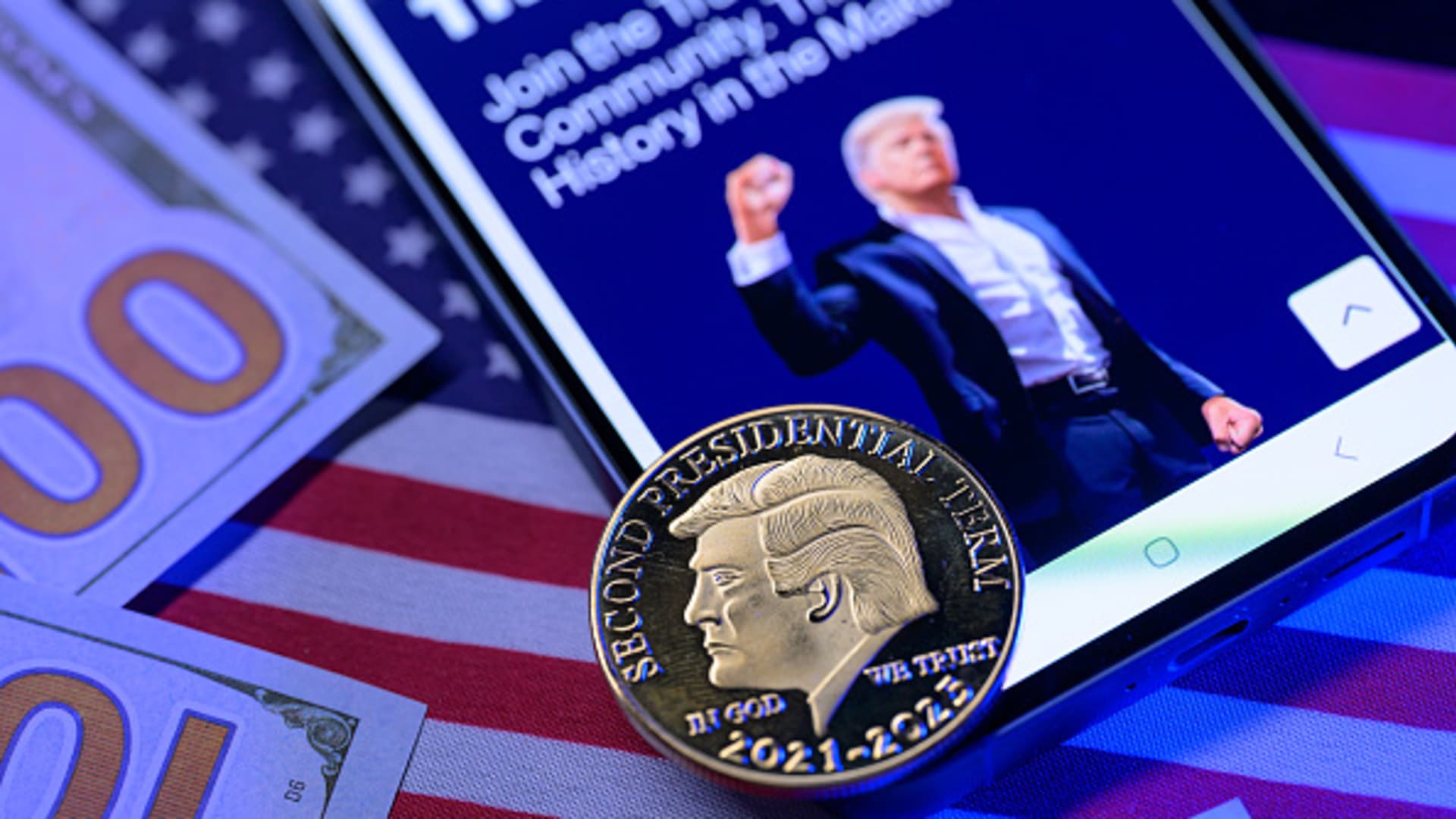
This exclusive gathering extends invitations to the top 220 holders of a specific digital asset, $TRUMP, marking a direct interface between significant capital and a leading political figure. While the asset itself is a speculative meme coin, the motivations of its largest holders – and their quest for a seat at the table – offer a revealing glimpse into the intricate dance between global finance and U.S. energy policy. The roster of attendees, compiled from an analysis that closed Monday night, raises pertinent questions about the true identities and strategic objectives behind these substantial investments.
The Global Reach of Political Capital
A deep dive into the nature of these pseudonymous crypto wallets underscores a critical trend: a substantial portion of this politically-aligned capital originates from outside U.S. borders. Blockchain analytics firm Inca Digital, whose findings were reviewed, indicated that movements of the $TRUMP token among the top 275 holders frequently involved international exchanges like Binance, platforms that typically do not serve U.S. customers. This strongly suggests that many of these influential token holders are not U.S. citizens, highlighting a global effort to engage with or anticipate U.S. political trajectories. Further corroborating this, an independent analysis by Bloomberg revealed that 19 of the top 25 wallets are almost certainly controlled by individuals operating internationally.
This international interest is particularly significant for the oil and gas sector. A potential Trump administration is widely expected to pursue policies favoring domestic energy production, deregulation, and a more assertive stance on global energy security, all of which resonate deeply with international energy players. Foreign entities investing in proximity to a potential administration are likely seeking insights into future permitting processes, environmental regulations, trade policies impacting LNG exports, and the broader geopolitical strategies that could influence crude benchmarks and energy supply chains.
Key International Players and Their Stakes
Among the most prominent figures believed to be at the apex of the $TRUMP token leaderboard is Justin Sun, a China-born crypto entrepreneur known for the Tron blockchain. Sun has openly disclosed a $75 million investment in the Trump family’s World Liberty Financial token, an asset structured to direct 75% of its proceeds to Trump-related entities. His wallet, identified as “Sun,” reportedly holds over $18 million worth of the $TRUMP token, with a notable $4.5 million acquired after the dinner contest was announced, signaling a clear intent to secure a coveted spot. Sun’s current discussions with the SEC regarding civil fraud charges further underscore the complex regulatory landscape that often intertwines with large-scale digital asset investments, a parallel that energy investors frequently encounter with environmental and market regulations.
Another significant player is MemeCore, a Singapore-based crypto network that openly pursued a top position, ultimately securing second place with an $18 million investment. Reports also indicate an Australian crypto entrepreneur made the cut. The involvement of these international entities—from Asia to Australia—demonstrates a proactive, global positioning strategy by sophisticated capital seeking to understand or influence the future direction of U.S. energy and trade policies. For oil and gas, this could mean anticipating shifts in global energy alliances, trade agreements affecting crude and refined product flows, or even the regulatory environment for international energy ventures involving U.S. companies.
Volatility and Capital Allocation: A Cautionary Tale for Investors
The underlying asset, the $TRUMP token, has exhibited extreme volatility, illustrating the speculative nature of such politically-charged digital investments. While 560,376 wallets have collectively realized gains totaling $5.2 billion on the token, a larger cohort of 592,962 wallets has collectively incurred losses amounting to $3.9 billion. These figures highlight a massive wealth transfer within this particular ecosystem, where early entrants have reaped significant windfalls, while the majority have seen their capital diminish.
This stark disparity in outcomes serves as a crucial reminder for oil and gas investors. While energy assets are grounded in fundamental supply and demand, the allure of speculative political plays can divert capital. The demonstrated risk appetite for such volatile assets, driven by the potential for political influence or perceived future policy benefits, suggests that some global capital is willing to chase high-risk, high-reward opportunities outside traditional sectors. Energy investors must discern whether such speculative fervor impacts broader market sentiment or capital availability for long-term, capital-intensive projects in upstream exploration, midstream infrastructure, or downstream refining. The question arises: is this a signal of a broader shift in investor psychology towards politically-driven bets, or merely an outlier event?
Regulatory Scrutiny and Market Transparency
The landscape of transparency and regulatory oversight surrounding these digital assets also presents parallels with the energy sector. Initially, prominent blockchain analytics firms like Chainalysis and Elliptic tracked the $TRUMP token’s movements and trading fees. However, days after reports surfaced detailing significant losses among token holders, both firms reportedly ceased their analysis, citing commitments to existing clients. This withdrawal of critical oversight raises concerns about market transparency and the potential for opaque dealings in politically sensitive financial instruments.
Senator Richard Blumenthal, D-Conn., ranking member of the Senate Subcommittee on Investigations, has voiced warnings regarding the growing crypto holdings associated with the Trump family. While the specifics of his concerns extend beyond the scope of this analysis, the broader implication is clear: the intersection of political influence, family finances, and novel financial instruments demands rigorous scrutiny. For oil and gas investors, this underscores the paramount importance of robust regulatory frameworks and transparent market operations. Any perceived lack of oversight in politically adjacent financial dealings can introduce systemic risks, affecting investor confidence and capital allocation across all sectors, including the energy industry which relies heavily on long-term stability and predictable regulatory environments.
Conclusion: Navigating the Geopolitical Nexus of Energy Investment
The private dinner with former President Donald Trump, facilitated by investments in a digital token, transcends its immediate crypto context. It serves as a potent symbol of how global capital is actively positioning itself ahead of a pivotal U.S. election, seeking to understand, and potentially influence, future policy directions. For oil and gas investors, this event signals the deep intertwining of geopolitics, domestic policy, and global financial flows.
Monitoring these subtle yet significant indicators of international engagement with potential U.S. leadership is critical. The actions of key global players, the allocation of substantial capital to politically linked assets, and the inherent volatility and transparency challenges within these markets all provide valuable insights into the broader risk appetite and strategic objectives of global investors. As the U.S. election cycle progresses, the energy sector must remain vigilant, analyzing not only traditional market fundamentals but also the intricate political and financial maneuvers that will ultimately shape the future of global oil and gas investment.