The global crude oil market is entering a fascinating new phase, characterized by significant supply expansion from non-OPEC+ producers. While coordinated efforts by the OPEC+ alliance have historically provided a crucial counterbalance, the sheer scale of anticipated growth from key regions is poised to redefine the supply-demand equilibrium. Investors are now grappling with the implications of this evolving landscape, particularly concerning crude price trajectories and the identification of resilient investment opportunities.
The Non-OPEC+ Production Surge: A New Supply Landscape
Projections indicate a substantial increase in global crude oil production, with an anticipated rise of approximately 800,000 barrels per day (bpd) in 2026. A striking feature of this expansion is the outsized contribution from a select group of non-OPEC+ nations: Brazil, Guyana, and Argentina. These three countries alone are forecast to account for roughly half of the total global growth in 2026, solidifying their role as pivotal players in the international energy arena.
This trend is not new; non-OPEC+ producers have led global supply growth since 2023. Although OPEC+ production cuts tempered these gains in 2024, global output rebounded sharply in 2025, increasing by an estimated 2.2 million bpd. Non-OPEC producers were responsible for about 1.7 million bpd of this increase, with Brazil, Guyana, and Argentina collectively driving approximately 28% of the total global expansion.
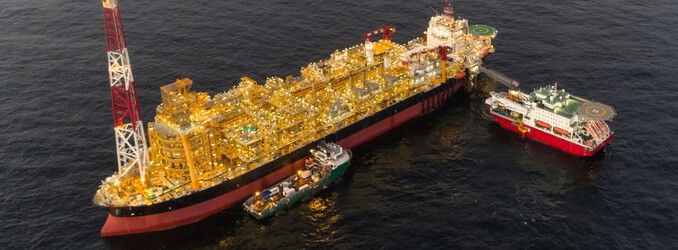
Brazil, in particular, saw its crude oil output surge in 2025, exceeding 4.0 million bpd for the first time in October, largely due to the commissioning of new Floating Production, Storage, and Offloading (FPSO) units in its deepwater fields, including Equinor’s Bacalhau field. The country is expected to maintain an average production of around 4.0 million bpd in 2026, further bolstered by two additional FPSOs slated for startup at Petrobras’ Buzios field.
Guyana continues to be a standout performer, demonstrating one of the fastest production growth rates globally, with output increasing nearly tenfold since 2020. Averaging an estimated 750,000 bpd in 2025, its growth stems primarily from developments in the Stabroek Block, operated by ExxonMobil alongside partners Hess and CNOOC. The Yellowtail project reached full capacity late last year, pushing Guyana’s November 2025 production above 900,000 bpd. Looking ahead, the Uaru project, scheduled to come online in 2026, is expected to add another 250,000 bpd, positioning Guyana to surpass 1.0 million bpd by 2027. Meanwhile, Argentina’s growth is largely concentrated in the Vaca Muerta shale play, one of the few unconventional oil basins outside the United States producing at scale. Argentine output is projected to climb from approximately 740,000 bpd in 2025 to around 810,000 bpd in 2026, with Vaca Muerta contributing over 60% of the nation’s total.
Market Volatility and Price Pressures
The anticipation of this significant supply expansion is already influencing market dynamics, contributing to recent price volatility. As of today, Brent crude trades at $91.87 per barrel, reflecting a sharp 7.57% decline within the day’s range of $86.08 to $98.97. Similarly, WTI crude has fallen to $84, down 7.86%, moving within a daily range of $78.97 to $90.34. This recent downward pressure extends a broader trend: our proprietary data reveals Brent has dropped by $20.91, or 18.5%, from $112.78 on March 30th to its current level on April 17th. Gasoline prices are also feeling the impact, currently at $2.95, a 4.85% decrease today.
While geopolitical factors and demand concerns often drive short-term price swings, the sustained expectation of increased supply from non-OPEC+ producers is a fundamental long-term consideration. The market is evidently pricing in a future with a more robust supply cushion, which could limit upside potential for crude prices despite any temporary disruptions. Investors must consider how this growing supply will interact with global demand trends, especially given the ongoing uncertainties in the broader economic outlook.
Navigating the Future: Key Events and Investor Sentiments
In this environment of increasing non-OPEC+ supply, the actions of OPEC+ become even more critical for price stability. Investors are keenly focused on upcoming events that could provide clarity. A significant event this week is the OPEC+ Full Ministerial Meeting scheduled for Saturday, April 18th. With our platform’s reader intent data showing a high volume of inquiries about “what are OPEC+ current production quotas?”, it’s clear the market is looking for signals on whether the alliance will adjust its strategy in response to the expanding global supply base. Any decision to maintain or deepen cuts would aim to offset non-OPEC+ gains, potentially providing a floor for prices, while a loosening of quotas could exacerbate downward pressure.
Beyond OPEC+, weekly data releases will continue to shape market sentiment. The API Weekly Crude Inventory report on April 21st and the EIA Weekly Petroleum Status Report on April 22nd will offer fresh insights into U.S. supply-demand balances. Similar reports will follow on April 28th and 29th, respectively. Furthermore, the Baker Hughes Rig Count on April 24th and May 1st will indicate future drilling activity, providing a leading indicator for U.S. production trends. These data points, read in conjunction with the broader non-OPEC+ growth narrative, will be crucial for investors assessing the immediate market direction.
Our proprietary reader intent also highlights investor preoccupation with the “price of oil per barrel by end of 2026.” Given the projected 800,000 bpd increase in global output for that year, with Brazil, Guyana, and Argentina contributing half, the upside for crude prices may be capped unless demand significantly outperforms expectations or geopolitical events create substantial supply disruptions. Consequently, investors are shifting their focus from broad commodity plays to identifying specific companies and regions that are positioned to benefit from this growth. For instance, while a question about “how well Repsol will end in April 2026” points to specific company interest, it underscores a broader trend: investors are seeking out operators with strong portfolios in these high-growth non-OPEC+ basins, such as those involved in Brazil’s deepwater, Guyana’s Stabroek Block, or Argentina’s Vaca Muerta, to capture value in a potentially lower price environment.
Investment Implications: Identifying Opportunity in a Shifting Balance
The sustained expansion of non-OPEC+ crude production, particularly from the dynamic trio of Brazil, Guyana, and Argentina, presents both challenges and distinct opportunities for oil and gas investors. The overarching challenge is the potential for persistent downward pressure on crude prices as global supply becomes more robust. However, this environment also spotlights operators with low lifting costs, efficient project execution, and strategic assets in these growth regions.
Investors should scrutinize companies with significant stakes in the deepwater developments of Brazil, such as Petrobras and its partners, which are bringing new FPSOs online to maintain and expand output. Similarly, companies like ExxonMobil, Hess, and CNOOC, with their substantial interests in Guyana’s Stabroek Block, are poised for continued production increases into 2027. In Argentina, firms actively developing the Vaca Muerta shale play stand to benefit from its rapidly increasing contribution to national output. As the market adapts to this rebalancing of global supply, a granular, asset-level approach to investment becomes paramount. Diversification within the energy sector, favoring companies with strong cash flows, disciplined capital allocation, and a clear path to production growth in these key non-OPEC+ areas, will be essential for navigating the complexities of the evolving crude market and securing long-term value.