

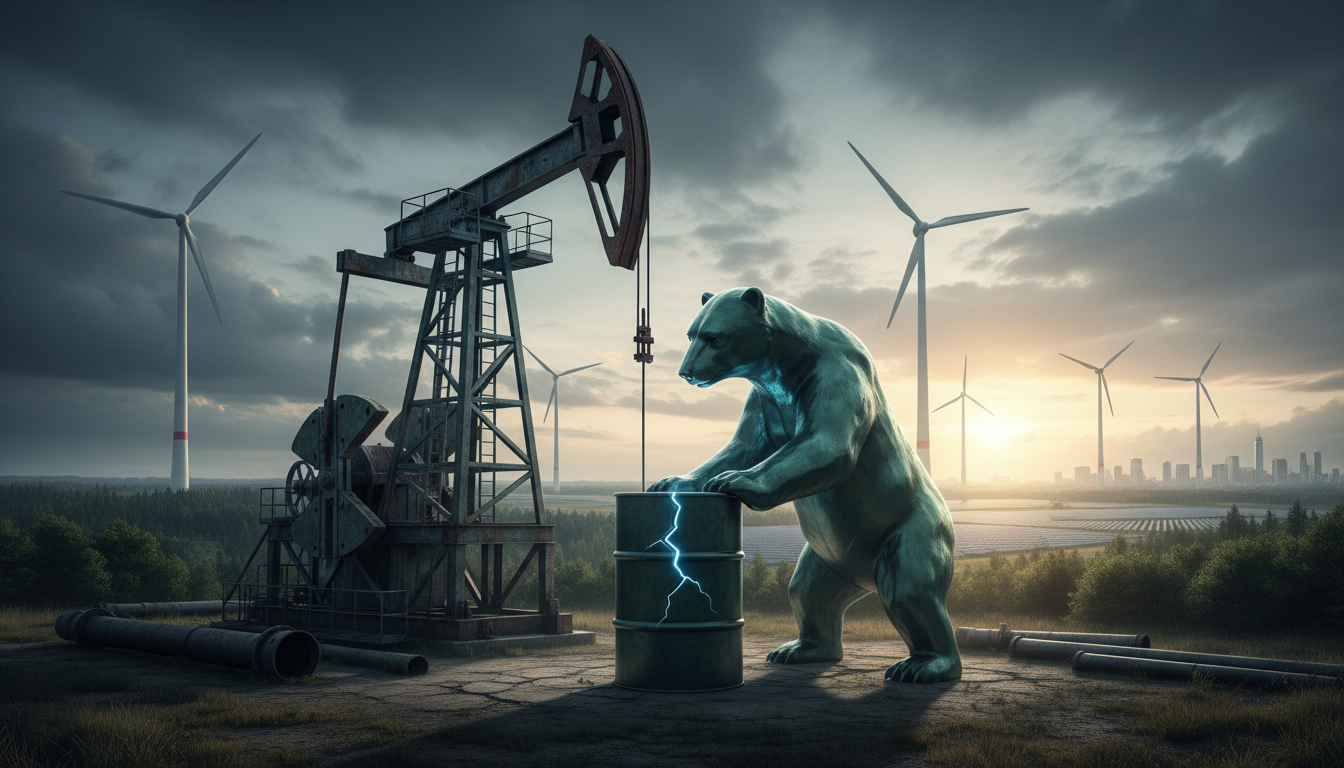
Germany Unveils Ambitious €8 Billion Climate Program, Reshaping European Energy Landscape
Frankfurt – Germany has officially launched its new Climate Protection Program, a comprehensive strategy backed by a substantial €8 billion investment over the next four years. This bold initiative underscores Berlin’s unwavering commitment to slashing emissions by 65% by 2030, benchmarked against 1990 levels, and holds profound implications for energy markets, particularly for fossil fuel investors watching the European transition.
The program outlines 67 distinct measures spanning the energy, transport, buildings, and agricultural sectors, designed to eliminate over 25 million tons of CO2 annually by the end of the decade. Crucially, the German government emphasizes that this isn’t solely an environmental push. It’s a strategic economic maneuver aimed at bolstering competitiveness and reducing the nation’s susceptibility to the notorious volatility of global fossil fuel prices – a point resonated deeply within investor circles following recent energy market dislocations. This dual objective of climate mitigation and energy independence signals a mature approach to the energy transition, recognizing its economic imperatives alongside its environmental goals.
According to Carsten Schneider, Germany’s Federal Environment Minister, the new program is poised to “reinvigorate climate protection,” moving beyond past controversies. He articulates a vision where Germany’s economy modernizes, society builds greater resilience against crises, and the nation becomes less reliant on costly and unpredictable oil and gas imports. For energy investors, Schneider’s comments highlight a governmental resolve that transcends political divides, suggesting a stable and predictable policy environment for green investments, while simultaneously signaling a systemic pivot away from traditional hydrocarbon reliance.
Wind Power Expansion Targets Natural Gas & Coal Displacement
A cornerstone of this ambitious plan is a significant expansion in onshore wind power capacity. Germany is targeting an additional 12 gigawatts (GW) of onshore wind generation, a move projected to displace electricity production equivalent to 15 to 20 conventional gas-fired power plants. This direct substitution is expected to considerably reduce demand for both natural gas and coal, preventing approximately 6.5 million tons of CO2 emissions by 2030. The government’s commitment to new tender rounds underscores its determination to achieve a cumulative 115 GW of installed onshore wind capacity by 2030, a figure that demands close attention from natural gas and coal asset holders assessing long-term European demand forecasts. This aggressive push into renewables offers substantial opportunities for investors in wind energy development, manufacturing, and grid infrastructure.
Industrial Decarbonization: A Direct Hit on Gas Imports
In the industrial sector, the program introduces targeted support for investments in decarbonizing process heat and accelerating the adoption of electrification technologies, such as advanced heat pumps. These initiatives are not only anticipated to prevent at least 4.3 million tons of CO2 emissions but, more pertinently for oil and gas investors, are slated to reduce natural gas imports by a substantial 2.5 billion cubic meters. This represents a tangible and direct impact on industrial natural gas consumption, a key demand segment. Companies supplying industrial gas or involved in gas infrastructure will need to closely monitor the pace of these transitions, while those specializing in industrial electrification or energy efficiency stand to benefit significantly from government subsidies and mandates.
Transforming Transport: €3 Billion Boost for Electric Vehicles
The transportation sector receives a powerful impetus through a new €3 billion subsidy program dedicated to electric vehicles (EVs). This funding is specifically designed to make EVs accessible to low- and middle-income individuals, aiming to overcome affordability barriers. The program intends to support the deployment of up to 800,000 electric vehicles by 2030, which in turn is projected to save over 800 million liters of gasoline. For crude oil and refined products markets, this represents a notable erosion of gasoline demand, intensifying the long-term headwinds facing traditional internal combustion engine vehicle sales and fuel consumption within Europe.
Building Sector Efficiency & District Heating
Measures within the building sector focus on a new district heating package. This initiative aims to significantly expand heating networks and increase the integration of renewable energy sources and waste heat into these systems. The government projects that these efforts will lead to savings equivalent to approximately one billion cubic meters of natural gas, along with a reduction of 2.3 million tons of CO2 by 2030. This initiative directly impacts the demand outlook for natural gas in residential and commercial heating, prompting a re-evaluation of long-term gas supply contracts and infrastructure investments in the urban heating sector.
Agriculture and Nature: Expanding the Green Mandate
Beyond the core energy and industry sectors, the program extends its reach into agriculture and nature-based solutions. Funding will support the transition from diesel-powered agricultural machinery to electric alternatives, while other measures focus on enhancing the carbon sequestration capabilities of forests, peatlands, and soils. While these initiatives may have a less immediate and direct impact on large-scale fossil fuel demand, they signal a holistic government approach to decarbonization that encompasses all facets of the economy, including off-road diesel consumption.
Long-Term Commitment and Investment Horizon
Carsten Schneider’s concluding remarks reinforce the long-term nature of Germany’s climate strategy: “Further progress will be necessary, but also possible. Climate protection requires perseverance, reliability, and the willingness to continually adjust course as new needs, opportunities, and insights emerge.” For energy investors, this statement is a critical insight. It underscores that the policies enacted today are part of an evolving, persistent commitment. The €8 billion investment is not an endpoint but a significant step in an ongoing transition. Investors in traditional oil and gas sectors must factor in this relentless policy pressure and the potential for continuous adjustments that will further accelerate the shift away from fossil fuels. Conversely, opportunities for capital deployment in renewable energy, energy efficiency, green hydrogen, and carbon capture technologies within Germany are poised for sustained growth and policy support, making the nation a key battleground in the global energy transition.
