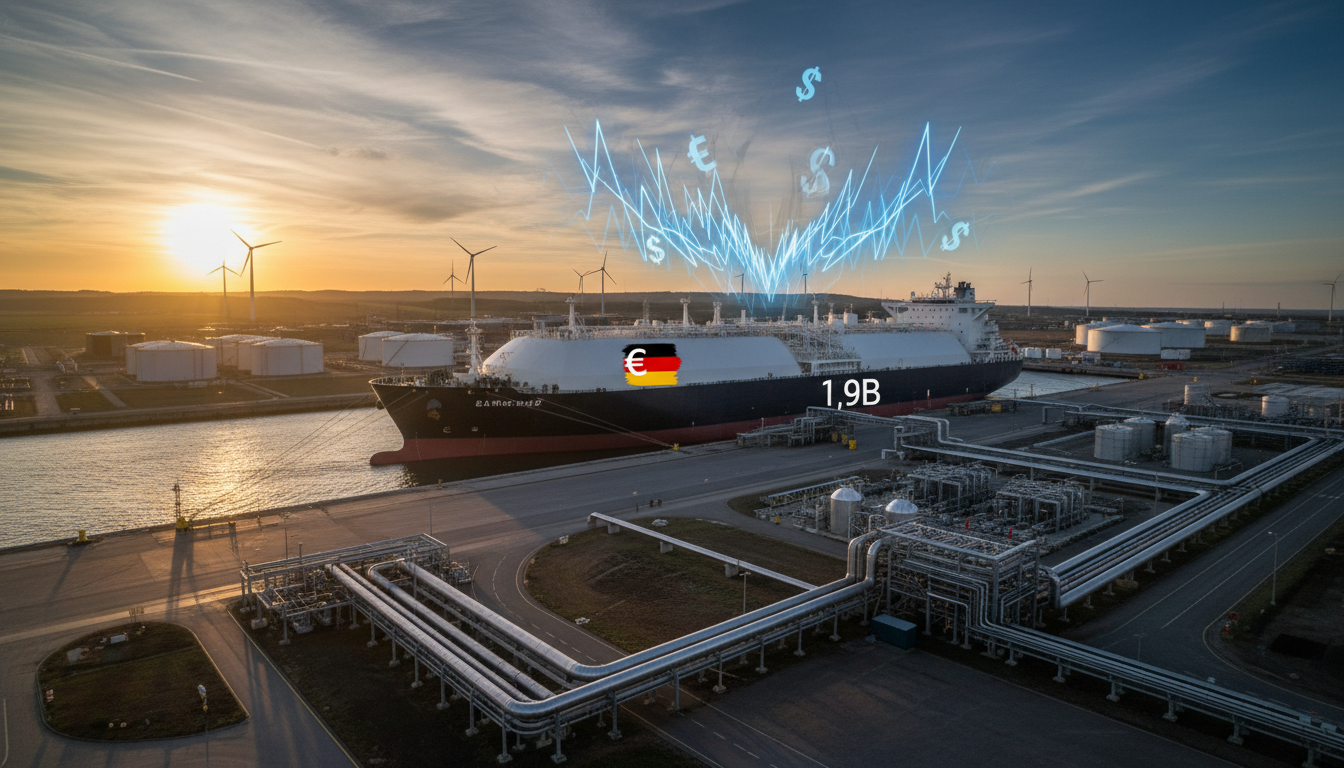
Germany’s €1.9 Billion Aid Package: A Signal for Energy Investors
Germany’s recent agreement on a €1.6 billion ($1.9 billion) fuel-cost relief package sends a clear signal to oil and gas investors: energy price volatility remains a dominant force shaping economic policy and consumer sentiment across Europe. This substantial intervention, spearheaded by Chancellor Friedrich Merz’s coalition, aims to shield both households and businesses from the acute impact of surging energy costs, directly linked to geopolitical tensions. For investors, this isn’t just a local news item; it’s a macro indicator of persistent inflationary pressures, governmental willingness to intervene, and the delicate balance between energy security and fiscal prudence in major global economies.
The Immediate Impact: Fuel Tax Cuts Amidst Surging Crude Prices
The core of Germany’s new policy centers on a temporary reduction in fuel taxes, specifically cutting gasoline and diesel prices by approximately €0.17 per litre over a two-month period. This direct relief measure underscores the government’s urgency in addressing consumer pain points. The timing of this intervention is particularly salient given the current market dynamics. As of today, Brent Crude trades at $95.48, marking a significant 5.64% increase in daily trading, while WTI Crude stands at $87.32, up 5.73%. This daily rebound follows a period of notable decline, with Brent having shed nearly 20% of its value from $112.78 to $90.38 over the past two weeks. This extreme volatility, where prices can swing dramatically within short windows, is precisely the environment that necessitates such governmental actions and highlights the ongoing risk for energy-exposed investments. The relief package, by offsetting some of these price swings at the pump, attempts to insulate the German economy from the immediate shockwaves of a highly unpredictable global energy market.
Navigating Fiscal Constraints and Investor Outlook
Beyond the direct fuel subsidies, Germany’s package includes a €1,000 tax-free employer bonus designed to help workers manage broader inflationary pressures without increasing payroll tax burdens. Funding for these initiatives will partly come from repurposed increases in tobacco taxes, reflecting a careful balancing act within the coalition. This fiscal maneuver is critical, especially when viewed against Germany’s projected €140 billion fiscal gap through 2029. Such measures highlight the ongoing challenge for governments to provide immediate relief without compromising long-term fiscal stability. From an investor perspective, this balancing act speaks volumes about the perceived durability of high energy prices and their systemic impact on economic growth. Our proprietary reader intent data shows a strong focus on price direction, with many investors asking “is WTI going up or down?” and seeking predictions for “the price of oil per barrel by end of 2026?” Germany’s willingness to commit significant funds, even with fiscal constraints, suggests an expectation of sustained energy price pressure, implying that while short-term volatility is high, the underlying trend for robust oil prices might persist, impacting demand and inflation across the Eurozone.
Geopolitical Drivers and Critical Upcoming Catalysts
Chancellor Merz explicitly linked domestic economic pressures to global instability, stating, “This war is the real cause of the problems we are experiencing in our own country as well,” directly referencing escalating conflict in the Middle East. This acknowledgment underscores the profound influence of geopolitics on energy markets and, consequently, on national economic policies. The effectiveness and necessity of Germany’s relief measures will be heavily influenced by upcoming market catalysts. Investors should pay close attention to the OPEC+ Joint Ministerial Monitoring Committee (JMMC) meeting occurring today, April 20th, followed by the full OPEC+ Ministerial Meeting on April 25th. These gatherings are crucial, as they will provide critical signals on future production policy, potentially impacting global supply balances significantly. Any decision to adjust output, particularly given today’s upward price movement in crude, could either alleviate or exacerbate the pressures necessitating Germany’s intervention. Furthermore, the EIA Weekly Petroleum Status Reports on April 22nd and April 29th, alongside API inventory data, will offer vital insights into U.S. supply-demand balances, influencing short-term price movements and the overall sentiment around gasoline prices, currently trading at $3.04.
Antitrust Scrutiny and Future Market Structure
Adding another layer of complexity, the German government plans to tighten antitrust rules to better monitor fuel pricing behavior and prevent excessive markups. While this aims to protect consumers, it signals a potentially heightened regulatory environment for refiners and fuel distributors operating within Germany. For investors in the downstream sector, this could imply increased scrutiny on margins and operational flexibility, necessitating a careful evaluation of investment risks in the European market. The combination of direct fiscal intervention, geopolitical sensitivity, and increased regulatory oversight paints a picture of an energy market under intense political pressure. This comprehensive approach by a major European economy indicates that energy costs are not merely a market fluctuation but a strategic concern that will continue to drive policy and influence investment decisions across the oil and gas value chain.


