Gazprom, the Russian gas behemoth, has signaled a significant turnaround, reporting a net income of $1.72 billion for the third quarter of 2025. This positive result stands in stark contrast to the $680 million net loss recorded in the same period last year, a loss largely attributed to a substantial one-off tax levied on the company. While the profit reversal offers a moment of respite for the state-controlled energy giant, particularly after its first annual net loss in 23 years in 2023, a deeper dive into the numbers reveals ongoing complexities and strategic challenges. Investors must look beyond the headline profit to understand the underlying dynamics impacting Gazprom and the broader Russian energy sector, especially given fluctuating global crude prices and looming geopolitical uncertainties.
Gazprom’s Profit Resurgence Amidst Revenue Declines
Gazprom’s return to profitability in Q3 2025 marks a notable shift from its recent struggles. The company booked a net income of $1.72 billion (134.2 billion Russian rubles), a substantial improvement from the $680 million (53 billion rubles) net loss in Q3 2024. This prior loss was primarily a consequence of a one-off tax imposed by the Russian government, designed to bolster state coffers. Without this extraordinary levy, Gazprom’s financial picture appears more stable, reflecting its reported return to an annual profit of $14.8 billion in 2024 after the severe setbacks of 2023.
However, the headline profit should be viewed in conjunction with a decline in top-line performance. Revenues for the July-September 2025 quarter fell to $28 billion (2.18 trillion rubles), down from $30.8 billion (2.4 trillion rubles) in the corresponding period of 2024. This divergence—profitability increasing despite falling revenues—suggests a combination of factors at play. The absence of the one-off tax is undoubtedly a primary driver. Beyond that, it could indicate improved operational efficiencies, a more favorable pricing environment for remaining gas sales, or a shift in the mix of markets served, potentially benefiting from higher prices in non-European destinations. For investors, understanding the sustainability of this profit trajectory, particularly in the face of ongoing geopolitical pressures and the structural shift in European gas demand, remains critical.
Broader Fiscal Headwinds and Market Realities
While Gazprom celebrates its Q3 profit, the broader Russian energy landscape faces significant headwinds that could impact future performance. The nation’s overall oil and gas revenues are projected to slump by 35% in November compared to a year earlier, with an expected budget intake of $6.63 billion (520 billion Russian rubles). This steep decline is a direct consequence of several market factors, including lower crude prices and a strengthening local currency.
The global crude market reflects this pressure. As of today, Brent crude trades at $90.25, reflecting a significant daily dip of 5.48% within a day range of $93.87-$95.69. This follows a broader 14-day trend where Brent has fallen from $118.35 on March 31st to $94.86 on April 20th, a nearly 20% decline. Similarly, WTI crude is at $86.87. This downward pressure on prices, combined with a widening discount for Russia’s flagship Urals crude—which has reached its highest level since May 2023 following U.S. sanctions on major producers like Rosneft and Lukoil—directly impacts Moscow’s ability to fund its extensive spending, particularly on its war in Ukraine. Given that oil and gas revenues constitute the single largest income item for the Russian Federation, the fiscal implications are substantial, creating an environment of heightened risk for state-controlled energy entities.
Navigating Uncertainty: Investor Focus on Future Events
Our proprietary reader intent data reveals a clear focus on future price movements among investors, with common inquiries including “is WTI going up or down?” and “what do you predict the price of oil per barrel will be by end of 2026?”. This sentiment underscores the prevailing uncertainty in the energy markets, driven by geopolitical tensions, shifting supply-demand dynamics, and the broader economic outlook. For investors eyeing the oil and gas sector, particularly entities like Gazprom whose performance is inextricably linked to global energy prices and geopolitical stability, the coming weeks present several crucial catalysts.
The immediate outlook for crude prices, and by extension, broader energy sector performance, will be heavily influenced by several key events. Investors should closely monitor the OPEC+ JMMC Meeting scheduled for April 21st, which could signal shifts in production policy from the world’s largest oil producers. Further insights into supply-demand dynamics will come from the EIA Weekly Petroleum Status Reports on April 22nd and April 29th, and the API Weekly Crude Inventory data on April 28th and May 5th. These reports are critical for gauging U.S. inventory levels and refinery activity, which are major drivers of short-term price movements. Additionally, the EIA’s Short-Term Energy Outlook on May 2nd will provide a macro perspective on projected market trends, offering valuable guidance for strategic positioning. These events are not just data points; they are potential inflection points that could dictate the direction of energy markets and, consequently, the investment thesis for companies like Gazprom.
Strategic Implications and Long-Term Outlook for Gazprom
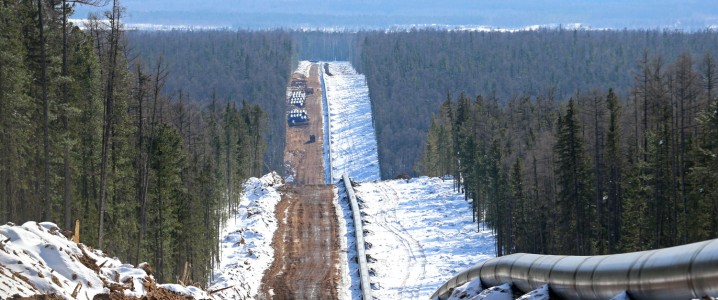
Despite the recent profit swing, Gazprom continues to operate in a fundamentally altered landscape. The “plunge of its gas sales to Europe” in recent years represents a structural shift that cannot be easily reversed. The company’s strategy has increasingly focused on reorienting its gas exports towards Asian markets, most notably through the Power of Siberia pipeline to China. However, the scale and profitability of these new routes may not fully compensate for the substantial loss of the European market, which historically offered premium prices and established infrastructure.
The Q3 profit, while encouraging, may primarily reflect a reduction in exceptional costs rather than a robust resurgence in core business revenues. The challenge for Gazprom, and by extension for investors, is to assess the long-term sustainability of its financial health. Can it effectively diversify its customer base and infrastructure without incurring prohibitive costs? Will future tax burdens, designed to support the Russian budget amidst declining oil revenues, erode profitability again? These are critical questions that demand continuous monitoring. The interplay of geopolitical developments, Russia’s fiscal needs, and Gazprom’s ability to adapt its strategic direction will ultimately determine its long-term investment viability in a rapidly evolving global energy paradigm.


