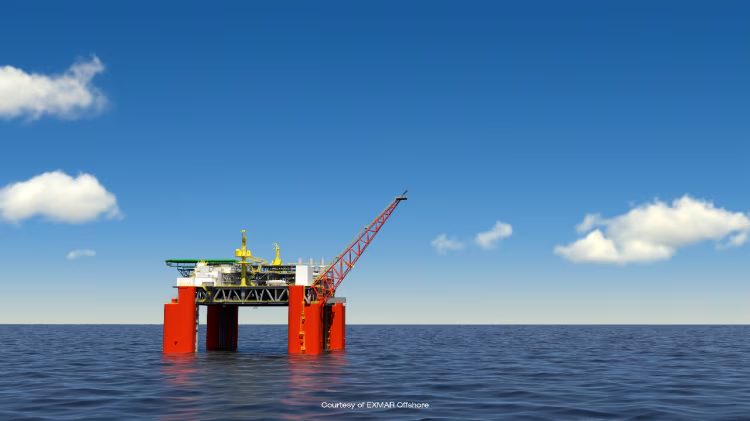
The deepwater Gulf of Mexico continues to prove a strategic basin for major operators, and the recent award of the full commissioning scope for bp’s Kaskida Floating Production Unit (FPU) to GATE Energy underscores this commitment. This significant development, located approximately 200 miles offshore Galveston in the Keathley Canyon area, represents a critical greenfield project in bp’s portfolio. For investors, this contract award signals continued robust activity in high-value, complex offshore operations, highlighting the specialized expertise required to bring these energy assets online efficiently and safely. GATE Energy’s role, encompassing static and dynamic commissioning, systems completion management, and interface coordination, positions them as a key enabler for deepwater project delivery, building on a proven track record that includes bp’s Argos platform.
Deepwater Gulf of Mexico: A Basin of Enduring Strategic Value
The Gulf of Mexico (GOM) remains a cornerstone of U.S. domestic oil production, particularly for deepwater projects which consistently deliver high-volume, low-carbon intensity barrels. The Kaskida FPU is a testament to this enduring strategic value. Operators like bp are investing in these long-cycle projects, betting on the basin’s geological potential and the established infrastructure. GATE Energy’s repeated collaboration with Seatrium, the project’s engineering, procurement, and construction (EPC) contractor, and with bp directly, speaks volumes about the specialized nature of deepwater commissioning. Their involvement in critical projects such as the Argos platform demonstrates a clear competitive advantage in a highly technical field. For investors tracking the deepwater sector, this contract reinforces the idea that despite energy transition pressures, select, high-quality deepwater assets will continue to see significant capital allocation and operational activity for years to come.
Commissioning Excellence: The Crucial Link to Project Value Realization
In complex deepwater developments, commissioning is far more than just a procedural step; it is the critical phase that bridges construction to full operational readiness, directly impacting a project’s safety, efficiency, and ultimate economic value. GATE Energy’s mandate to execute the full commissioning scope for Kaskida highlights the importance operators place on a flawless startup. An efficient commissioning process minimizes delays, mitigates risks, and accelerates the flow of first oil, directly enhancing the project’s internal rate of return (IRR) and net present value (NPV). Lee Jordan, CEO of GATE Energy, emphasized leveraging their integrated Asia-Pacific and U.S.-based commissioning teams, underscoring the global expertise required for these technically demanding projects. Investors should view a company’s proven commissioning capability as a strong indicator of its ability to de-risk capital-intensive projects and unlock maximum value from major deepwater investments.
Navigating Current Market Dynamics and Investor Sentiment
The backdrop for this significant contract award is a dynamic and closely watched global oil market. As of today, Brent Crude trades at $98.36, experiencing a modest downturn of 1.04% within a day range of $97.92 to $98.67. Similarly, WTI Crude is at $89.96, down 1.33% today. While these daily movements are notable, the broader context shows a significant correction, with Brent having declined by approximately $14, or 12.4%, from $112.57 on March 27 to $98.57 on April 16. Despite this recent pullback, prices remain at levels that generally support the economics of deepwater projects like Kaskida. Investors are keenly focused on supply-side dynamics, with many frequently inquiring about the current Brent crude price and, crucially, about OPEC+ current production quotas. This intense interest reflects the market’s sensitivity to supply management decisions and their potential impact on future price stability. Successful commissioning of projects such as Kaskida will be vital to major operators like bp, allowing them to capitalize on a price environment that, while volatile, remains supportive of new production.
Forward-Looking Analysis: Upcoming Catalysts and Operational Efficiency
Looking ahead, several key events on the energy calendar will shape the short-term market outlook and, by extension, influence investor confidence in long-cycle deepwater investments. The upcoming OPEC+ Joint Ministerial Monitoring Committee (JMMC) meeting on April 18, followed by the Full Ministerial Meeting on April 20, are pivotal. Decisions from these gatherings regarding production quotas will directly impact global supply forecasts and oil price trajectories. Moreover, weekly reports such as the API Crude Inventory on April 21 and the EIA Weekly Petroleum Status Report on April 22 will provide critical insights into U.S. inventory levels, further refining supply-demand balances. For service providers like GATE Energy, securing contracts for essential services like commissioning highlights the ongoing need for operational excellence, irrespective of short-term price fluctuations. Their ability to deliver projects to stringent safety and quality standards, as demonstrated on Kaskida, positions them favorably to capture future opportunities in a market continually seeking efficiency and reliability. As investors monitor these upcoming events, the focus will remain on how effectively major projects like Kaskida can be brought online to meet anticipated global energy demand, reinforcing the long-term value proposition of specialized deepwater expertise.