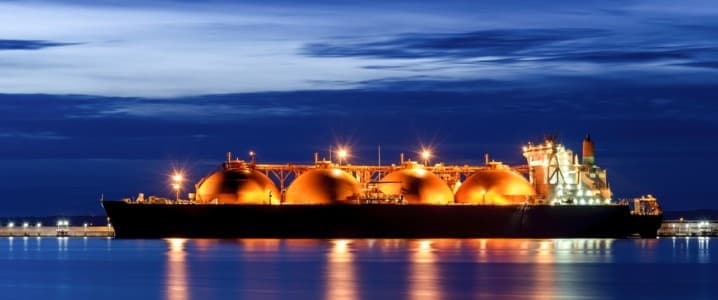
The global energy landscape is undergoing a profound transformation, with liquefied natural gas (LNG) emerging as a critical commodity for energy security and geopolitical strategy. Recent discussions initiated by GAIL (India) Ltd to secure long-term LNG supply from the proposed $44 billion Alaska LNG project underscore this shift, signaling a strategic pivot for both Asian consumers and U.S. energy producers. For investors, these developments highlight the enduring demand for diversified energy sources and the significant capital outlays required for the infrastructure to meet it. This potential deal, driven by India’s broader push to reduce its trade surplus with the United States, represents a pivotal moment in the complex interplay of energy economics, trade policy, and long-term investment.
Current Market Dynamics Informing Long-Term LNG Strategies
While the Alaska LNG project represents a multi-decade investment horizon, its viability and the appetite for long-term contracts are profoundly influenced by the immediate market environment. As of today, Brent crude trades at $94.7 per barrel, experiencing a modest daily dip of 0.24%, within a narrow range of $94.7 to $94.91. West Texas Intermediate (WTI) mirrors this stability, currently at $90.97, down 0.35% for the day. This relative calm, however, follows a period of notable volatility; over the past two weeks, Brent has shed nearly 9% of its value, declining from $102.22 on March 25 to $93.22 by April 14. This fluctuation in benchmark crude prices, even if not directly impacting LNG spot prices in the same way, shapes the broader investor sentiment and capital allocation decisions across the energy sector. A stable, albeit lower, price environment can make the long-term, predictable revenue streams promised by massive LNG off-take agreements more attractive to investors seeking consistent returns, insulating them from short-term market swings. The strategic commitment to new LNG capacity, therefore, is often seen as a hedge against future energy price volatility and supply disruptions, justifying the substantial upfront investment.
Navigating Future Supply Amidst Geopolitical Currents and Upcoming Events
The Alaska LNG project, with its ambitious design to transport North Slope natural gas via an 800-mile pipeline to a south-central export facility, embodies a long-term vision. Such projects require immense capital and political will, often spanning years from conception to operation. For investors, understanding the forward trajectory of both supply and demand is paramount. While the energy market braces for near-term catalysts like the Baker Hughes Rig Count on April 17 and April 24, or the critical OPEC+ Joint Ministerial Monitoring Committee (JMMC) meeting on April 18, followed by the Full Ministerial meeting on April 20, these events largely influence short-term crude supply dynamics. In contrast, the Alaska LNG project’s timeline operates on an entirely different scale. The U.S. administration’s strong support, driven by a desire to reduce trade deficits with Asian allies, provides a significant geopolitical tailwind, potentially de-risking the project for investors. This strategic alignment between producer and consumer nations, seen in Washington’s encouragement for Japan and South Korea to also buy more U.S. LNG, is a crucial factor. Long-term off-take agreements, such as those GAIL is discussing, are designed to secure supply for decades, largely immune to the weekly API and EIA inventory reports (scheduled for April 21, 22, 28, and 29), which move the needle for short-term traders but offer less insight into the multi-billion-dollar infrastructure investments.
Addressing Asia’s Insatiable LNG Demand and Investor Concerns
Our proprietary reader intent data reveals a consistent focus on what’s driving Asian LNG spot prices this week, underscoring the region’s pivotal role in global gas markets. The answer lies in sustained economic growth, rapid urbanization, and a strategic pivot away from coal towards cleaner-burning natural gas for power generation and industrial use. This voracious demand fuels the necessity for countries like India to secure diversified, long-term supply. GAIL’s discussions with Alaska LNG are a direct response to this imperative, seeking not just volume but also price stability against the inherent volatility of the spot market. The “cost of supply” from Alaska LNG is cited as the crucial factor for GAIL, despite the project developer, Glenfarne, noting up to 50 companies have expressed formal interest and $115 billion in potential commitments. This gap between expressions of interest and firm, price-sensitive off-take deals highlights the financial hurdle for new mega-projects. Investors closely monitor such negotiations, as competitive pricing is essential to convert interest into binding long-term contracts. Furthermore, while investors are keen on a consensus 2026 Brent forecast, a stable outlook for overall energy prices provides a favorable backdrop for financing and developing capital-intensive LNG projects, ensuring demand and economic viability over their operational lifespan.
The Investment Calculus: Project Scale, Strategic Buyers, and Geopolitical Risk
The Alaska LNG project, estimated at $44 billion, represents a monumental investment in energy infrastructure. The reported $115 billion in potential commitments from various energy companies demonstrates significant market interest, but GAIL’s focus on the cost of supply highlights the critical juncture these mega-projects face: balancing massive upfront capital expenditure with competitive pricing for long-term buyers. For investors, the sheer scale offers substantial long-term revenue potential, yet also carries execution risk and a lengthy return on capital. The project’s strategic appeal to U.S. allies, such as Taiwan’s state-held CPC Corporation signing a letter of intent to invest and buy LNG, underscores its geopolitical significance. However, the subsequent imposition of a 32% tariff on Taiwan, effective August 1 unless a trade deal is struck, illustrates the complex and often unpredictable nature of international trade policy. Such geopolitical maneuvers introduce an additional layer of risk for investors, where strategic energy deals can become entangled with broader trade disputes. For project developers and potential investors, securing firm, long-term off-take agreements from creditworthy entities like GAIL at competitive prices is paramount to de-risking the venture and attracting the necessary financing to bring this colossal project to fruition.


