GAIL’s Strategic Shipping Play: Future-Proofing India’s Energy Artery
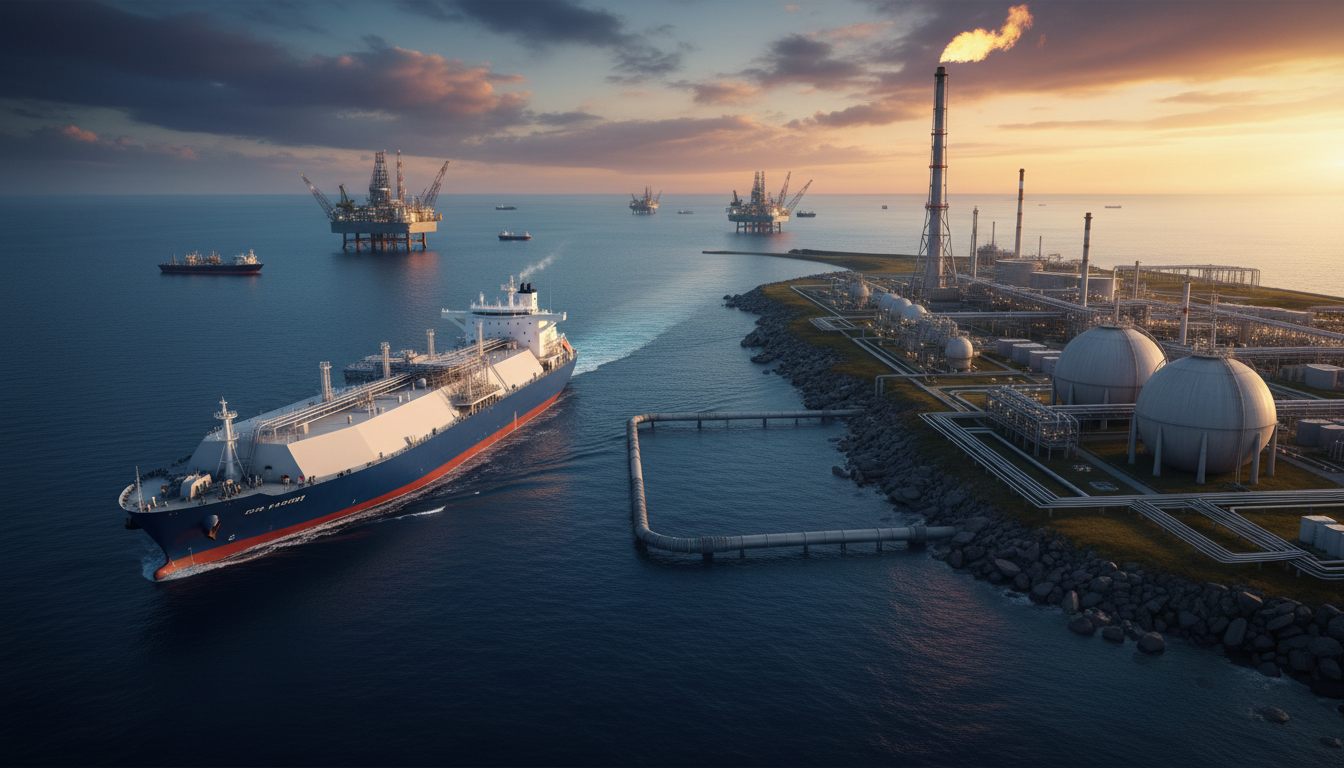
In a decisive move to fortify its energy supply chain, GAIL (India) Ltd has cemented a long-term charter party agreement for an advanced liquefied natural gas (LNG) carrier, the “Energy Fidelity.” This strategic acquisition, executed with Alpha Gas through its Singapore-based affiliate, Pantheon Maritime Services Pvt Ltd, is far more than a simple vessel procurement; it represents a critical step in de-risking India’s energy imports amidst a turbulent global landscape. For investors, this action underscores GAIL’s commitment to operational resilience, cost predictability, and adherence to national strategic imperatives, positioning the company robustly against future market shocks and geopolitical uncertainties.
Geopolitical Volatility Drives Long-Term Security
GAIL’s latest shipping commitment arrives at a crucial juncture, directly addressing vulnerabilities exposed by recent global disruptions. The early March 2026 escalation of the West Asia conflict, particularly the US-Israeli strikes on Iran and subsequent restrictions impacting the vital Strait of Hormuz, directly challenged GAIL’s established supply lines. These events led to temporary halts in crucial Qatar-linked LNG deliveries, forcing the Indian energy giant to rely on more costly and less predictable spot market purchases and agile supply reallocations. This experience highlighted the indispensable need for robust, long-term chartered shipping assets to maintain an uninterrupted flow of energy.
The long-term charter of the “Energy Fidelity” is a direct response to these lessons learned. By securing dedicated shipping capacity, GAIL significantly mitigates its exposure to volatile spot freight rates and the logistical bottlenecks that arise during periods of geopolitical tension. This proactive measure not only enhances India’s energy security by ensuring reliable access to vital LNG supplies but also provides GAIL with greater control over its operational costs, a key factor for maintaining profitability in a commodity-driven business. It’s a strategic pivot from reactive spot market reliance to a more stable, planned logistics framework.
Advanced Vessel Technology: Efficiency and ESG Benefits
The “Energy Fidelity” is not merely an additional vessel; it embodies a forward-thinking investment in efficiency and environmental sustainability. With an impressive cargo capacity of 174,000 cubic meters, this carrier is equipped with state-of-the-art technologies designed to optimize performance and significantly reduce its ecological footprint. Key features include a two-stroke propulsion system, widely recognized for its superior fuel efficiency and lower emissions profile, alongside innovative air lubrication technology and shaft generators. These advancements are engineered to collectively improve fuel economy and curtail greenhouse gas emissions, aligning perfectly with global efforts toward sustainable shipping practices.
For investors, these technological specifications translate into tangible long-term benefits. Enhanced fuel efficiency means reduced operational expenditures, providing GAIL with a competitive advantage in the cost-intensive LNG shipping sector. Furthermore, the commitment to lower emissions resonates strongly with increasing investor demand for robust Environmental, Social, and Governance (ESG) performance. This partnership with Alpha Gas, a reputable name in maritime transport, further instills confidence in GAIL’s operational resilience and its sophisticated logistics strategy, ensuring a modern and efficient fleet for future operations.
Navigating Market Volatility: A Long-Term Anchor for Investors
The timing of GAIL’s long-term shipping commitment is particularly relevant given the current dynamics in global energy markets. As of today, Brent crude trades at $94.05, reflecting a +0.87% increase over the last 24 hours. However, this slight daily uptick follows a notable 14-day decline of approximately 7%, moving from $101.16 on April 1st to $94.09 on April 21st, illustrating the persistent volatility in the global oil complex. Similarly, WTI crude stands at $90.3, up 0.7%, while gasoline prices are at $3.13, up 0.32%. This fluctuating environment underscores the broader investor focus on price direction, a sentiment reflected in frequent inquiries from our readers asking about the future trajectory of crude prices and what the oil price per barrel might be by the end of 2026.
GAIL’s move acts as a strategic anchor in such an unpredictable market. By locking in long-term shipping rates, the company insulates itself from potential spikes in spot LNG freight costs that often accompany rising energy demand or geopolitical disruptions. This provides a level of cost predictability that is invaluable for financial planning and risk management. While crude oil and natural gas prices will inevitably fluctuate, securing transportation capacity now means GAIL can focus on optimizing its LNG procurement and distribution, rather than being at the mercy of the volatile shipping market. This strategy offers investors a degree of stability in GAIL’s operational outlook, irrespective of short-term energy price movements.
Strategic Alignment with India’s Maritime Vision and Future Demand
GAIL’s proactive securing of LNG shipping capacity is deeply embedded within India’s ambitious “Maritime Amrit Kaal Vision 2047.” This overarching national initiative aims to comprehensively transform the nation’s maritime sector, encompassing significant improvements in port infrastructure, shipping capabilities, and the entire maritime energy supply chain. For GAIL, aligning with this vision means not only enhancing its own operational capabilities but also contributing directly to India’s broader energy security and economic growth objectives.
Looking ahead, investors should closely monitor upcoming energy reports that will provide further context for GAIL’s strategic positioning. Key data points include the EIA Weekly Petroleum Status Reports scheduled for April 29th and May 6th, as well as the crucial EIA Short-Term Energy Outlook on May 2nd. These reports will offer insights into global supply-demand balances, inventory levels, and refined price forecasts for both crude oil and natural gas, directly influencing the demand landscape for LNG. By locking in long-term shipping capacity now, GAIL is strategically positioning itself to meet India’s anticipated long-term energy demand growth, ensuring reliable access to global LNG markets and reinforcing its role as a cornerstone of India’s evolving energy matrix.


