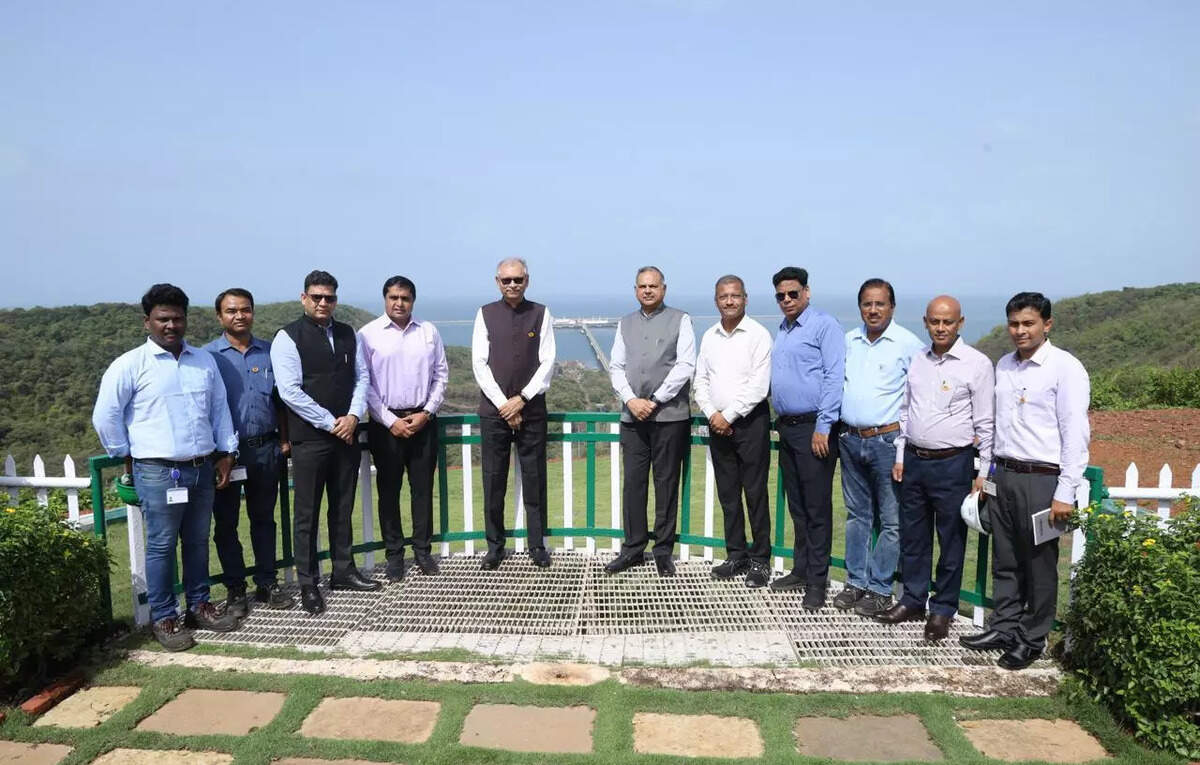
India’s energy landscape is undergoing a significant transformation, driven by a dual imperative: meeting burgeoning demand and transitioning towards a cleaner energy mix. At the heart of this evolution lies robust infrastructure development, particularly in natural gas. GAIL (India) Limited’s recent commissioning of the breakwater at its Dabhol LNG Terminal marks a pivotal moment, transforming the facility into an all-weather port and setting the stage for substantial capacity expansion. This strategic enhancement not only bolsters India’s energy security but also presents a compelling long-term investment narrative amidst a dynamic global energy market.
Dabhol’s Transformation: A New Era of Reliability for India’s Gas Supply
The successful commissioning of the breakwater at the Dabhol LNG Terminal, celebrated with the berthing and unloading of the GAIL Bhuwan LNG vessel on June 2, 2025, is a game-changer for India’s west coast energy logistics. Historically, the southwest monsoon season has posed significant challenges to marine operations, leading to disruptions in LNG imports. With this advanced island-type breakwater now fully operational and statutory approvals secured, Dabhol has been designated an all-weather port, guaranteeing uninterrupted, year-round LNG operations. This engineering feat, a testament to extensive coordination and customized technical solutions, immediately enhances the terminal’s capacity utilization and ensures a more reliable flow of natural gas into the national grid. Currently operating at 5.0 million metric tonnes per annum (MMTPA) regasification capacity, the terminal is a critical artery, seamlessly connected to the Dabhol-Bangalore and Dabhol-Panvel cross-country pipelines, serving vital industrial and domestic demand across several states.
Scaling Up: GAIL’s Vision for Enhanced LNG Throughput
Beyond the immediate benefits of year-round operability, GAIL has laid out ambitious plans for the Dabhol terminal’s future. The company intends to expand the facility’s capacity from its current 5.0 MMTPA to 6.3 MMTPA in the first phase, a strategic initiative slated for completion over the next three years. This expansion is projected to significantly increase throughput, enabling the terminal to handle up to 100 LNG cargoes annually. Such an increase in capacity is directly aligned with GAIL’s broader objective of strengthening India’s energy infrastructure and ensuring greater reliability in the natural gas supply chain. For investors, this planned growth signals a clear commitment to leveraging India’s rising natural gas consumption, a trend driven by industrialization, urbanization, and the nation’s push for cleaner energy sources. The expansion positions Dabhol, and by extension GAIL, as a key enabler of India’s long-term energy strategy.
Market Volatility vs. Infrastructure Stability: An Investor’s Lens
Against the backdrop of GAIL’s foundational infrastructure advancements, the broader energy market continues to exhibit significant volatility. As of today, Brent crude trades at $90.38, reflecting a notable decline of 9.07% within the day, while WTI sits at $82.59, down 9.41%. This intraday movement follows a more extended trend, with Brent having fallen by $20.91, or 18.5%, from $112.78 on March 30th to $91.87 on April 17th. Our proprietary reader intent data reveals investors are keenly focused on navigating these market fluctuations, with frequent queries such as “what do you predict the price of oil per barrel will be by end of 2026?” and “What are OPEC+ current production quotas?” These questions underscore a desire for clarity amidst an uncertain crude market. However, strategic investments in critical natural gas infrastructure like Dabhol offer a distinct value proposition. While crude prices may swing dramatically due to geopolitical tensions or supply-demand imbalances, the long-term demand for natural gas in a rapidly developing economy like India provides a more stable growth trajectory. Dabhol’s enhanced reliability and expanded capacity represent a defensive, yet growth-oriented, play that offers a degree of insulation from the short-term gyrations dominating the oil headlines.
Upcoming Catalysts and the Long-Term Outlook for Indian Gas
The next two weeks will bring several key events that could influence energy market sentiment. Investors will closely monitor the OPEC+ Joint Ministerial Monitoring Committee (JMMC) and full Ministerial meetings on April 18th and 19th, which could signal shifts in global crude supply policy. Subsequent weekly releases of the API and EIA crude inventory reports, alongside the Baker Hughes Rig Count, will provide ongoing insights into North American supply dynamics. While these events are crucial for short-term trading and crude market analysis, GAIL’s Dabhol expansion operates on a multi-year horizon, fundamentally strengthening India’s energy backbone. The planned capacity increase over the next three years demonstrates a long-term commitment to natural gas as a cornerstone of India’s energy future, regardless of immediate crude price movements. For investors looking beyond daily headlines, GAIL’s strategic move at Dabhol positions it well to capitalize on India’s inevitable rise in natural gas consumption, offering a compelling opportunity in a sector characterized by sustained demand and critical infrastructure development.


