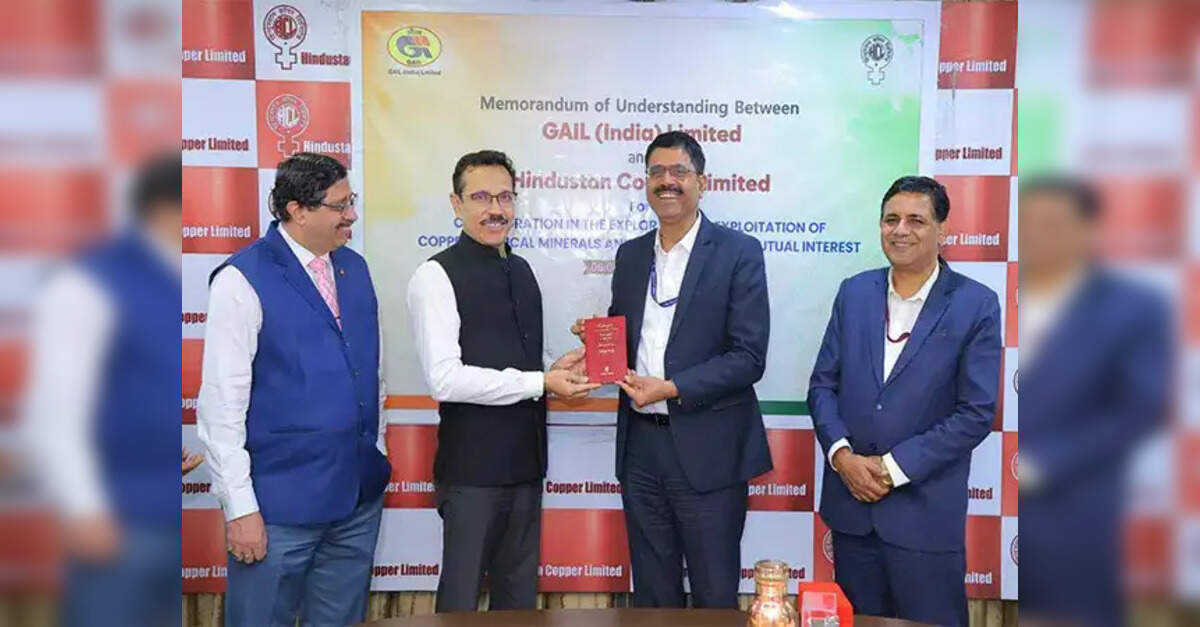
India’s energy landscape is undergoing a profound transformation, driven by national ambitions for energy security and a rapid pivot towards cleaner sources. In this dynamic environment, GAIL (India) Limited’s recent Memorandum of Understanding (MoU) with Hindustan Copper Limited (HCL) to explore and develop critical mineral resources in India and abroad represents a pivotal strategic move. This collaboration is far more than a simple partnership; it signifies a conscious decision by a major state-owned energy player to diversify its portfolio into the very bedrock of the clean energy revolution. For investors, this move warrants close attention, as it positions GAIL not just as a gas transmission giant, but as an emerging participant in the critical minerals supply chain essential for renewable energy, electric mobility, and advanced electronics manufacturing. This analysis will delve into the strategic rationale, market context, and forward-looking implications for investors eyeing India’s evolving energy sector.
Strategic Imperative: Fueling India’s Green Future
GAIL’s venture into critical minerals, particularly in collaboration with HCL, underscores a clear strategic imperative aligned with India’s national interests. Critical minerals such as copper, lithium, cobalt, and rare earth elements are the indispensable building blocks for the technologies driving the global energy transition. From the batteries powering electric vehicles to the solar panels capturing sunlight and the wind turbines harnessing kinetic energy, these minerals are in high demand. India currently relies heavily on imports for a significant portion of these resources, particularly from China, creating a vulnerability that this partnership aims to address. By combining GAIL’s extensive experience in energy infrastructure and project development with HCL’s deep expertise in mineral exploration and mining, the MoU seeks to enhance India’s domestic capacity to source, process, and ultimately utilize these vital materials. This commitment to reducing import dependence and fostering self-reliance not only bolsters India’s long-term energy security but also positions GAIL at the forefront of a sustainable development agenda, expanding beyond its core natural gas and petrochemical operations into a crucial segment of the future energy economy.
Market Dynamics and the Critical Minerals Play
Understanding GAIL’s diversification requires a look at the broader energy market context. As of today, April 16, 2026, Brent Crude trades at $99.6, marking a significant 4.92% gain for the day, with a range between $94.42 and $99.73. WTI Crude similarly saw a robust increase of 3.85% to $91.52. This daily rebound comes after a notable period of volatility, where Brent experienced a 12.4% decline, shedding $13.43 from $108.01 on March 26 to $94.58 on April 15. Such fluctuations in the traditional oil markets highlight the inherent volatility of hydrocarbon commodities, which can influence investment decisions across the energy spectrum. While GAIL’s core business remains in natural gas, its strategic pivot into critical minerals offers a valuable hedge against this volatility, aligning capital with the accelerating energy transition. High crude prices, as seen today, can inadvertently accelerate the economic viability of renewable alternatives, thereby increasing demand for critical minerals. Conversely, sustained low prices might slow some transition projects, but the long-term structural demand for these minerals remains robust due to global decarbonization efforts and technological advancements, positioning GAIL for future growth irrespective of short-term crude swings.
Investor Questions and Forward-Looking Catalysts
Investors are keenly observing the evolving energy landscape, with frequent inquiries into market drivers. For instance, many are asking about the factors driving Asian LNG spot prices this week, a direct reflection of GAIL’s primary business. While LNG markets are influenced by regional demand, weather patterns, and supply chain logistics, GAIL’s foray into critical minerals offers a strategic buffer against potential downturns or increased competition in its gas segment. Similarly, questions regarding the base-case Brent price forecast for the next quarter and the consensus 2026 Brent forecast underscore the market’s focus on macro energy trends. GAIL’s critical minerals initiative diversifies its risk profile, allowing it to capture growth in a segment less directly tied to these traditional oil price forecasts. Looking ahead, several upcoming events will shape the broader investment climate. The OPEC+ Joint Ministerial Monitoring Committee (JMMC) meeting on April 18 and the Full Ministerial meeting on April 20 are critical for crude supply outlooks. EIA Weekly Petroleum Status Reports on April 22 and 29, alongside API Crude Inventory data on April 21 and 28, will provide vital insights into U.S. demand and supply dynamics. While not directly related to mining, these events influence global capital allocation and investor confidence, indirectly impacting the appetite for strategic diversification plays like GAIL’s. Investors will monitor these catalysts for signals on overall energy market health, which can influence the financing and perceived value of long-term strategic shifts into new commodity streams.
Investment Implications and Long-Term Outlook for GAIL
For investors, GAIL’s strategic move into critical minerals, initiated with the MoU in August 2025, represents a significant recalibration of its long-term growth strategy. As a “Maharatna” central public sector enterprise, GAIL has a mandate not only for commercial success but also for contributing to national development. This diversification aligns perfectly with both. From an investment perspective, it enhances GAIL’s resilience by reducing its sole reliance on the fluctuating natural gas and petrochemical markets. The critical minerals sector, while capital-intensive and requiring specialized expertise, offers substantial long-term growth potential driven by an irreversible global energy transition. The partnership with HCL, a company with established mineral exploration and mining strengths, is crucial for mitigating execution risks. Investors should view this as GAIL positioning itself for the next generation of energy infrastructure, where the value chain extends beyond traditional hydrocarbons to include the essential raw materials for clean energy technologies. While the returns on critical mineral projects may materialize over a longer horizon, this proactive step provides a future-proof dimension to GAIL’s portfolio, offering exposure to high-growth sectors and potentially unlocking new revenue streams that will be increasingly vital in the decarbonized economy of tomorrow. This strategic foresight could translate into sustained value creation for shareholders who understand the long-term trajectory of global energy demand.


