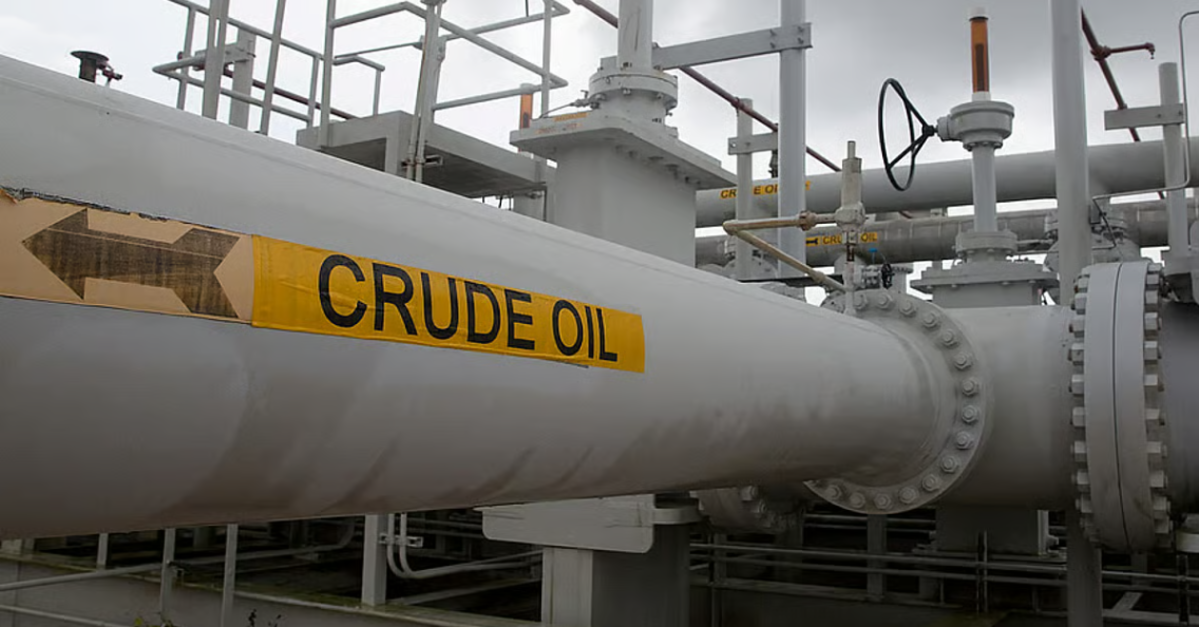
New Delhi’s commodity markets witnessed a notable softening in crude oil futures trading today, as participants adjusted their positions amidst signals of subdued demand in the immediate physical market. This latest development provides critical insight for investors navigating the volatile energy landscape, underscoring the delicate balance between futures expectations and real-time consumption trends.
Domestic Futures Contract Sees Price Contraction
On the Multi Commodity Exchange (MCX), the benchmark crude oil contract designated for July delivery experienced a decline of Rs 44, settling at Rs 5,709 per barrel. This reduction represents a 0.76 percent dip from previous levels, reflecting a cautious sentiment pervading the trading floor. The trading volume for this particular contract registered 12,961 lots, indicating active participation even as prices moved downwards. This specific movement highlights the sensitivity of India’s commodity derivatives market to immediate supply-demand dynamics, often acting as a bellwether for broader economic activity and industrial energy consumption.
Market analysts attribute this price contraction primarily to participants offloading their holdings, a direct response to weakening demand observed in the spot market. When physical market transactions show signs of sluggishness, it often prompts futures traders to recalibrate their expectations, leading to position trimming. This dynamic is crucial for investors to monitor, as a disconnect between futures and spot prices can signal underlying shifts in market fundamentals or short-term speculative pressures.
The Influence of Spot Market Dynamics
Understanding the interplay between futures and spot markets is paramount for energy investors. Futures contracts, by their nature, are agreements to buy or sell a commodity at a predetermined price on a future date. They are heavily influenced by expectations of future supply and demand. However, when the immediate, or “spot,” market – where oil is bought and sold for prompt delivery – shows signs of weakness, it can significantly impact these future expectations. A persistent lack of robust spot demand can signal oversupply, dwindling industrial appetite, or even broader economic deceleration. Refineries might be running at lower capacities, or consumer fuel demand could be softer than anticipated, leading to an accumulation of inventories that pressure prices across the entire curve, from prompt to deferred contracts.
For investors, a decline driven by weak spot demand is often more concerning than one caused by purely speculative trading. It suggests a fundamental imbalance rather than transient market noise. Monitoring indicators such as refinery utilization rates, finished product inventories, and import/export data for various petroleum products can offer early warnings of shifts in spot demand and their potential ramifications for futures prices.
Global Benchmarks Mirror Downward Trend
The domestic market’s performance today was not an isolated event; it echoed a broader trend observed in international crude oil benchmarks. West Texas Intermediate (WTI) crude, the primary benchmark for North American oil, was trading 0.96 percent lower, settling at USD 66.80 per barrel. Concurrently, Brent Crude, the international standard, saw a decline of 0.88 percent, reaching USD 68.50 per barrel in New York trading. The synchronized decline across these major benchmarks underscores a collective market apprehension regarding global oil demand, or perhaps an anticipated increase in supply.
The difference between WTI and Brent, often referred to as the Brent-WTI spread, remains a key indicator for energy traders. While both moved downwards, their respective percentages indicate similar underlying pressures. Global factors influencing these benchmarks include the macroeconomic outlook in major consuming nations like China and the United States, the ongoing production policies of OPEC+ members, and any geopolitical tensions that could impact supply routes or demand centers. A global softening in prices often puts downward pressure on domestic markets, even with localized demand variations, due to the highly interconnected nature of the international oil trade.
Investor Outlook: Navigating Volatility and Fundamental Shifts
For investors in the oil and gas sector, today’s market movements serve as a reminder of the inherent volatility and the critical importance of staying attuned to both micro and macro-level signals. While a single day’s decline may not dictate a long-term trend, the underlying reason—weak spot demand—warrants close scrutiny. Investors should consider how these short-term pressures might influence earnings for exploration and production (E&P) companies, refining margins, and the overall trajectory of energy transition investments.
Position trimming by participants on the MCX suggests a cautious stance, which could persist if fundamental demand remains sluggish. Long-term investors, while often weathering daily price swings, must evaluate whether this dip signals a temporary blip or the beginning of a more sustained period of lower demand and potentially softer prices. Strategic portfolio allocation, risk management through diversification, and a deep understanding of company-specific hedges against price fluctuations become even more critical during such periods. Monitoring global inventory levels, particularly in key storage hubs, and tracking economic indicators that influence industrial output and consumer mobility will be essential for making informed investment decisions in the coming weeks and months.
Looking Ahead: Key Drivers for the Energy Market
As we move forward from this July 3, 2025, trading session, the global energy market remains a complex interplay of supply, demand, and geopolitical factors. The immediate future of crude oil prices will largely depend on the evolution of global economic growth, particularly in Asia, and the ability of major oil producers to manage supply effectively. Any unexpected shifts in production from non-OPEC+ nations, coupled with changes in demand patterns driven by economic stimulus or recessionary pressures, could quickly alter the current trajectory.
Investors should continue to monitor reports on crude oil inventories, refining throughputs, and the forward curves for both WTI and Brent. A widening contango (where futures prices are higher than spot prices) could indicate an expectation of future oversupply or rising storage costs, while backwardation (spot prices higher than futures) often signals tight supply. Understanding these nuances is key to anticipating market direction and positioning investment portfolios effectively in the dynamic realm of oil and gas commodities.


