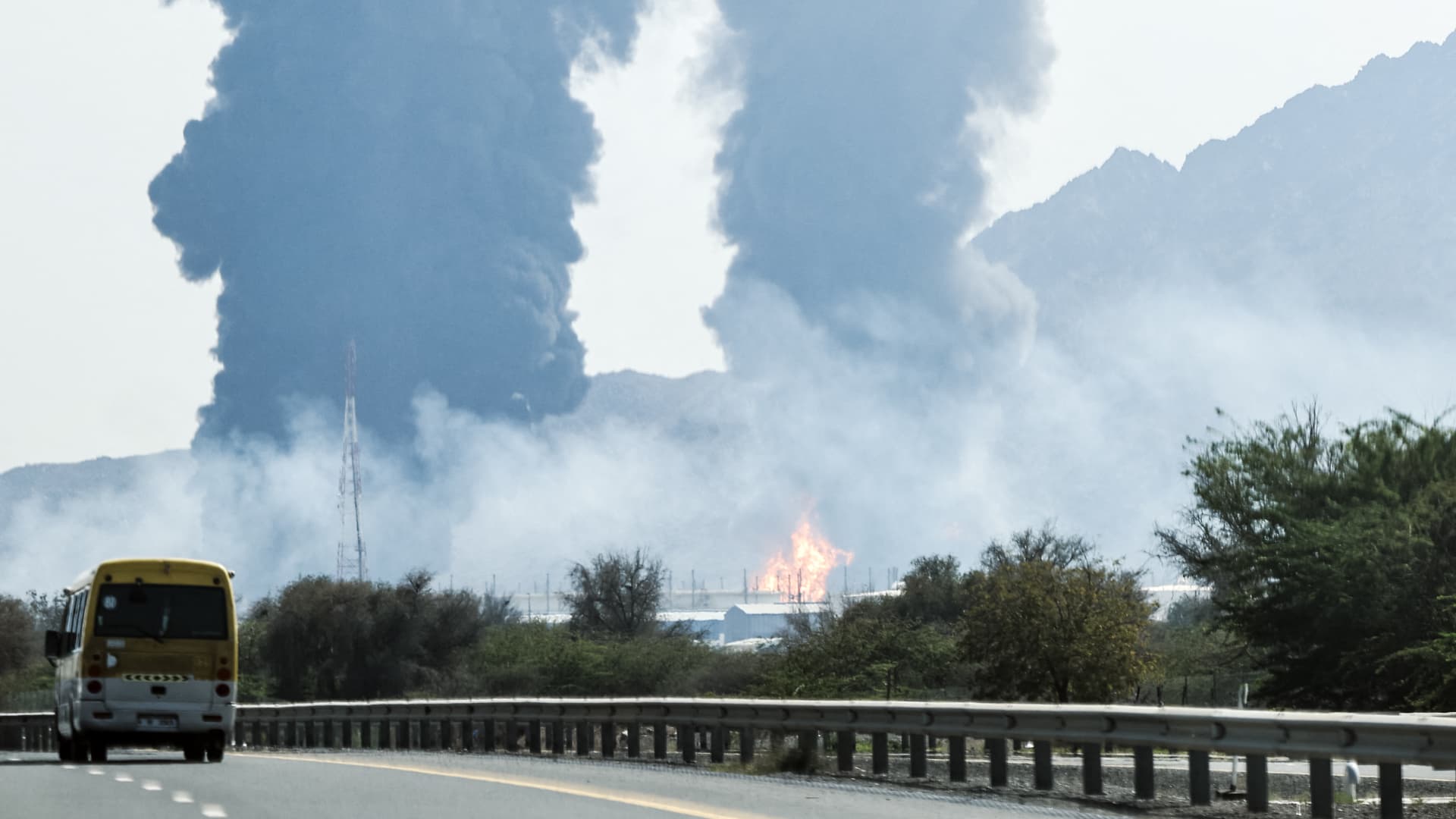
The global oil market remains a crucible of geopolitical tension and supply chain vulnerabilities, a reality starkly underscored by the recent events in the UAE’s Fujairah port. While reports confirm that oil loading operations have swiftly resumed following a drone strike and fire, the incident serves as a potent reminder of the inherent risks embedded in the Middle East’s energy infrastructure. For investors navigating this volatile landscape, understanding the immediate market reactions and the broader implications of such events is paramount. This analysis delves into the market’s current pulse, forward-looking indicators, and the pressing questions investors are asking, all viewed through the lens of OilMarketCap’s proprietary data.
Market Resilience Amidst Lingering Geopolitical Shadows
The swift resumption of operations at Fujairah, a critical oil bunkering and storage hub, undoubtedly prevented a more significant market shock. As of today, Brent crude trades at $92.9 per barrel, marking a marginal decrease of 0.36% within a daily range of $92.57 to $94.21. Similarly, WTI crude stands at $89.24, down 0.48%, fluctuating between $88.76 and $90.71. Gasoline prices also reflect this slight easing, currently at $3.11, down 0.64%. These figures suggest that the market, while sensitive to disruption headlines, is pricing in the rapid resolution of the Fujairah incident rather than a prolonged supply bottleneck.
However, a broader look at the 14-day trend for Brent crude reveals a more nuanced picture. Brent has retreated significantly from its recent highs, falling from $101.16 on April 1st to $94.09 on April 21st, representing a 7% decline over three weeks. This downward trajectory indicates that while specific events like the Fujairah strike can introduce immediate volatility, underlying market forces, potentially including demand concerns or a perception of overall supply stability despite regional tensions, are also at play. The prompt restoration of Fujairah’s operations likely contributed to preventing a reversal of this trend, mitigating what could have been a sharp upward price correction had the disruption persisted.
Navigating Future Volatility: Upcoming Events and Strategic Chokepoints
While the immediate crisis at Fujairah has passed, the wider geopolitical chessboard remains highly active, promising continued volatility. Iran’s explicit threats to attack key UAE ports—Jebel Ali, Khalifa, and Fujairah—coupled with the US military action against targets on Iran’s Kharg Island, intensify the risk premium in energy markets. Kharg Island is not merely a military target; it is the lynchpin of Iran’s crude exports, handling roughly 90% of the country’s oil and boasting a loading capacity of around 7 million barrels per day. Any sustained disruption to operations there would send shockwaves through global supply, dwarfing the impact of a temporary halt in Fujairah.
Investors must calibrate their strategies with upcoming energy data releases. The EIA Weekly Petroleum Status Reports, scheduled for April 22nd and April 29th, will offer crucial insights into US crude oil inventories, refinery utilization, and product supplied. These reports, alongside the API Weekly Crude Inventory data on April 28th and May 5th, will provide critical snapshots of demand and supply dynamics. Against a backdrop of heightened Gulf tensions, a significant draw in inventories could amplify price pressures, especially if perceived threats to maritime transit persist. Furthermore, the EIA Short-Term Energy Outlook on May 2nd will offer a macro perspective, potentially incorporating updated geopolitical risk assessments into its forecasts, which could significantly influence market sentiment for the coming months.
Addressing Investor Concerns: Price Predictions and Risk Management
The constant flux in geopolitical events and market fundamentals naturally leads investors to ask pressing questions: “Is WTI going up or down?” and “What do you predict the price of oil per barrel will be by the end of 2026?” The Fujairah incident perfectly illustrates the challenge of precise forecasting in today’s environment. While the rapid resumption of operations prevented an immediate price surge, the underlying threat landscape has undeniably intensified. This creates a market characterized by sharp, event-driven swings rather than predictable trends.
For investors, the key lies in understanding the probabilities and managing risk. The market is currently pricing in a significant geopolitical risk premium, which can expand or contract based on headlines from the Middle East. While a direct, sustained attack on a major facility like Kharg Island or the prolonged closure of a key hub like Fujairah would undoubtedly propel oil prices well above current levels, the market has also demonstrated resilience to temporary disruptions. Predicting an exact end-of-year price for 2026 is speculative; instead, investors should focus on scenario planning. Prices could easily re-test, and potentially breach, the $100 per barrel mark if geopolitical tensions escalate into tangible supply disruptions, or retreat further if diplomatic solutions emerge and global demand softens. The current environment demands agility and a keen eye on both fundamental data and geopolitical developments.
The Strategic Significance of Gulf Energy Hubs
The UAE’s Fujairah port holds immense strategic importance beyond its immediate operational capacity. Situated outside the Strait of Hormuz, it provides a vital alternative for oil storage and bunkering, bypassing the world’s most critical oil transit choke point. This geographical advantage makes any threat or disruption to Fujairah particularly concerning for global energy security and supply chain diversification efforts. The rapid containment and resumption of operations highlight the UAE’s robust infrastructure and emergency response capabilities, which likely prevented a more severe market reaction.
However, Iran’s explicit threats against Fujairah, Jebel Ali, and Khalifa, claiming them as “legitimate targets,” underscore a dangerous escalation in regional rhetoric. Such declarations inherently raise the perceived risk for maritime insurance and shipping operations throughout the Gulf, potentially leading to higher costs and increased logistical complexities for oil transportation. While the US strike on Kharg Island signals a clear red line regarding Iranian export infrastructure, the reciprocal threats against UAE ports indicate a widening scope of potential conflict. Investors must integrate this expanded risk matrix into their assessments, recognizing that even the perception of vulnerability in key transit and storage hubs can significantly influence crude oil prices and the overall stability of the global energy market.


