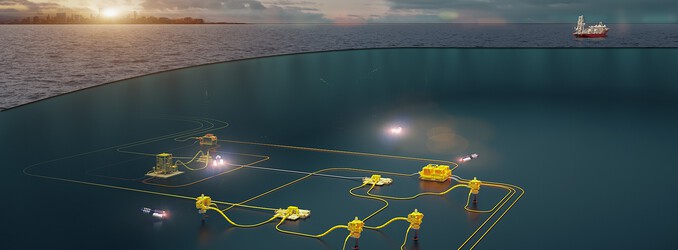
The energy sector is witnessing a compelling divergence, and for astute investors, the recent performance of TechnipFMC PLC (FTI) offers a powerful signal. Shares in the offshore oil gear giant surged by as much as 12% this week, hitting their highest intraday level since November 2014. This robust market reaction comes on the back of FTI’s ambitious forecast: an expectation to generate roughly $10 billion or more in subsea orders for the current year, with a similar trajectory projected for 2027. This isn’t just a win for one company; it underscores a profound optimism within the offshore oil development segment, suggesting a resilient growth story taking root amidst broader market fluctuations and a maturing shale landscape.
The Offshore Renaissance: A Decade-High Signal for Investors
TechnipFMC’s latest quarterly results have provided a tangible illustration of the burgeoning confidence in deepwater exploration and production. The company’s impressive outlook, targeting $10 billion in subsea orders for 2026 and beyond, is a clear indicator that major producers are committing significant capital to long-cycle projects. This commitment is particularly notable given the current market dynamics. In the second quarter alone, FTI secured $2.6 billion in subsea gear orders, handily surpassing the $2.2 billion anticipated by analysts, including Citigroup. This strong order beat, coupled with adjusted earnings that exceeded average analyst estimates, points to robust operational execution and demand.
What makes this surge even more compelling for investors is the nature of these orders. Nearly half of the recent awards were tied to greenfield projects – undeveloped sites – a strategic move by exploration and production companies to secure future supply. As TechnipFMC’s CEO, Douglas Pferdehirt, highlighted, subsea services are operating at one of the highest quarterly levels ever for the company. This focus on new developments, rather than just maintenance or incremental expansions, signals a long-term investment horizon from operators and a belief in the sustained economic viability of offshore resources, setting it apart from the often shorter-cycle, more price-sensitive shale plays.
Navigating Current Oil Price Volatility: Offshore’s Resilience Amidst Headwinds
The optimism surrounding the offshore sector arrives at a time when the broader crude oil market is experiencing significant volatility. As of today, April 18, 2026, Brent crude trades at $90.38 per barrel, marking a 9.07% decline on the day, with its price ranging from $86.08 to $98.97. Similarly, WTI crude is priced at $82.59, down 9.41%. This intraday drop follows a noticeable trend: over the past 14 days, Brent crude has seen a substantial correction, falling from $112.78 on March 30 to $91.87 yesterday, representing an 18.5% decrease. Such price movements typically cast a shadow over energy investments, yet the offshore segment appears to be charting a different course.
This resilience of offshore development, even as weaker oil prices challenge shale production, underscores a fundamental difference in investment rationale. While shale output can be rapidly adjusted in response to price signals, deepwater projects demand multi-year planning and substantial upfront capital. Producers in regions like the Gulf of Mexico are bringing online major, longer-term projects that are less susceptible to short-term price fluctuations once sanctioned. The commitment to a $10 billion subsea order pipeline indicates that operators are looking past immediate price swings, focusing instead on securing future supply from high-quality, long-life assets. For investors, this translates into a more stable earnings visibility for key offshore service providers, offering a potential hedge against the inherent volatility of crude prices.
Forward Catalysts and Investor Outlook: What’s Next for Crude and Offshore Investments?
Looking ahead, several key events on the energy calendar will shape the landscape for both crude prices and the investment appeal of the offshore sector. This weekend, the market will be fixated on the OPEC+ meetings, with the Joint Ministerial Monitoring Committee (JMMC) convening today, April 18, followed by the Full Ministerial meeting on April 19. Investors are keenly watching for any shifts in production quotas, a question frequently asked by our readers, as these decisions will heavily influence global supply and, by extension, crude prices. A sustained commitment to supply management from OPEC+ could provide the price stability necessary to continue fueling long-term offshore project sanctioning.
Beyond OPEC+, weekly data releases will offer further insights. The API Weekly Crude Inventory reports on April 21 and April 28, followed by the EIA Weekly Petroleum Status Reports on April 22 and April 29, will provide critical information on U.S. supply and demand dynamics. Additionally, the Baker Hughes Rig Count on April 24 and May 1 will be closely monitored for indications of drilling activity, particularly to observe the ongoing divergence between onshore and offshore rig deployments. Many of our readers are asking about the predicted price of oil per barrel by the end of 2026. While no analyst can offer a definitive answer, the robust subsea order book, coupled with anticipated global demand growth and potential OPEC+ supply discipline, suggests a baseline of sustained demand that supports prices conducive to offshore investment, even if short-term volatility persists. The long lead times for subsea projects mean their viability is often predicated on a longer-term oil price outlook, making them somewhat insulated from immediate market noise.
Strategic Implications for Energy Portfolios: Beyond Short-Term Swings
The strong performance and outlook from TechnipFMC serve as a potent reminder that not all energy investments are created equal. In a market characterized by rapid technological advancements and geopolitical shifts, the offshore sector is reasserting its strategic importance. For investors seeking to diversify their energy portfolios beyond the often-cyclical nature of shale, companies deeply embedded in the offshore value chain, like FTI, present a compelling long-term opportunity.
The multi-year visibility provided by a $10 billion-plus order pipeline, extending into 2027, offers a level of earnings predictability that is rare in the volatile oil and gas industry. This stability is particularly attractive when considering the capital intensity and long operational lives of deepwater assets. As global energy demand continues to grow and easily accessible onshore reserves mature, the strategic imperative for major energy companies to develop complex, high-yield offshore projects only intensifies. Investors should view the current momentum in the offshore services segment not merely as a temporary upswing, but as evidence of a structural shift towards significant, long-term capital allocation in deepwater resources, positioning these companies as core holdings for sustained growth in the evolving energy landscape.