

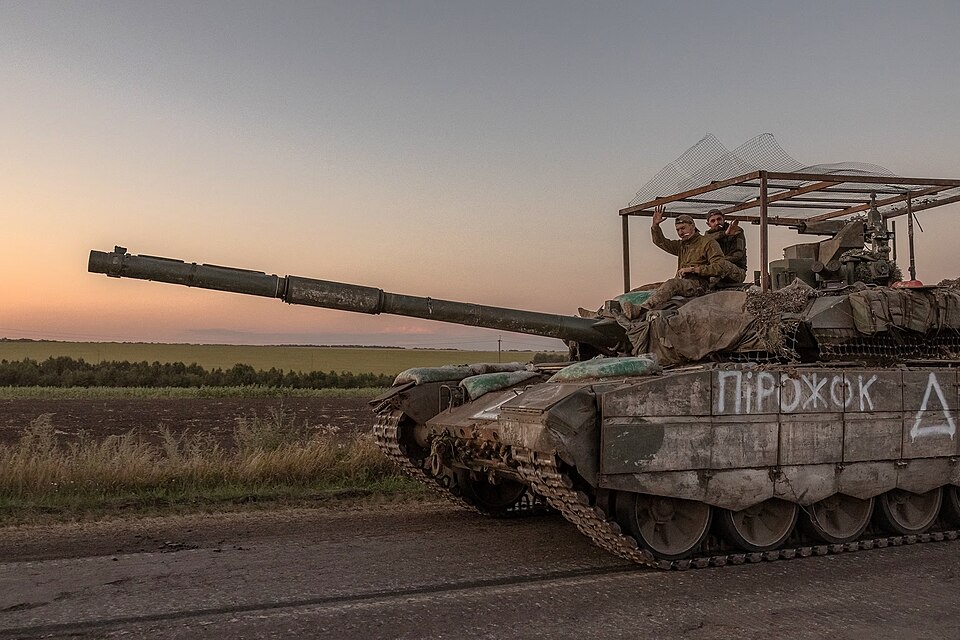
Four years after Russian troops crossed into Ukraine on 24 February 2022, the war has settled into something more troubling – a grinding conflict that continues to destroy lives and livelihood, and test the limits of international law. The early drama of invasion has given way to sufferings and anxieties, and there is hardly any substantive move toward peace.
The front line stretches for roughly 1,200 kilometres. Russia today controls about one-fifth of Ukrainian territory, but its gains since 2022 have been slow and costly. Estimates suggest that up to 1.8 million soldiers on both sides have been killed, wounded or gone missing. Civilian losses remain severe. The UN has documented nearly 15,000 civilian deaths and more than 40,000 injuries, while warning the true number is higher.
Recent months show little improvement. Civilian casualties rose sharply in 2025, and attacks on energy infrastructure have left millions with only a few hours of electricity each day in sub-zero winter temperatures. In frontline regions such as Kherson, children live underground, attending classes and sleeping in basements as shelling continues.
The war’s toll on women is also stark. UN estimates say that more than 5,000 women and girls have been killed and around 14,000 injured since the invasion, while blackouts threaten livelihoods and safety. Across the country, about 3.7 million people remain internally displaced and nearly six million live abroad as refugees.
According to international agencies, reconstruction costs now approach $588 billion, nearly three times Ukraine’s projected GDP for 2025. Housing, transport and energy systems are shattered. Even clearing unexploded ordnance will cost tens of billions. Humanitarian agencies continue to supply generators, heating equipment and repairs, but they openly admit that aid alone cannot replace a political settlement.
Imperial ambition and authoritarian logic
The Kremlin expected a quick victory. Instead, it faces a prolonged war that has drained resources and exposed the limits of Russian power. Russia’s leadership still insists the invasion is necessary to keep Ukraine out of NATO and secure Russian influence. But the outcome has been the opposite. Finland and Sweden joined NATO, extending the alliance’s border with Russia.
The invasion has also intensified authoritarian trends at home. Western sanctions froze foreign assets, tying elites more closely to the Kremlin. Meanwhile, corruption investigations and asset seizures inside Russia appear aimed at reinforcing central control and discipline within the bureaucracy.
Economic pressure is visible in everyday life. Rising taxes, inflation and war spending are squeezing households and small businesses. Public support often sounds like resignation — people adjusting to hardship and waiting for the conflict to end.
Putin’s strategy seems clear enough. Maintain pressure until Ukraine or its allies tire. His government continues to insist on territorial concessions, limits on Ukraine’s military and long-term neutrality. Whether these goals reflect security concerns or imperial ambition remains debated, but the war’s logic increasingly resembles an attempt to reassert Russian influence over its former sphere.
Ukraine’s struggle and the West
Ukraine has defied expectations. Kyiv still stands, Russian forces remain hundreds of kilometres away, and the Ukrainian military has grown into one of Europe’s most battle-hardened forces.
However, the costs are heavy. Recruitment is harder, infrastructure is devastated, and economic survival depends heavily on Western assistance. The European Union recently approved a €90-billion financial package to support Ukraine’s state and military functions.
Politically, Kyiv faces a delicate balancing act. President Zelensky insists on restoring Ukraine’s borders and securing firm guarantees. At the same time, he indicated openness to negotiations and elections if they are credible and backed by international security assurances.
Ukraine’s bargaining strategy reveals its reality. It must appear open to peace while avoiding concessions that could invite further Russian advances. This leaves Kyiv in a position of constant negotiation without clear leverage beyond military strength and Western backing.
Western governments portray the war as a defence of sovereignty and rules-based order. But their policies also involve strategic interests. NATO expansion, sanctions, and military aid all serve geopolitical aims.
The United States has pushed for negotiations while also using economic pressure. President Trump’s trade-centred diplomacy — including his tariff policy toward allies and rivals — sought to leverage economic tools as strategic weapons. The recent Supreme Court ruling limiting aspects of that tariff authority weakens that approach and complicates Washington’s attempt to use economic coercion alongside diplomacy.
European states continue to supply weapons and funding, but aid patterns are changing. Military assistance fell in some areas while European contributions increased to compensate Political unity remains unstable, as shown by disputes within the EU over sanctions and energy policy.
For many Western leaders, the war is both a moral cause and a strategic opportunity – a way to weaken Russia, reinforce alliances, and ensure European security. That dual motive explains why support persists even as public enthusiasm wanes.
The fading authority of international law
The war has clearly shown the limits of international institutions. The UN documented violations of humanitarian law, including torture and attacks on civilians. However, all countries know that enforcement remains weak. Appeals for ceasefires and humanitarian pauses have little effect without political consensus.
This situation reminds Cold War conflicts, where international institutions served essentially as forums for argument. The Ukraine war shows how quickly legal principles yield to power politics when major states are involved.
Diplomatic efforts may continue amid reports of attacks from both sides. Talks have been held in Geneva and Abu Dhabi, still both sides remain far apart. Russia demands territorial recognition and military limits. Ukraine insists on security guarantees and sovereignty. Neither side appears ready to compromise decisively.
On the battlefield, the conflict has proved to be a costly stalemate. Drones dominate the fighting, artillery flattens towns, and both sides hope time will tilt the balance in their favour.
The danger is that the war may outlast the political will to end it. History shows that wars of attrition often persist long after their original causes fade. What began as a dramatic invasion has become a prolonged struggle in which setbacks and sufferings matter more than victory.
[Photo by Mil.gov.ua, CC BY 4.0, via Wikimedia Commons]
The views and opinions expressed in this article are those of the author.
K.M. Seethi, Director, Inter University Centre for Social Science Research and Extension, is the Academic Advisor of the International Centre for Polar Studies at Mahatma Gandhi University, Kerala. He also served as ICSSR Senior Fellow, Senior Professor and Dean of International Relations at MGU.
