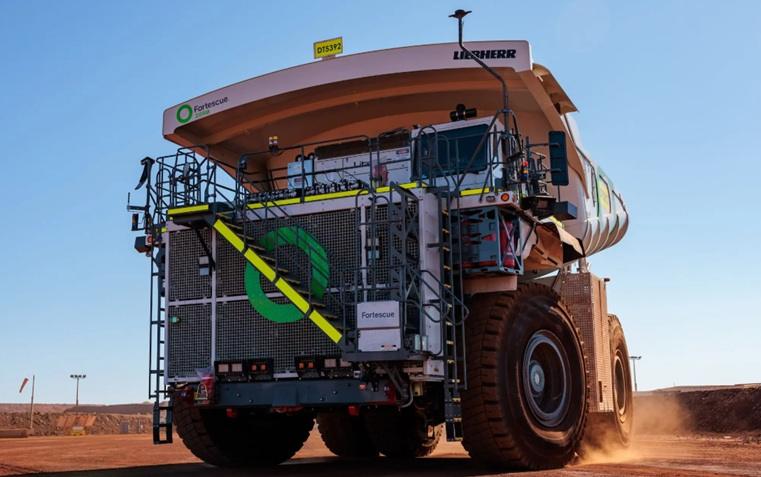
In a significant move reshaping the landscape of global energy transition financing, Australian mining giant Fortescue has secured a landmark RMB 14.2 billion (approximately USD$2 billion) syndicated term loan facility. This Renminbi-denominated financing, a first of its kind for an Australian corporate, underscores a strategic pivot towards Chinese partnerships for its ambitious decarbonization agenda. The development comes as Fortescue’s executive leadership publicly highlights a perceived retreat from green technology investment in the United States, positioning this Chinese-backed loan as a crucial signal of aligned ambition in the burgeoning global green industrial revolution. For investors, this transaction represents more than just a capital infusion; it’s a profound indicator of evolving geopolitical alignments and shifting investment opportunities within the broader energy sector.
A Strategic RMB Green Facility Signals Shifting Alliances
Fortescue’s decision to pursue RMB-denominated financing for its decarbonization efforts is a powerful statement. The RMB 14.2 billion facility, allocated for both general corporate purposes and specifically for green initiatives, directly supports the company’s commitment to achieving real zero Scope 1 and 2 terrestrial emissions by 2030 across its Australian iron ore operations. This ambitious target is backed by a substantial pledge to invest over $6 billion in decarbonizing its Pilbara assets. The move into Chinese financing follows Fortescue’s recent decision to halt investment in its Arizona Green Hydrogen Project, citing a “shift in policy priorities away from green energy” within the U.S. This strategic realignment suggests a proactive approach to secure capital and technological partnerships where policy environments and financial incentives are most conducive to its green transition goals. By embracing Chinese suppliers and technology leaders through this loan, Fortescue is not merely diversifying its funding sources but is actively forging deeper ties with a key economic partner that is also a major consumer of its iron ore.
China’s Role in Fortescue’s Decarbonization Drive and Broader Market Implications
Fortescue’s deep commercial ties with China are well-established, with the company shipping over 190 million tonnes of iron ore annually to support China’s vast steel industry. This new green loan further solidifies that relationship, extending it into the critical domain of sustainable development and technology. For investors monitoring the global energy landscape, this alignment raises important questions about China’s growing influence in the green technology space and its implications for commodity demand. Our proprietary data indicates that investor interest in Chinese industrial activity, particularly regarding “tea-pot” refinery operations, remains high this quarter. While Fortescue’s direct operations are in mining, the underlying demand for its iron ore is tied to China’s industrial output and infrastructure development, which in turn influences overall energy consumption patterns. A robust commitment from China to support green initiatives, as evidenced by this loan, suggests sustained industrial activity and a strategic focus on sustainable growth, which could influence long-term energy demand and commodity price stability, albeit with a growing emphasis on cleaner production methods.
Navigating Volatility: Investor Outlook Amidst Geopolitical Shifts and Market Dynamics
The strategic shifts highlighted by Fortescue’s financing come against a backdrop of significant volatility in the global energy markets. As of today, April 16, 2026, Brent Crude trades strongly at $99.75, marking a significant 5.08% daily increase and reaching the upper end of its day range ($94.42-$99.75). Similarly, WTI Crude stands at $91.68, up 4.03% for the day. This daily surge follows a period of notable decline; over the past 14 days, Brent crude experienced a 12.4% drop, falling from $108.01 on March 26 to $94.58 yesterday, April 15. This seesaw pattern reflects heightened investor uncertainty, a sentiment clearly echoed in our reader intent data. Investors are actively seeking a base-case Brent price forecast for the next quarter and the consensus 2026 Brent forecast, indicating a strong desire to anchor their investment strategies amidst these swings. Fortescue’s strategic financing, by diversifying its capital sources and aligning with a major economic power for its green agenda, offers a model for companies looking to de-risk their transition plans in an unpredictable global economic and political climate, even as traditional energy prices remain a central focus.
Upcoming Events to Shape the Energy Landscape
Looking forward, the immediate future holds several critical events that will undoubtedly influence energy market sentiment and investment decisions. The upcoming OPEC+ meetings are particularly significant: the Joint Ministerial Monitoring Committee (JMMC) convenes on April 18, followed by the Full Ministerial Meeting on April 20. These gatherings will provide crucial insights into supply policy, potentially impacting crude oil price trajectories and investor outlooks for the next quarter. Beyond OPEC+, we anticipate the regular Baker Hughes Rig Count reports on April 17 and April 24, offering a pulse check on North American drilling activity and potential supply responses. Furthermore, the API Weekly Crude Inventory reports on April 21 and April 28, coupled with the EIA Weekly Petroleum Status Reports on April 22 and April 29, will provide vital data on U.S. supply-demand dynamics and inventory levels. These events collectively inform investment strategies across the energy spectrum, influencing capital allocation not only into traditional oil and gas plays but also into the burgeoning green energy sector where companies like Fortescue are seeking to redefine their operational footprint.
Conclusion: A Green Pivot Redefining Global Energy Investment
Fortescue’s successful RMB-denominated green loan is more than a financial transaction; it’s a potent symbol of the evolving global energy landscape. It highlights a pragmatic approach to decarbonization, where strategic partnerships and capital sources are sought from regions most aligned with green industrial ambitions. For investors, this signals a need to look beyond traditional energy paradigms and consider the intricate interplay of geopolitical alignments, policy incentives, and technological advancements in shaping future returns. As the world navigates the complexities of the energy transition, companies that adapt their financing strategies and global alliances, much like Fortescue, are positioning themselves at the forefront of a redefined investment universe, where the pursuit of sustainability is increasingly intertwined with global economic power shifts.


