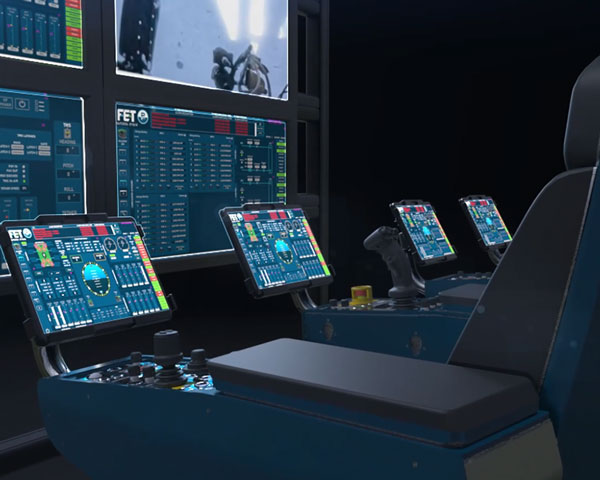
The offshore energy sector is undergoing a profound transformation, driven by a relentless pursuit of efficiency and operational agility. Amidst persistent market volatility, companies that can deliver tangible cost savings without compromising performance are increasingly gaining an edge. This week, Forum Energy Technologies (FET) unveiled a significant advancement in subsea operations: a new remote control station for remotely operated vehicles (ROVs). This innovation promises to reshape how subsea tasks are executed, offering critical flexibility and cost benefits to operators at a time when every dollar counts. As of today, Brent Crude trades at $92.86, down 0.41% within a day range of $92.57-$94.21, while WTI Crude is at $89.29, reflecting a similar dip. This current market snapshot, following a 7% decline in Brent over the past 14 days, from $101.16 to $94.09, underscores the persistent pressure on operators to optimize expenditure and enhance productivity, making FET’s remote ROV solution particularly timely for investors keen on efficiency plays.
The New Frontier of Subsea Operations
FET’s latest offering, a remote control station designed to operate ROV systems from virtually any location, represents a pivotal step in subsea technology. Built upon the company’s ICE® Unity ROV control platform, which debuted in 2025, this system liberates operators from the confines of offshore vessels, allowing them to monitor system performance and live data streams remotely. The platform’s capabilities extend beyond mere control, encompassing live streaming of crucial survey data, comprehensive system monitoring, and seamless access to FET’s remote support services and software updates. This holistic approach ensures that operational integrity and safety are maintained, even with personnel situated hundreds of kilometers away. The package includes advanced FET Subsea control chairs, robust Remote-Connect gateway enclosures, and sophisticated VisualSoft video streaming and network player software, ensuring a complete and integrated solution for remote deployment. This technological leap means specialized expertise can be leveraged globally without the logistical hurdles and costs traditionally associated with offshore deployments.
Cost Optimization as a Strategic Imperative
In an energy landscape characterized by fluctuating commodity prices and heightened investor scrutiny, cost reduction is not merely an advantage; it is a strategic imperative. FET’s remote ROV system directly addresses this need by fundamentally altering the operational expenditure model for subsea activities. By enabling full system control from onshore or distant locations, offshore operators can significantly improve flexibility in personnel deployment, reduce the number of crew required offshore, and minimize logistical overheads associated with vessel operations and travel. This directly translates into substantial cost savings that flow straight to the bottom line. Kevin Taylor, Vice President of Operations, Subsea Technologies at FET, emphasized that this development aligns perfectly with “FET 2030,” the company’s long-term strategy centered on innovation. As crude benchmarks like Brent and WTI continue to exhibit daily volatility, with Brent recently shedding over $7 per barrel in just two weeks, technologies that promise consistent operational cost reductions become increasingly attractive for investors seeking stability and competitive advantage in their portfolio companies. The ability to maintain operational performance and safety while drastically cutting expenses offers a compelling value proposition in the current market climate.
FET’s Strategic Vision and Market Expansion
The strategic implications of this remote control station extend beyond immediate cost savings, positioning FET for significant growth across multiple subsea markets. The company publicly demonstrated the system’s capabilities during Oceanology 2026, where an ROV operating at FET’s UK headquarters in Kirkbymoorside was seamlessly piloted from a control chair located 300 km away at the conference in London. This real-world demonstration not only validated the technology’s efficacy but also showcased its potential for widespread adoption. With all hardware for the system manufactured at its Kirkbymoorside facility, FET controls the supply chain, ensuring quality and scalability. The expected demand for this new capability spans across offshore energy, defense, and other critical subsea sectors. For investors, this signals a diversified growth pathway, mitigating reliance on any single market segment and enhancing FET’s long-term revenue potential. The innovation aligns with the broader industry trend towards digitalization and automation, securing FET’s position as a forward-thinking provider in the subsea domain.
Navigating Future Signals and Investor Outlook
As investors grapple with the ongoing volatility, with questions frequently arising about the near-term trajectory of benchmarks like WTI and the broader oil price outlook for 2026, understanding the underlying drivers of demand for supporting technologies is paramount. The adoption of advanced subsea solutions like FET’s remote ROV system will be influenced by macro industry trends, which can be tracked through upcoming calendar events. For instance, the EIA Weekly Petroleum Status Reports (scheduled for April 29th and May 6th) and the API Weekly Crude Inventory reports (April 28th and May 5th) will offer crucial insights into supply-demand dynamics and inventory levels, directly impacting crude prices and, by extension, investment appetite for offshore projects. Furthermore, the Baker Hughes Rig Count on May 1st will indicate the pace of drilling activity, a key barometer for future demand in the oilfield services sector. Crucially, the EIA Short-Term Energy Outlook, due on May 2nd, will provide a comprehensive forecast for energy markets, offering a critical lens through which to assess the long-term viability and growth prospects for subsea technologies that promise efficiency and cost reduction. These upcoming data points will help investors contextualize the market environment for subsea service providers, highlighting how innovations like FET’s remote ROV can offer a competitive edge regardless of short-term price fluctuations, by delivering enduring value through operational optimization.