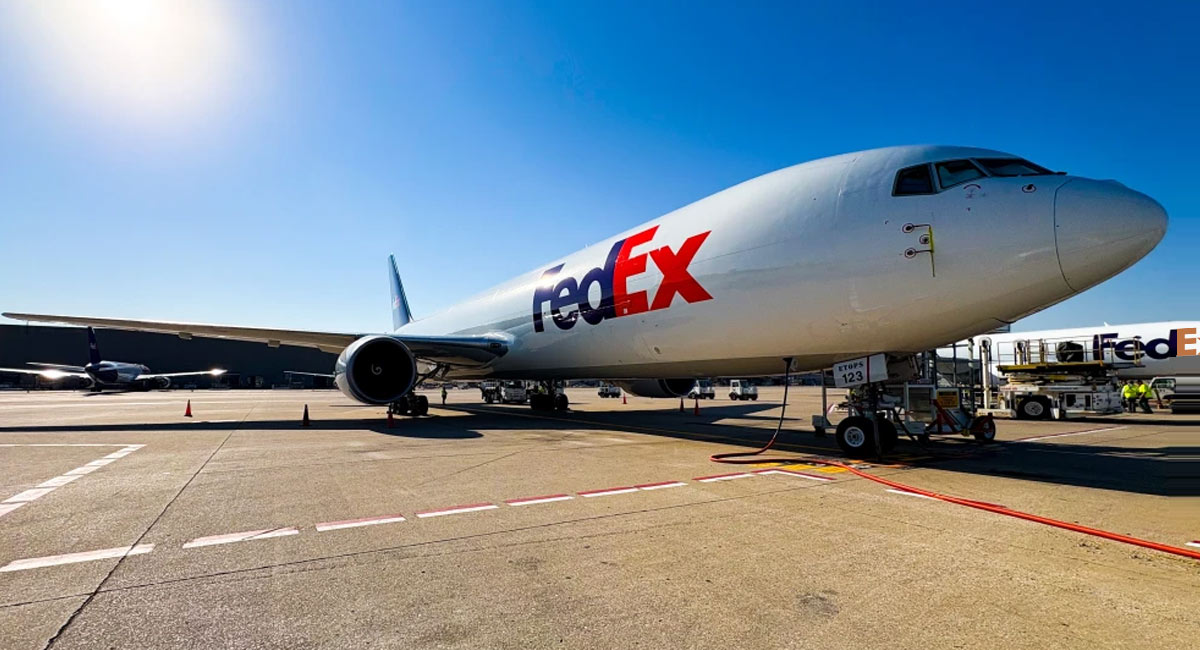
The recent announcement by FedEx, detailing the integration of Sustainable Aviation Fuel (SAF) into its daily operations at key U.S. cargo hubs – Chicago O’Hare and Miami International – serves as a potent signal for the broader energy market. While the immediate volumes of SAF remain a fraction of overall jet fuel consumption, this strategic pivot by a global logistics giant underscores an accelerating trend towards decarbonization within hard-to-abate sectors. For oil and gas investors, this move is not merely a corporate sustainability update; it’s a critical indicator of evolving demand dynamics, capital reallocation priorities, and the long-term trajectory of the energy transition, demanding a nuanced understanding of both conventional and alternative fuel markets.
Logistics Giants and the Green Mandate: A Demand-Side Driver
FedEx’s commitment to sourcing 30% alternative fuels by 2030 is a clear manifestation of a growing corporate imperative driven by both internal sustainability goals and, crucially, external customer demand. Large retailers and manufacturers, increasingly under pressure from consumers and regulators, are actively seeking lower-carbon shipping options. This commercial pressure translates directly into strategic shifts for critical service providers like FedEx. The deployment of SAF at high-volume cargo hubs like Chicago, a major inland distribution point, and Miami, the primary U.S. gateway to Latin America, is not coincidental. These locations offer a real-world proving ground for SAF’s operational performance across diverse cargo types and routes, gathering invaluable data on efficiency, handling, and cost implications. Investors frequently ask about the future price of oil per barrel by the end of 2026, a question that implicitly acknowledges the complex interplay of supply and demand. Initiatives like FedEx’s, while small in volume today, chip away at future conventional jet fuel demand, signaling a structural shift that will influence crude pricing over the medium to long term. Companies failing to adapt to these evolving customer demands risk losing market share, making the “green premium” for SAF an increasingly accepted cost of doing business rather than an optional expense.
Navigating Current Market Volatility Amidst Strategic Shifts
The backdrop for this SAF expansion is a volatile energy market. As of today, Brent crude trades at $90.17 per barrel, reflecting a significant 9.28% drop. Similarly, WTI crude is at $82.21, down 9.83% within the same day. This sharp downward movement follows a notable trend over the past two weeks, where Brent has shed $14, or 12.4%, from $112.57 on March 27th to $98.57 just yesterday. Gasoline prices have also seen a downturn, currently at $2.92, a 5.5% decrease. This immediate market softness in conventional fuels presents a fascinating paradox for SAF. On one hand, the higher cost of SAF compared to conventional jet fuel becomes more pronounced when crude prices decline, potentially challenging the immediate economic rationale for broader adoption. However, FedEx’s commitment, despite this market turbulence, underscores a deeper, long-term strategic decision. The premium paid for SAF is increasingly viewed as an investment in future operational resilience, regulatory compliance, and brand reputation. For O&G investors, this signals that while short-term crude price fluctuations will always capture headlines, the underlying structural demand for sustainable alternatives is gaining momentum, irrespective of day-to-day commodity swings. Companies that can effectively bridge the cost gap for SAF, through technological innovation or policy support, will be well-positioned for future growth.
Upcoming Events and the Supply-Side Imperative for SAF
The biggest hurdle for widespread SAF adoption remains supply, a challenge FedEx itself acknowledges. Several U.S. refineries and renewable fuel startups are working to scale production, but industry groups indicate it will take years for supply to meet burgeoning airline demand. This supply-side constraint creates a critical investment opportunity within the broader energy sector. The coming weeks offer important insights into both conventional and alternative energy supply dynamics. The OPEC+ Joint Ministerial Monitoring Committee (JMMC) meeting today, April 17th, followed by the Full Ministerial meeting tomorrow, April 18th, will directly influence global crude supply quotas. Investors are keenly watching these decisions, with questions surfacing about current OPEC+ production quotas, as these directly impact the pricing environment for conventional fuels against which SAF competes. Additionally, the upcoming API and EIA Weekly Crude Inventory reports on April 21st, 22nd, 28th, and 29th, alongside the Baker Hughes Rig Count on April 24th and May 1st, will provide crucial data points on traditional oil production and inventory levels. These events, while focused on conventional oil, are vital for understanding the baseline market conditions and the economic incentives (or disincentives) for diverting capital towards SAF production. Companies in the O&G sector with existing refining infrastructure or those capable of converting feedstocks into SAF stand to gain significantly from this growing demand, effectively diversifying their portfolios away from pure crude extraction.
Investment Implications for a Shifting Energy Landscape
FedEx’s strategic move validates the growing conviction that sustainable fuels are not a niche market but an integral part of future energy demand. For oil and gas investors, this translates into several key considerations. Firstly, companies heavily invested in renewable diesel, sustainable aviation fuel, or advanced biofuels technologies are poised for significant growth. This includes traditional refiners making strategic pivots, as well as pure-play renewable fuel producers. Secondly, the emphasis on “practical paths” for emissions reduction suggests a continued role for natural gas as a transition fuel, particularly in power generation that supports SAF production or in refining processes. Investors should scrutinize O&G companies’ capital allocation strategies: are they prioritizing investments in low-carbon solutions, carbon capture technologies that can support SAF production, or feedstock diversification? Finally, the long-term implications for crude oil demand, particularly for jet fuel, cannot be overstated. While the shift will be gradual, the direction is clear. Investors looking to predict the price of oil per barrel by the end of 2026 and beyond must factor in these demand-side erosion trends, driven by corporate mandates and technological advancements in alternatives. The FedEx initiative is a bellwether, signaling that the future of energy investment increasingly lies at the intersection of traditional infrastructure and innovative sustainable solutions.