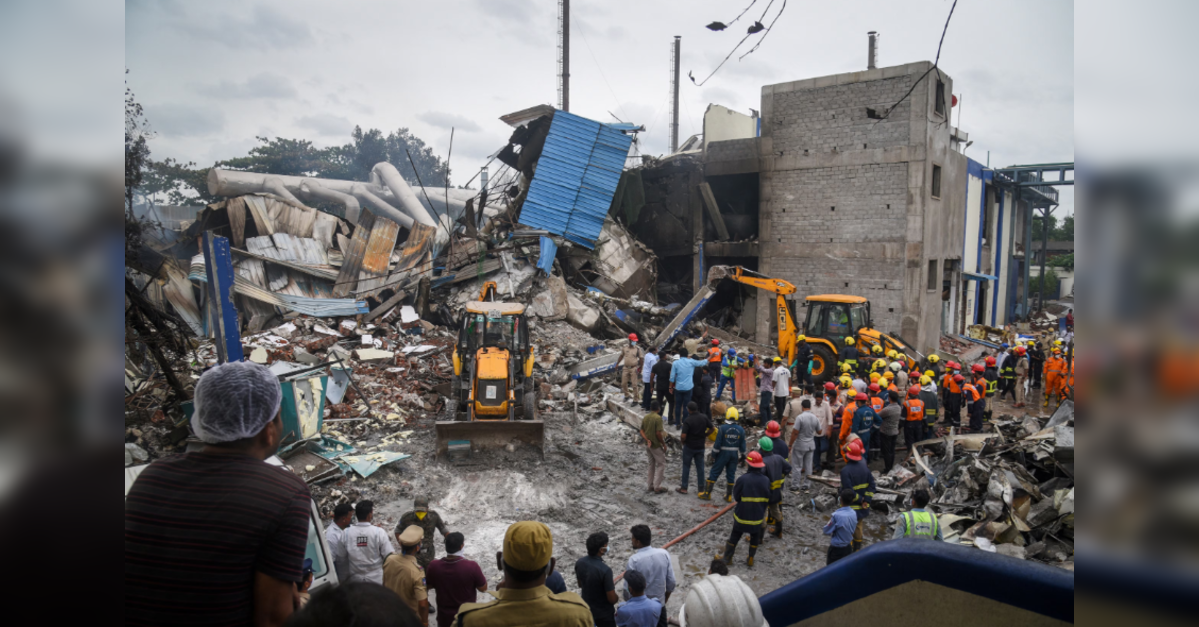
The energy sector, with its intricate web of refineries, petrochemical complexes, and gas processing units, operates at the forefront of industrial ambition and inherent risk. While market watchers often fixate on geopolitical tensions, supply-demand balances, and interest rate hikes, a recent catastrophic industrial incident serves as a stark reminder of another critical, often underestimated, factor impacting investment profiles: operational safety. A fatal dust explosion at a manufacturing facility, resulting in significant casualties and asset damage, underscores the severe consequences of neglected process safety. Though occurring outside the direct oil and gas sphere, the underlying vulnerabilities — pressure build-up, equipment malfunction, and sensor failures — are universal threats that demand immediate attention from investors scrutinizing energy portfolios. This analysis pivots the lessons learned from this tragedy to the oil and gas landscape, exploring the potential for output disruptions, financial repercussions, and the heightened importance of robust safety protocols in safeguarding shareholder value.
The Unseen Threat: Dust Explosions in Energy Infrastructure
The recent incident, triggered by a suspected pressure build-up and linked to overheating, malfunctioning temperature sensors, and inadequate airflow control, highlights a critical hazard: combustible dust. While the specific fuel involved was microcrystalline cellulose, the principles of a dust explosion – fine particles suspended in air, an oxidizer, confinement, and an ignition source – are alarmingly relevant across the process industries. Case studies and expert analyses confirm that facilities such as refineries, gas processing units, and petrochemical plants are “equally at risk.” Critical areas like catalyst handling units, coke handling systems, and sulphur recovery units, which frequently deal with finely divided solids, present prime environments for such catastrophic events. The potential for a rapid energy release, leading to structural damage, prolonged outages, and tragic loss of life, translates directly into massive financial liabilities, reputational damage, and a fundamental erosion of investor confidence. For energy companies, these incidents can halt production, disrupt supply chains, and trigger extensive regulatory scrutiny, directly impacting profitability and long-term sustainability.
Market Realities and the Cost of Unforeseen Events
As of today, Brent crude trades at $94.72, showing a modest intraday dip of 0.22% within a range of $94.42 to $94.91. Similarly, WTI crude is at $90.97, down 0.35% for the day. While these figures suggest a relatively stable market today, the broader context reveals significant volatility: Brent has shed over 12% in the past two weeks, plummeting from $108.01 on March 26th to $94.58 as of yesterday. This sharp correction underscores a market highly sensitive to shifts in supply and demand narratives. A major operational incident, such as a dust explosion at a critical refinery or gas processing plant, could swiftly reverse this downward trend, creating an immediate and profound supply shock. Consider gasoline prices, currently holding at $2.99, down slightly by 0.33%. A significant disruption to refining capacity could send these prices soaring, impacting consumer demand and broader economic stability. Investors must recognize that while macro-economic indicators drive much of the daily price action, an unexpected operational failure can instantly introduce unquantifiable risk, creating localized supply tightness that ripples across global markets, irrespective of prevailing sentiment.
Navigating Future Risks: Investor Due Diligence and Upcoming Catalysts
Investors are consistently seeking clarity on future price trajectories, with common questions revolving around a “base-case Brent price forecast for next quarter” and the “consensus 2026 Brent forecast.” However, the lessons from industrial incidents highlight that even the most meticulous forecasts can be derailed by unforeseen operational failures. These events introduce a layer of systemic risk that traditional supply-demand models often struggle to incorporate. Looking ahead, the energy calendar is packed with significant events that could influence market direction. The upcoming OPEC+ Joint Ministerial Monitoring Committee (JMMC) meeting on April 18th, followed by the Full Ministerial meeting on April 20th, will be closely watched for any shifts in production policy. Furthermore, the weekly API and EIA crude inventory reports (April 21st/22nd and April 28th/29th) will provide crucial insights into supply levels. While these events typically drive short-term volatility, a major industrial incident could completely overshadow their impact, creating an immediate supply disruption that dwarfs any planned adjustments or inventory builds. Astute investors must broaden their due diligence, scrutinizing not just geopolitical stability and demand projections, but also the granular details of an energy company’s safety culture, maintenance schedules, and emergency preparedness. Asking management about their investment in dust suppression systems, explosion-proof equipment, and regular hazard analyses becomes as crucial as inquiring about their capital expenditure plans or reserve replacement ratios.
Mitigating the Risk: A Call for Enhanced Safety Protocols
The tragedy serves as a potent reminder of the critical importance of robust process safety systems. The recommended preventative measures – including the installation of dust suppression and extraction systems, explosion-proof electrical equipment, regular dust hazard analysis, proper grounding, and strict housekeeping protocols – are not merely regulatory burdens but vital investments in operational resilience. For investors, these are tangible indicators of a company’s commitment to safeguarding its assets, its workforce, and ultimately, its shareholder value. Companies that proactively invest in these measures demonstrate superior risk management, making them inherently more attractive. Conversely, those that lag in safety compliance face not only the potential for catastrophic incidents but also the specter of regulatory fines, litigation costs, heightened insurance premiums, and severe reputational damage that can erode market capitalization for years. In an increasingly interconnected and transparent world, a company’s safety record is no longer an ancillary detail but a core component of its environmental, social, and governance (ESG) profile. Investors seeking long-term value in the energy sector must prioritize companies that exhibit an unwavering commitment to operational excellence and safety, recognizing that a secure operation is the bedrock of sustainable returns.


