ExxonMobil’s Yellowtail Deepwater Project Achieves Critical Subsea Milestone
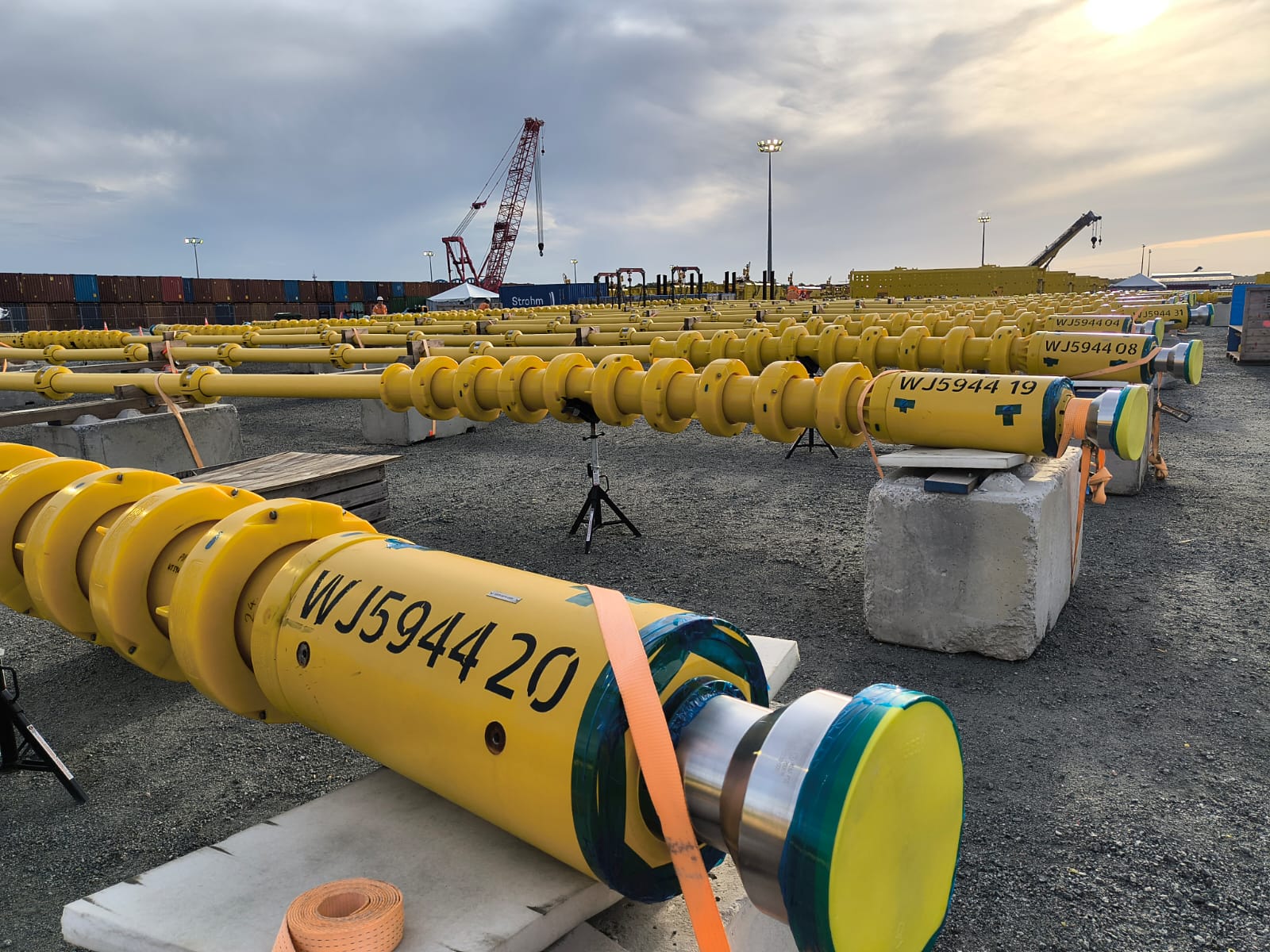
ExxonMobil’s ambitious Yellowtail development offshore Guyana has marked a significant operational achievement, successfully integrating the initial set of advanced thermoplastic composite pipe (TCP) Jumpers. This milestone, facilitated by subsea technology specialist Strohm, underscores the increasing sophistication and efficiency driving deepwater energy projects in one of the world’s most watched oil and gas basins. The successful deployment of 13 water alternating gas (WAG) TCP Jumpers represents a crucial step forward for the Yellowtail field, highlighting innovation in subsea infrastructure and reinforcing ExxonMobil’s strategic advantage in the prolific Stabroek Block.
The integration of these specialized jumpers is part of an innovative “Jumper on Demand” concept, a method designed to streamline and accelerate subsea installation processes. This approach is particularly valuable for large-scale, complex deepwater projects like Yellowtail, where operational efficiency and cost control are paramount for investor returns. The initial two TCP Jumpers have already been successfully installed at remarkable depths exceeding 1,700 meters, demonstrating the robustness and reliability of this cutting-edge technology in challenging environments.
Revolutionizing Subsea Installations with ‘Jumper on Demand’
The “Jumper on Demand” concept represents a paradigm shift in the fabrication and deployment of subsea flowlines. Traditionally, jumpers are manufactured to precise, pre-determined lengths onshore, which can introduce logistical complexities and potential delays if field conditions or design specifications change. Strohm’s innovative system, however, allows for continuous lengths of TCP to be spooled from a delivery reel and then precisely cut into individual jumper lengths directly on-site. This flexibility is a game-changer for project schedules and cost management.
Once cut, these individual jumpers undergo parallel fabrication by Strohm’s dedicated Field Service Group, a team of highly trained specialists proficient in TCP handling and termination. This parallel processing capability significantly accelerates the production volume of jumpers, ensuring that the installation schedule can be met with greater agility. For investors, this translates directly into reduced project execution risk and potentially faster time to first oil, enhancing the overall profitability of deepwater assets. The ability to scale fabrication up or down based on real-time demands provides an unparalleled level of adaptability, a critical factor in dynamic offshore operations.
Flawless Execution and Operational Excellence
The success of this initial campaign speaks volumes about the meticulous planning and execution by all parties involved. The first two TCP Jumpers were integrated with vertical connections, meticulously pressure tested, and then safely installed more than 1,700 meters below the ocean surface earlier this month. The installation contractor successfully locked in these jumpers and completed back seal testing, confirming their integrity and readiness for operation. This flawless execution is a testament to the advanced engineering and rigorous safety protocols in place.
Gavin Leiper, Vice President Americas & Global Field Services Group, emphasized the significance of this achievement. He noted that this first “Jumper on Demand” campaign for ExxonMobil has successfully validated a high-volume fabrication method, proving the inherent flexibility and scalability of on-site TCP jumper production to meet evolving installation schedules. The project’s completion on time, under budget, and with a perfect safety record – zero incidents or observations – received global commendation from ExxonMobil internally, highlighting the exceptional standards achieved. For shareholders, such operational excellence directly impacts the bottom line, mitigating risks and optimizing capital expenditure.
The Strategic Advantage of Thermoplastic Composite Pipes (TCP)
Strohm’s TCP technology offers compelling advantages that are increasingly attractive to major operators like ExxonMobil. As a leading manufacturer in this space, Strohm provides a robust, corrosion-free, and field-proven solution for deepwater applications. Unlike traditional steel pipes, TCP is inherently resistant to corrosion, a major operational challenge and cost driver in subsea environments. This eliminates the need for costly corrosion inhibitors and continuous maintenance, leading to significant lifecycle cost reductions.
Furthermore, TCP solutions contribute to a reduced CO2 footprint for pipeline infrastructure. The lighter weight and simpler installation methods associated with TCP contribute to lower emissions throughout the project lifecycle, aligning with growing industry and investor demand for more sustainable energy development. This ESG benefit, combined with the operational efficiencies, positions TCP as a preferred technology for future deepwater projects. The long-term reliability and reduced environmental impact of TCP add tangible value for investors considering the sustainability and longevity of their energy portfolios.
Guyana’s Deepwater Future and ExxonMobil’s Strategic Vision
ExxonMobil’s continued confidence and support in deploying TCP on their assets, particularly within the critical Guyana basin, underscore their commitment to leveraging cutting-edge technology for enhanced operational performance. The success of this campaign lays the groundwork for future collaborations, with the next fabrication campaign anticipated in 2026. This forward-looking approach ensures the sustained application of high standards of quality and safety that have become synonymous with these deepwater developments.
The Yellowtail field is a cornerstone of ExxonMobil’s growth strategy in Guyana, a region that has rapidly emerged as a global hotspot for deepwater oil and gas production. By embracing innovative solutions like the “Jumper on Demand” concept and TCP technology, ExxonMobil is not only driving efficiency and cost-effectiveness in its operations but also setting new benchmarks for subsea project execution. For investors, this translates into a stronger, more resilient portfolio of assets capable of delivering superior returns over the long term, further cementing ExxonMobil’s dominant position in the Stabroek Block and its broader global energy footprint. This milestone is not just a technical achievement; it’s a clear signal of continued strategic investment in advanced solutions to unlock the full potential of Guyana’s vast deepwater resources.