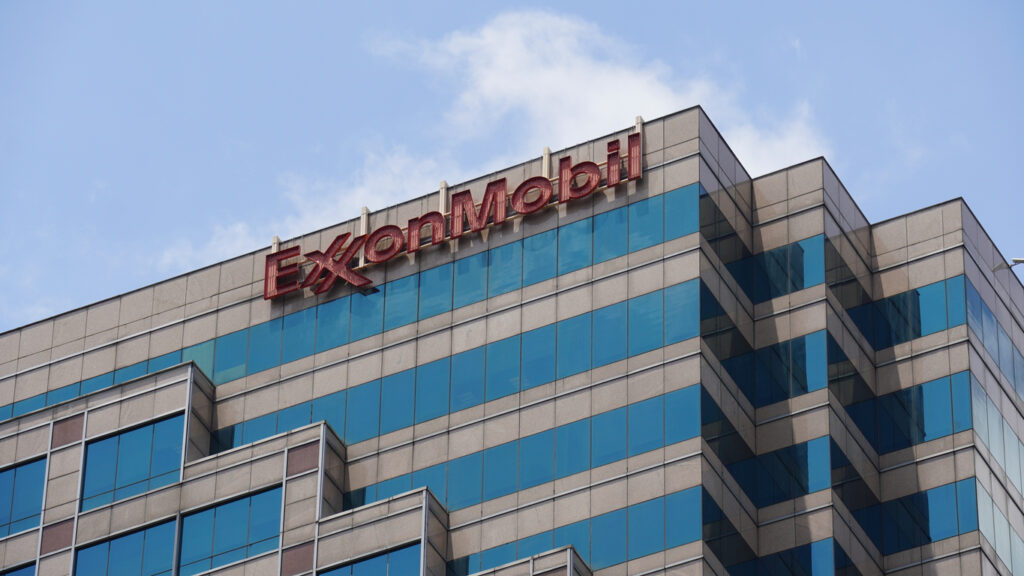
Energy supermajor ExxonMobil (NYSE:XOM) and its strategic partner QatarEnergy have announced a significant natural gas find off the coast of Cyprus, sending positive signals across the Eastern Mediterranean’s burgeoning energy landscape. The discovery, confirmed by the Cypriot government on Monday, marks a critical step forward for the consortium’s exploration efforts in the highly prospective Block 10.
New Discovery Bolsters Block 10 Potential
The latest drilling operation, conducted at the Pegasus-1 well, unveiled preliminary indications of a substantial 350-meter gas-bearing reservoir. Located at an impressive depth of 1.9 kilometers beneath the seabed, this find adds considerable weight to the region’s energy potential. Cypriot government spokesperson Konstantinos Letymbiotis confirmed the discovery following a briefing to President Nikos Christodoulides, though he emphasized that a comprehensive evaluation of the results would be required in the coming months to fully assess the commercial viability and resource estimates.
For investors tracking ExxonMobil’s global exploration portfolio, this represents the second major gas discovery by the ExxonMobil-QatarEnergy partnership within Block 10. The consortium’s initial success came with the Glaucus-1 well in February 2019. Subsequent appraisal work at the Glaucus-2 well, completed in March 2022, further solidified the presence of a high-quality, gas-bearing reservoir, confirming the area’s rich hydrocarbon potential. The consecutive successes in Block 10 underscore the strategic importance of this acreage and the technical prowess of the operating partners.
Cyprus’s Untapped Riches and Commercialization Hurdles
Despite a string of natural gas discoveries across its southern maritime zones, Cyprus has yet to transition any of these finds into commercial production or export. This ongoing challenge highlights the complex interplay of technical, economic, and geopolitical factors inherent in developing deepwater gas assets in the Eastern Mediterranean. While the subsurface potential is clear, the path to monetizing these resources involves massive capital expenditure for infrastructure, navigating regional political dynamics, and securing long-term market commitments.
The Pegasus-1 discovery, therefore, is not merely about finding gas; it’s about adding critical mass to the existing discoveries, potentially making a larger-scale development project more attractive and economically feasible. For investors, the ability to aggregate multiple discoveries into a single, large-scale production and export scheme is often the tipping point for a final investment decision (FID).
Eastern Mediterranean: A Strategic Energy Frontier
The Eastern Mediterranean has rapidly emerged as a global hotspot for natural gas exploration and development. Significant finds like Egypt’s Zohr field, Israel’s Leviathan and Tamar, and now Cyprus’s Glaucus and Pegasus discoveries, collectively point towards a major new energy province. This region is strategically located to potentially supply gas to energy-hungry European markets, which are actively seeking to diversify away from traditional sources, particularly in the wake of recent geopolitical shifts.
ExxonMobil’s continued commitment to Cyprus, alongside QatarEnergy, signifies a long-term view on the region’s role in global energy security. The potential for liquefied natural gas (LNG) exports, or even pipeline connections to existing or planned regional infrastructure, remains a key driver for these investments. Developing these resources could transform Cyprus into a significant regional energy player, fostering economic growth and enhancing its geopolitical standing.
ExxonMobil’s Global Strategy and Investor Implications
For ExxonMobil shareholders, these exploration successes contribute to the company’s broader strategy of building a resilient, high-value upstream portfolio. Natural gas, particularly from large, long-life assets, plays a crucial role in the global energy transition, serving as a lower-carbon fossil fuel that complements renewable energy growth. ExxonMobil’s focus on deepwater exploration in areas like Cyprus, Guyana, and Brazil is central to its long-term growth objectives and shareholder value creation.
While the Pegasus-1 discovery is promising, investors should remain cognizant of the inherent risks and timelines associated with deepwater gas developments. Exploration success is the first step, followed by extensive appraisal, engineering studies, regulatory approvals, and multi-billion-dollar infrastructure investments. The journey from discovery to first gas can often span a decade or more. However, each successful well reduces geological risk and strengthens the investment case for future development phases.
The partnership with QatarEnergy, a global leader in LNG, also adds strategic depth. QatarEnergy’s expertise in large-scale gas development and LNG markets could prove invaluable as these Cypriot discoveries move closer to commercialization, potentially easing market access and financing challenges.
Looking Ahead: The Road to Commercialization
The immediate next steps involve detailed technical analysis of the Pegasus-1 well data, integrated with the existing Glaucus field information. This will allow the consortium to refine resource estimates and develop a comprehensive field development plan. The Cypriot government’s active involvement underscores the national importance of these projects, and continued collaboration between the operators and the state will be crucial.
The latest discovery offshore Cyprus represents a significant positive development for ExxonMobil, QatarEnergy, and the broader Eastern Mediterranean energy sector. While the path to commercialization remains complex, the repeated success in Block 10 substantially de-risks future investment decisions and solidifies the region’s reputation as a vital source of natural gas for global markets. Investors will be closely watching for further appraisal results and any indications of accelerated development plans as Cyprus seeks to finally unlock its considerable energy wealth.