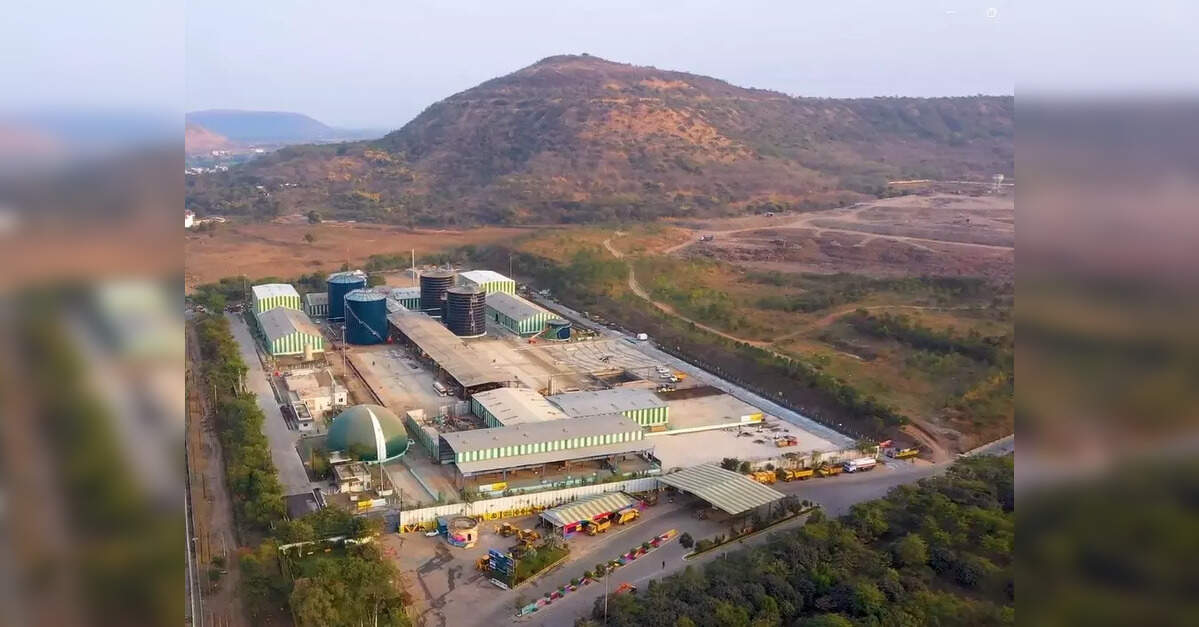
The energy investment landscape is in constant flux, but amidst the volatility in traditional crude markets, a significant signal is emerging from the bioenergy sector. The record-setting performance of India’s largest compressed biogas (CBG) plant, operated by EverEnviro Resource Management, is more than just a local success story; it represents a tangible blueprint for industrial-scale bioenergy solutions that demand serious attention from oil and gas investors. This facility, processing municipal solid waste (MSW) to produce 20 tonnes of CBG daily with the highest Plant Load Factor in the country, underscores the viability and scalability of waste-to-energy projects in a globally decarbonizing economy. For discerning investors, this achievement highlights a growing asset class offering diversification, environmental benefits, and robust operational metrics.
The Indore Blueprint: A New Paradigm for Bioenergy Investment
The EverEnviro plant in Indore stands as a formidable proof-of-concept for the industrial viability of bioenergy. Commissioned in 2022, the facility efficiently processes 550 metric tonnes of segregated organic waste every day, a monumental feat in urban waste management. Beyond its impressive daily output of 20 tonnes of CBG, the plant also generates 40 metric tonnes of organic fertilizer, creating a dual-revenue stream and closing the loop on a circular economy model. This integrated approach not only provides clean energy but also addresses critical environmental challenges, contributing to an estimated reduction of 70,000 tonnes of CO₂ equivalent emissions annually.
What makes this project particularly compelling from an investment perspective is its demonstrated operational efficiency and replicability. Achieving the highest Plant Load Factor in the sector signifies not just technical prowess but also consistent, reliable production – a key metric for evaluating any energy asset. The plant’s recognition as a national benchmark, attracting interest from urban local bodies across India and international delegations from the UK, Nepal, and Southeast Asia, signals a burgeoning global market for similar infrastructure. This model aligns perfectly with national clean energy objectives, such as India’s SATAT (Sustainable Alternative Towards Affordable Transportation) initiative, and broader net-zero goals, providing strong governmental and regulatory tailwinds for future investments.
Navigating Volatility: Bioenergy’s Role Amidst Shifting Crude Dynamics
While the bioenergy sector quietly builds momentum, the traditional oil market continues its characteristic volatility. As of today, Brent crude trades at $90.38 per barrel, reflecting a significant 9.07% drop in a single day. WTI crude mirrors this trend, sitting at $82.59, down 9.41% within the same period. This sharp downturn follows a broader market correction, with Brent having shed $20.91, or 18.5%, from its $112.78 high just two weeks prior. Gasoline prices have also felt the impact, currently at $2.93, down 5.18% today, directly affecting consumer spending and broader economic sentiment.
This persistent volatility underscores the strategic value of diversifying energy portfolios. While geopolitical events and OPEC+ decisions continue to exert immense pressure on crude prices, localized and sustainable energy sources like CBG offer a degree of insulation. The success of plants like EverEnviro’s provides a compelling argument for investing in assets that are less susceptible to international supply shocks and price swings. These projects deliver stable, domestically sourced energy, reduce reliance on imported fossil fuels, and offer a more predictable revenue profile, acting as a crucial hedge against the inherent uncertainties of the global crude market.
Investor Focus: Strategic Positioning in a Transitioning Energy Landscape
Our proprietary reader intent data reveals a keen investor focus on the trajectory of crude prices, with many actively asking about predictions for oil per barrel by the end of 2026, and the specifics of OPEC+’s current production quotas. This intense interest highlights the persistent influence of conventional oil and gas on investment strategies. However, the growing recognition of bioenergy’s potential suggests a shift in how investors are approaching long-term energy plays.
While questions about Repsol’s performance in April 2026 and EnerGPT’s data sources indicate a desire for detailed market intelligence, the underlying theme is a search for reliable, growth-oriented opportunities. The Indore plant’s achievement directly addresses this need by showcasing a scalable, profitable, and environmentally beneficial model. For investors evaluating portfolios, projects like these offer a strategic avenue to align with global sustainability mandates while delivering tangible returns. The extensive governmental support in India, exemplified by initiatives like SATAT, de-risks initial capital outlay and provides long-term off-take certainty, making these ventures highly attractive in a climate where ESG considerations are increasingly critical for capital allocation.
Upcoming Catalysts and the Accelerating Bioenergy Horizon
The next two weeks are packed with critical traditional energy events that will undoubtedly shape market sentiment, yet simultaneously highlight the growing importance of alternative fuels. Tomorrow, April 18th, marks the OPEC+ Joint Ministerial Monitoring Committee (JMMC) meeting, followed by the full Ministerial meeting on April 19th. Any adjustments to production quotas emerging from these discussions will directly impact crude prices, potentially reinforcing the economic competitiveness of bioenergy solutions if traditional fuel costs remain elevated or highly volatile. Further insights into conventional supply and demand will come from the API Weekly Crude Inventory reports on April 21st and 28th, and the EIA Weekly Petroleum Status Reports on April 22nd and 29th, alongside the Baker Hughes Rig Count on April 24th and May 1st.
While these events provide essential short-term market direction for oil and gas, the long-term investment horizon is increasingly being defined by the energy transition. The proven success of the EverEnviro plant serves as a powerful catalyst, demonstrating that industrial-scale waste-to-energy projects are not just aspirational but fully operational and highly efficient. As traditional energy markets react to OPEC+ decisions and inventory shifts, the bioenergy sector, driven by innovation and supported by national policies, is charting a more stable, growth-oriented course. Investors looking beyond the immediate fluctuations of crude will find compelling opportunities in this expanding sector, capitalizing on a model that delivers both financial returns and significant environmental impact.


