EV Charging Roads: A New Challenge for Diesel’s Dominance
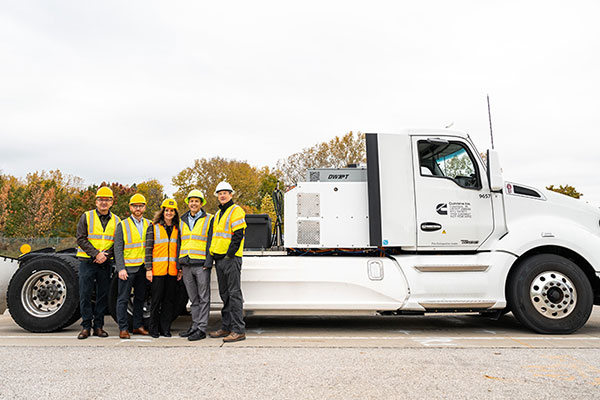
The energy landscape is in constant flux, driven by geopolitical dynamics, supply-side decisions, and, increasingly, disruptive technological innovation. While investors often focus on immediate market catalysts like inventory reports or OPEC+ pronouncements, a recent development in Indiana offers a glimpse into a profound long-term shift that could fundamentally reshape demand for diesel, particularly in the heavy-duty transportation sector. Researchers at Purdue University, in collaboration with the Indiana Department of Transportation, have successfully demonstrated the first U.S. highway segment capable of wirelessly charging a heavy-duty electric truck while it drives at highway speeds. This isn’t merely about passenger vehicles; it’s about the backbone of freight and logistics, signaling a potential “game-changer” for electrification that demands careful consideration from oil and gas investors.
The Technological Leap: Powering Freight Without Plugs
The successful test on a quarter-mile section of Indiana highway represents a significant technological milestone. For the first time in the U.S., a heavy-duty electric truck was charged in motion, receiving substantial power from coils embedded beneath the road surface. This system delivered enough energy to support real-world freight vehicles, not just smaller test platforms, addressing a critical hurdle for long-haul electric trucking: range anxiety and charging downtime. By allowing trucks to charge continuously as they traverse highways, the need for large, heavy, and expensive onboard batteries could be significantly reduced. This innovation directly targets the economic and logistical barriers that have slowed the electrification of heavy-duty transport, a sector historically reliant on diesel. The ability to transfer power through a magnetic field at highway speeds and at levels thousands of times higher than, for instance, a smartphone, underscores the engineering prowess behind this development. While still in its testing phase, the implications for future diesel demand in the freight industry are substantial, laying the groundwork for highways to become active energy conduits.
Navigating Market Volatility Amidst Structural Shifts
The immediate concerns for oil and gas investors often revolve around short-term market dynamics and price volatility. As of today, Brent crude trades at $91.87, reflecting a notable 7.57% decline for the day, with WTI crude similarly down 7.86% at $84. This daily fluctuation follows a broader trend over the past two weeks, where Brent has shed $14, or 12.4%, from $112.57 on March 27th to $98.57 just yesterday. Such movements are typically driven by macroeconomic signals, geopolitical tensions, and immediate supply-demand imbalances. However, these short-term price swings can sometimes overshadow the deeper, structural shifts occurring in the energy sector. The advancement in inductive charging for heavy-duty trucks, while not an immediate market mover, represents a powerful long-term disruptor to demand. For investors tracking the trajectory of crude prices, particularly those predicting where the price of oil per barrel will be by the end of 2026, it is crucial to integrate these nascent technological developments into their longer-term demand models. The electrification of trucking, facilitated by innovations like charging roads, represents a fundamental erosion of future diesel demand that will play out over years, regardless of daily price movements.
Investor Focus: Beyond Current Quotas to Future Consumption
Our proprietary reader intent data reveals a keen investor focus on immediate and near-term market drivers. Questions frequently posed include “What are OPEC+ current production quotas?” and inquiries about specific company performance, such as “How well do you think Repsol will end in April 2026?”. These questions highlight a natural preoccupation with supply-side management, geopolitical influences, and the performance of integrated energy companies in the current environment. However, the emergence of technologies like inductive charging roads compels a broader perspective. While OPEC+ decisions and production quotas heavily influence the supply side, these innovations directly address the demand side, specifically in a high-consumption segment like heavy-duty transport. Investors must ask how quickly such technology can scale and what its widespread adoption would mean for the refining sector’s diesel output, or for companies whose logistics and service station networks are built around traditional fuel. A long-term investment strategy in oil and gas must account for the increasing likelihood of demand destruction from technological advancements, not just supply-side adjustments.
Upcoming Events and the Long-Term Demand Horizon
The next two weeks are packed with events that will undoubtedly influence short-term oil and gas market sentiment. Investors will closely watch the OPEC+ Joint Ministerial Monitoring Committee (JMMC) meeting tomorrow, April 17th, followed by the full Ministerial Meeting on April 18th, for any signals regarding production policy. Subsequent days bring the API Weekly Crude Inventory reports on April 21st and 28th, and the EIA Weekly Petroleum Status Reports on April 22nd and 29th, providing crucial insights into U.S. inventory levels. Finally, the Baker Hughes Rig Count on April 24th and May 1st will offer a snapshot of upstream activity. These events are vital for tactical trading and short-to-medium-term portfolio adjustments. Yet, the quiet progress exemplified by the Indiana EV charging road project operates on a different timeline, representing a foundational shift that transcends weekly inventory builds or OPEC+ production cuts. While the market reacts to immediate supply signals, the long-term trajectory of oil and gas demand will increasingly be shaped by the rate of adoption of such disruptive technologies. Investors are advised to balance their attention to these immediate catalysts with a strategic outlook that incorporates these powerful, demand-side innovations, understanding that today’s experimental road segment could be tomorrow’s standard infrastructure for a fossil-fuel-free freight future.