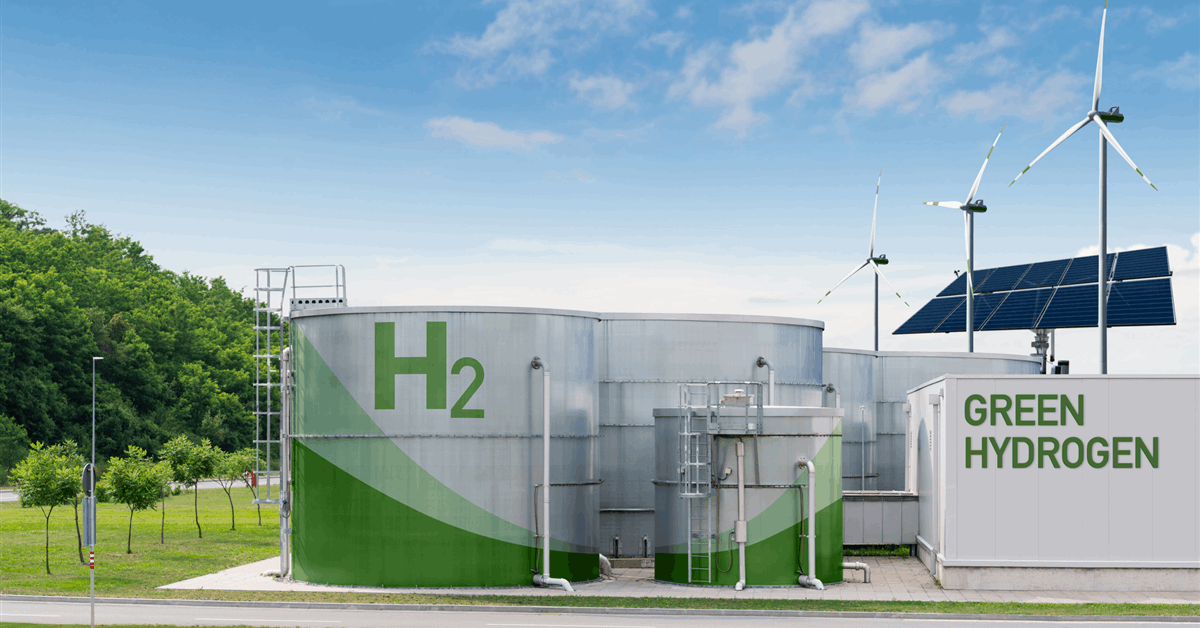
The European Union has underscored its unwavering commitment to the energy transition, channeling nearly a billion euros into ambitious green hydrogen initiatives. This substantial financial injection, totaling EUR 992 million ($1.12 billion) across 15 production projects, signals a pivotal moment for Europe’s decarbonization efforts and presents both challenges and opportunities for the global energy investment landscape. As traditional fossil fuel markets navigate significant volatility, these strategic investments in renewable hydrogen illuminate a clear path towards future energy independence and climate neutrality, prompting investors to scrutinize the long-term implications for their portfolios.
Europe’s Decisive Push for Renewable Hydrogen Dominance
The recent allocation of EUR 992 million ($1.12 billion) through the second round of the European Hydrogen Bank marks a robust escalation in the continent’s renewable energy strategy. This funding supports 15 selected projects across five nations, designed to catalyze the production of approximately 2.2 million tonnes of renewable hydrogen over a decade. Such an output is projected to prevent over 15 million tonnes of CO2 emissions, underscoring the environmental dividends of this initiative. The grants are structured as a fixed premium per kilogram of renewable hydrogen produced over a period of up to 10 years, with 12 of the chosen projects receiving between EUR 0.20 and EUR 0.60 per kilogram. This mechanism aims to bridge the current cost disparity between production and market willingness to pay, directly de-risking early-stage investments.
Geographically, Spain leads with eight projects, followed by Norway with three, and Germany with two. Finland and the Netherlands each host one significant venture. Notable projects include the Netherlands’ Zeevonk Electrolyser, targeting 411 kilotons of hydrogen production over 10 years, Germany’s KASKADE project with 354 kilotons, and Finland’s Kristinestad PtX project with 258 kilotons. These projects are strategically targeting hard-to-abate sectors such as transportation, the chemical industry, and the production of methanol and ammonia. Furthermore, this auction round introduced a dedicated budget for hydrogen producers with off-takers in the maritime sector, a critical development given the industry’s significant carbon footprint and the potential for hydrogen-based bunkering activities to drive substantial emissions reductions.
Navigating Divergent Market Signals: Crude Volatility vs. Green Investment
The substantial investment in green hydrogen unfolds against a backdrop of considerable turbulence in the traditional oil markets. As of today, Brent Crude trades at $90.38, marking a notable 9.07% decline within the day, with prices fluctuating between $86.08 and $98.97. Similarly, WTI Crude stands at $82.59, down 9.41%, having seen a daily range from $78.97 to $90.34. This immediate downturn is part of a broader trend; Brent has shed $20.91, or 18.5%, over the past 14 days, falling from $112.78 on March 30 to $91.87 yesterday. Such pronounced volatility in crude prices contrasts sharply with the stable, long-term policy-driven investment in renewable hydrogen, highlighting a clear divergence in market signals for energy investors.
While gasoline prices have also seen a dip to $2.93, down 5.18% today, the underlying message for capital allocation is becoming clearer. The EU’s proactive measures to subsidize renewable hydrogen production serve as a powerful counter-narrative to the unpredictable nature of fossil fuel markets. For investors, this creates a dual challenge: managing the immediate risks and opportunities presented by crude price swings, while simultaneously positioning for the inevitable structural shift towards cleaner energy sources. The strategic allocation of capital into hydrogen projects, supported by robust governmental frameworks and “auction as a service” mechanisms that saw an additional EUR 836 million committed by Austria, Lithuania, and Spain, demonstrates a fundamental re-weighting of energy priorities at the policy level.
Investor Focus: Long-Term Outlook Amidst Short-Term Uncertainty
Our proprietary reader intent data reveals a keen investor focus on both immediate market dynamics and the longer-term trajectory of the energy sector. Questions such as “what do you predict the price of oil per barrel will be by end of 2026?” and inquiries into OPEC+ current production quotas underscore a desire to forecast the traditional oil market’s path. Simultaneously, interest in specific company performance indicates that investors are evaluating the micro-level impacts of these macro shifts.
This nuanced investor interest directly intersects with the EU’s green hydrogen push. While upcoming events like the OPEC+ JMMC and Full Ministerial meetings on April 18-19 will undoubtedly dictate short-term crude price movements, alongside weekly API and EIA inventory reports on April 21-22 and 28-29, the strategic investments in renewable hydrogen represent a significant long-term demand-side disruptor. These initiatives signal a gradual but persistent erosion of fossil fuel demand in sectors earmarked for decarbonization. Investors must therefore look beyond the immediate supply-demand narratives of crude. The robust response to the European Hydrogen Bank auction reflects growing confidence in the viability and eventual scalability of renewable hydrogen, urging a re-evaluation of portfolios for exposure to companies positioned for this transition, or those facing significant future demand destruction.
Strategic Implications for Oil & Gas Investment
The EU’s nearly €1 billion commitment to green hydrogen, bolstered by an additional €836 million from national co-funding, solidifies the region’s position at the forefront of the energy transition. This is not merely a symbolic gesture; it is a tangible step towards establishing a robust renewable hydrogen market, critical for achieving climate neutrality and enhancing energy independence. For investors in the oil and gas sector, these developments necessitate a strategic re-evaluation of existing investment theses.
Companies heavily invested in traditional fossil fuel production, particularly those with significant exposure to the European transportation, chemical, and industrial sectors, face a clear long-term demand challenge. Conversely, integrated energy majors and technology providers actively diversifying into green hydrogen production, infrastructure, or related technologies stand to gain. The focus on maritime bunkering is particularly insightful, pointing to a direct policy-driven shift away from heavy fuel oil in a hard-to-decarbonize segment. Investors should scrutinize company roadmaps for their energy transition strategies, evaluating their capacity to adapt to evolving energy demands and regulatory frameworks. The trajectory of green hydrogen, while still in its nascent stages, is now undeniably on a path towards commercial scale, making it an increasingly critical factor in long-term oil and gas investment decisions.


