

Europe’s benchmark natural gas prices jumped by another 30% at market open on Monday, following a massive 67% weekly gain last week, as oil prices soared past $100 per barrel and Europe remains the most vulnerable customer of LNG supply.
The April 2026 contract of the Dutch TTF Natural Gas Futures opened 30% higher in Amsterdam on Monday, before giving up some gains to trade 16% higher mid-morning in Europe.
The futures traded at $70.61 (61.245 euros) per megawatt-hour (MWh) on Monday morning. That’s doubled compared to February 27, the day before the war in the Middle East began and roiled energy markets.
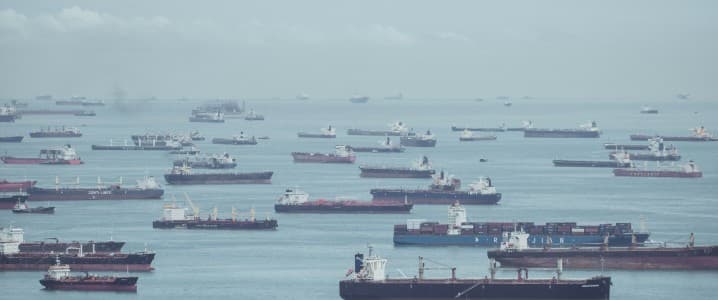
Last week, the European benchmark gas price soared by 67% for the steepest weekly gain since the energy crisis of 2022, as the Strait of Hormuz, through which 20% of global LNG flows pass, is effectively closed for traffic.
European gas prices have soared since the war began as Qatar announced it is halting LNG production at Ras Laffan, the world’s biggest liquefaction complex, issued force majeure notices to customers, and the Strait of Hormuz became inaccessible for tanker traffic.
Related: The U.S. Just Took a Giant Step in The Rare Earth Race With China
Asia is attracting most flexible-destination LNG cargoes away from Europe amid renewed competition for supply. A growing number of LNG cargoes that were initially en route to Europe have sharply diverted in the Atlantic toward Asia via the Cape of Good Hope as Asian buyers are now winning the competition with Europe with about 20% of global LNG supply currently offline.
A total of 85% of Qatar’s LNG exports go to Asia, so the immediate physical supply crunch is skewed toward Asia, analysts say.
Europe has typically received about 12% of Qatari LNG—a much smaller share compared to Asia’s exposure.
However, the repercussions of a supply squeeze in Asia are huge for Europe, too, as Europe currently loses the competition with Asia for alternative spot supply as the Asian premiums over European prices soar and arbitrage is giving the strongest signal for traders to send LNG cargoes to Asia since the end of 2022.
By Michael Kern for Oilprice.com
More Top Reads From Oilprice.com
