Europe’s Gas Market in Crisis: A Geopolitical Reset for Investors
European natural gas markets are once again at the epicenter of global energy volatility, presenting both significant risks and potential opportunities for astute investors. The recent dramatic surge in benchmark gas prices underscores the profound impact of ongoing geopolitical events on energy supply routes and the delicate balance of global energy security. With the Middle East conflict intensifying, key maritime passages under threat, and a fierce bidding war for liquefied natural gas (LNG) cargoes, Europe finds itself grappling with a renewed energy crisis, reminiscent of the challenges faced in 2022. Understanding the intricate dynamics at play – from immediate supply disruptions to long-term recalibrations of global energy flows – is crucial for navigating this complex investment landscape.
The Shockwave: Unprecedented Gas Price Spikes and Supply Disruptions
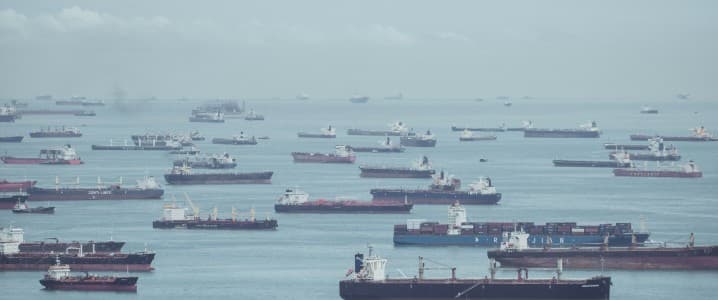
The past week has witnessed an extraordinary escalation in European natural gas prices, signaling a severe tightening of supply. The Dutch TTF Natural Gas Futures contract for April 2026 recently surged to $70.61 per megawatt-hour (MWh), effectively doubling from its late February levels just before the current Middle East conflict began to roil energy markets. This rapid ascent followed a massive 67% weekly gain, marking the steepest increase since the energy crisis of 2022, compounded by an additional 30% jump at the start of the week. The primary catalyst for this price explosion is the effective closure of the Strait of Hormuz, a critical chokepoint through which approximately 20% of global LNG flows pass. Further exacerbating the situation, Qatar, a pivotal LNG supplier, announced a halt in production at its Ras Laffan complex – the world’s largest liquefaction facility – and issued force majeure notices to customers. These combined events have not only reduced physical supply but also injected a significant risk premium into an already sensitive market, forcing Europe to confront its deep vulnerability to disruptions in distant energy arteries.
Divergent Paths: Gas Surges While Crude Cools
Interestingly, while European natural gas prices have entered a parabolic ascent, the broader crude oil market has shown a more subdued, even softening, trend in recent days. As of today, Brent Crude trades at $92.89 per barrel, down 0.38% on the day, while WTI Crude sits at $89.51 per barrel, marking a 0.18% decrease. This current stability, or even slight retreat, in crude benchmarks contrasts sharply with the recent parabolic ascent in European gas. Our proprietary data shows Brent crude has actually softened by over 7% in the past two weeks, falling from $101.16 on April 1st to $94.09 yesterday. This divergence highlights a critical nuance for investors: while both commodities are influenced by geopolitical tensions, the immediate market impact can vary significantly depending on the specific nature of the threat. The current crisis is acutely impacting LNG shipping routes and production, creating a direct and severe squeeze on European gas supply. Crude markets, while sensitive to broader regional instability, are perhaps less directly affected by the specific Strait of Hormuz LNG traffic disruption or Qatar’s LNG production halt, and may be balancing these risks against broader demand outlooks or robust inventory levels. This distinction is vital for investors seeking to allocate capital effectively across the energy complex.
Asia’s Magnetic Pull: Europe Loses the LNG Bidding War
The repercussions of the Middle East crisis extend far beyond immediate supply disruptions, fundamentally reshaping global LNG trade flows. With roughly 20% of global LNG supply currently offline due to various factors including the Qatar halt, a fierce bidding war has erupted for the remaining flexible-destination cargoes. Asia, traditionally the largest recipient of Qatari LNG with 85% of its exports directed there, is currently outcompeting Europe for these crucial spot supplies. While Europe typically receives a much smaller share, around 12% of Qatari LNG, the broader impact of a supply squeeze in Asia is profound for European consumers. Our market intelligence indicates that a growing number of LNG cargoes initially bound for Europe have sharply diverted across the Atlantic towards Asia via the Cape of Good Hope. Asian buyers are now consistently winning the arbitrage game, with soaring premiums making it significantly more profitable for traders to reroute cargoes to the East. This dynamic, last seen with such intensity at the end of 2022, means that even as Europe seeks alternative supplies, it is consistently losing out in the competition, exacerbating its supply crunch and driving prices higher.
Navigating Uncertainty: Upcoming Catalysts and Investor Concerns
The current environment demands a proactive and informed investment strategy. Our proprietary reader intent data reveals a clear focus on the future direction of oil prices, with many asking “Is WTI going up or down?” and seeking predictions for “the price of oil per barrel by end of 2026?” These questions underscore the profound uncertainty and the need for clarity amidst the volatility. While predicting exact price points remains challenging given the multitude of variables, investors must closely monitor key upcoming catalysts. The EIA Weekly Petroleum Status Reports, scheduled for April 22nd, April 29th, and May 6th, will offer crucial insights into U.S. crude, gasoline, and distillate inventories, providing a critical pulse on demand and supply in the world’s largest consumer. Similarly, the API Weekly Crude Inventory reports on April 28th and May 5th will offer early indicators. The Baker Hughes Rig Count on April 24th and May 1st will shed light on North American production activity, while the EIA Short-Term Energy Outlook on May 2nd will provide a broader forward-looking perspective on global energy markets. For European gas, the focus remains squarely on geopolitical developments in the Middle East, the resolution of shipping route blockages, and the ability of Europe to secure alternative LNG supplies amidst intense global competition. Investors should prepare for continued volatility, with significant price swings driven by news flow and the interplay of these fundamental data points.


