

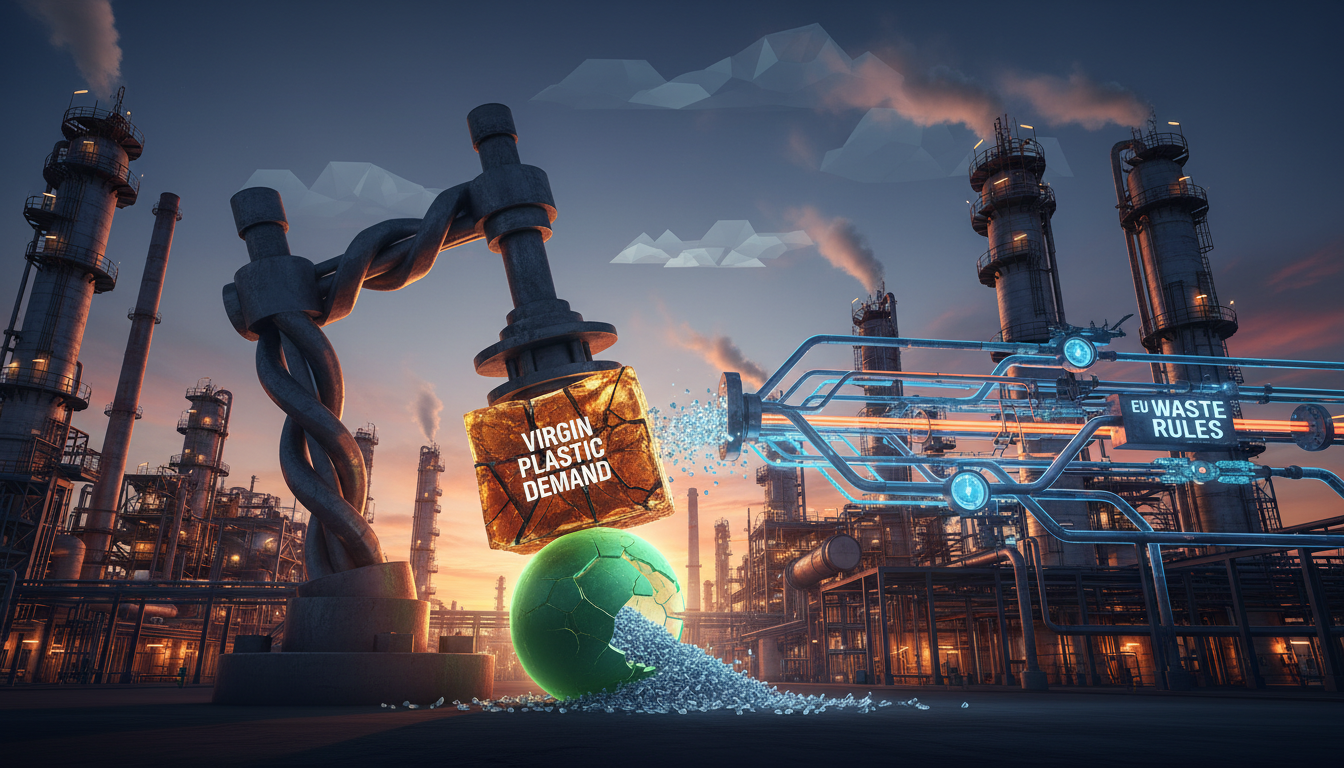
EU Packaging Overhaul: A Crucial Signal for Petrochemical Investors
Investors tracking the global petrochemical landscape must pay close attention to the European Union’s latest move: detailed guidance for its far-reaching Packaging and Packaging Waste Regulation (PPWR). While seemingly a niche environmental policy, this ambitious framework carries significant implications for the future demand of virgin plastics, directly impacting upstream and downstream oil and gas investments.
The European Commission’s proactive stance is designed to clarify a complex regulatory environment, aiming to standardize fragmented national rules and reduce the administrative burden on businesses operating across the bloc. However, its true power lies in its capacity to reshape material consumption patterns, particularly for plastic, a cornerstone product of the modern petrochemical industry. For savvy oil and gas investors, understanding these shifts is not merely about compliance; it’s about anticipating market transformations that will influence long-term asset values and strategic capital allocation.
Mounting Waste Pressures Drive Policy Acceleration, Threatening Virgin Plastic Demand
The urgency driving the PPWR is underscored by stark statistics. In 2023, the average European citizen generated a staggering 178 kilograms of packaging waste. Without significant policy interventions, projections indicate total waste volumes could surge by 19% by 2030 compared to 2018 levels. Even more critically for the petrochemical sector, plastic waste alone is forecast to escalate by as much as 46% over the same period. These figures represent a direct challenge to the linear “take-make-dispose” model that has long underpinned virgin plastic production.
Such trends are not just environmental liabilities; they are economic disrupters. For oil and gas companies heavily invested in petrochemical feedstocks like naphtha, ethane, and propane, these projections signal a potential deceleration in future demand growth for the polymers derived from these resources. The EU’s clear intention to transition towards a circular economy for packaging materials means a structural reduction in the need for newly produced plastics, a development that cannot be overlooked by investors analyzing long-term cash flow forecasts for petrochemical assets.
Key Regulatory Clarifications: Reshaping the Petrochemical Value Chain
The new guidance aims to demystify several critical aspects of the PPWR, providing much-needed clarity for industries, including those within the broader chemicals and materials sectors. For instance, it precisely defines what constitutes a “manufacturer” or “producer” under the regulation, distinctions that carry substantial financial and operational responsibilities. Similarly, a clearer definition of “packaging” itself will impact reporting obligations, recycling mandates, and ultimately, cost allocations across complex value chains involving petrochemical-derived materials.
Specific measures outlined in the guidance will directly influence plastics demand. Restrictions on various forms of single-use packaging, particularly prevalent in sectors like food service and retail, directly target high-volume applications of virgin polymers. Furthermore, stringent limits on per- and polyfluoroalkyl substances (PFAS) in food contact packaging introduce new material specifications, potentially requiring a shift away from certain existing plastic formulations or coatings. Investors should note these changes as they could necessitate significant research and development outlays, or even divestment from product lines reliant on affected materials.
Moreover, the emphasis on reuse targets and the expansion of extended producer responsibility (EPR) schemes signal a fundamental shift. EPR mandates place the financial and organizational burden of managing packaging waste onto the producers themselves, creating a strong economic incentive to design packaging that is easily recyclable, reusable, or made from recycled content. This effectively internalizes the cost of waste, driving investment away from virgin materials and towards circular solutions, including mechanical and advanced chemical recycling technologies.
Implementation Tools and the Evolving Regulatory Landscape
Beyond the immediate guidance, the Commission has released a comprehensive FAQ document to address operational queries, a testament to the dynamic and evolving nature of this regulatory framework. Importantly, while this guidance offers interpretive clarity, it does not alter the legal provisions of the PPWR. Instead, it paves the way for a series of delegated and implementing acts.
These forthcoming acts are critical for oil and gas investors to monitor. They will establish harmonized registration and reporting formats, standardize labelling requirements for waste sorting, and crucially, define robust criteria for recyclability and recycled content in plastic packaging. Such measures will create new market specifications that could significantly disadvantage virgin plastic producers unable to demonstrate a clear path to circularity. The collaboration with Member States, industry stakeholders, and international partners underlines the global ramifications of the EU’s packaging policy, indicating a strong potential for these standards to influence markets far beyond European borders.
Strategic Implications for Oil & Gas Investors
For C-suite executives and astute investors in the oil and gas sector, the PPWR is far more than an environmental footnote; it’s a strategic imperative. The shift in packaging away from a purely cost-optimized function to a strategic lever intertwined with sustainability, brand resilience, and regulatory risk management directly impacts the profitability and valuation of petrochemical assets.
Companies with significant downstream petrochemical exposure will need to aggressively reassess their product portfolios, invest heavily in research and development for recyclable and reusable materials, and ensure their supply chains can meet stringent new reporting and recycled content standards. Those that proactively pivot towards advanced recycling technologies, bio-based alternatives, or circular business models may gain a significant competitive advantage, unlocking new revenue streams and reducing long-term regulatory exposure.
From a governance perspective, the PPWR solidifies the EU’s role as a global leader in environmental regulation. Its successful implementation will inevitably set benchmarks and influence policy decisions in other major economies, particularly for multinational corporations. This ripple effect demands a holistic re-evaluation by oil and gas companies of their global petrochemical strategies, considering the increasing premium placed on ESG performance and circular economy principles by institutional investors.
As the Commission rolls out the next phase of technical rules, the ultimate success of the PPWR hinges on consistent, uniform application across all Member States. For oil and gas investors, this translates into a need for continuous vigilance, as the regulatory clarity and market signals from Europe will undoubtedly shape the future of plastics demand and, consequently, the long-term outlook for a significant segment of the petrochemical industry.
