The global energy landscape is once again shifting under the weight of geopolitical maneuvering, with the European Union’s latest sanctions targeting Chinese entities involved in the trade of Russian oil. This move, part of the EU’s 19th package, escalates the economic pressure on Moscow and, crucially, its enablers, injecting fresh uncertainty into global crude markets. For investors, understanding the ripple effects of these measures — from immediate price volatility to long-term supply chain realignments — is paramount. We delve into how these sanctions could reshape trade flows, impact key buyers like China and India, and what upcoming market events could signal the next phase for crude prices.
Navigating the Immediate Market Reaction and Escalating Sanctions
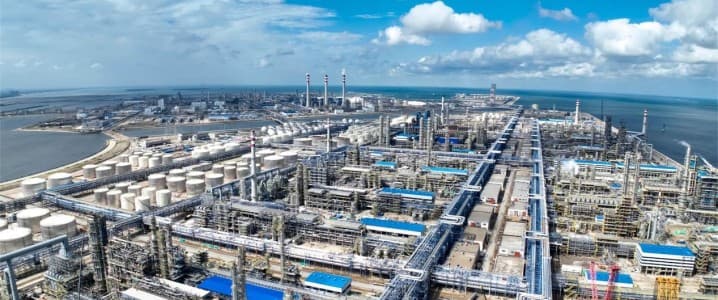
The European Union’s 19th sanctions package marks a significant escalation, directly listing four companies, including a Chinese trading firm and two independent Chinese oil refineries. These entities are accused of actively circumventing Western restrictions on Russian oil, a practice China continues to describe as “normal trade.” This strategic move by Brussels follows previous sanctions that targeted Chinese entities involved in drone manufacturing, dual-use goods, and even two small Chinese banks in July, which prompted retaliatory bans from Beijing on Lithuanian banks. The EU’s focus is clearly broadening from direct Russian actors to third-party facilitators, aiming to increase the friction and cost of Moscow’s continued oil exports.
As of today, Brent crude trades at $90.38 per barrel, reflecting a notable decline of 9.07% within the day, with its price range spanning $86.08 to $98.97. WTI crude mirrors this volatility, sitting at $82.59, down 9.41% for the day. This sharp correction in prices, which has seen Brent crude fall by nearly 20% from $112.78 just fourteen days ago, underscores the market’s sensitivity to both geopolitical uncertainties and evolving supply-demand dynamics. While not solely attributable to this specific sanctions news, the renewed focus on potential disruptions to Russian oil flows and the broader tightening of trade channels contribute to a risk-off sentiment, compelling investors to weigh the implications of a potentially more fragmented global energy market.
China and India’s Pivotal Role in the Russian Oil Equation
Despite numerous Western sanctions, Russian oil has largely kept flowing to global markets, with China emerging as the dominant buyer. Beijing’s stance maintains that its trade with Russia is legitimate, even as the West views China as central to helping Moscow circumvent restrictions. According to customs data, China’s oil imports from Russia increased 4.3% month-on-month in September to 8.29 million tons, constituting 17.5% of the country’s total oil imports. However, it’s worth noting that China’s imports from Russia have seen a similar percentage decline compared to a year ago, indicating a dynamic, opportunistic purchasing strategy that responds to market conditions and geopolitical pressures.
The Economist Intelligence Unit’s senior economist, Xu Tianchen, suggests China’s increased Russian oil purchases may be an “act of defiance” ahead of further talks with the US, highlighting Beijing’s reluctance to abandon Russian crude without significant concessions, such as the removal of tariffs and sanctions on Chinese companies. Meanwhile, India’s position appears to be evolving. Reports indicate that Indian Prime Minister Narendra Modi reportedly assured a scaling back of Russian crude oil purchases following discussions with US President Donald Trump earlier this week. This shift comes as the United States and India are reportedly nearing a trade deal that would lower US tariffs on Indian exports to around 15-16 percent, in exchange for a gradual reduction in Russian oil imports. This potential agreement represents a significant development, as it could redirect a substantial volume of crude and create new dynamics in global energy trade flows.
Investor Horizon: Price Predictions and OPEC+ Directives
Our proprietary reader intent data reveals a keen investor focus on forward-looking scenarios, with frequent questions arising such as, “what do you predict the price of oil per barrel will be by end of 2026?” and “What are OPEC+ current production quotas?”. These inquiries underscore the market’s search for clarity amid ongoing volatility and geopolitical shifts. The upcoming OPEC+ Joint Ministerial Monitoring Committee (JMMC) Meeting on April 19th, followed by the full Ministerial Meeting on April 20th, will be critical events for shaping investor sentiment.
These sessions will undoubtedly address the recent market volatility, including the significant nearly 20% drop in Brent crude over the past two weeks, and assess the broader impact of escalating geopolitical tensions on global supply. Any adjustments to production quotas or forward guidance from OPEC+ will directly influence price trajectories for the remainder of 2026. Beyond these pivotal meetings, investors will also be closely monitoring the API Weekly Crude Inventory report on April 21st and the EIA Weekly Petroleum Status Report on April 22nd, providing immediate insights into US supply and demand dynamics. These, along with the Baker Hughes Rig Count on April 24th, offer granular data that can signal short-term market direction. The interplay of escalating sanctions, strategic buyer shifts, and OPEC+ policy will largely dictate the path to year-end prices, demanding a nuanced understanding from investors.
Geopolitical Fallout and the Resilience of Global Oil Flows
The EU’s targeting of Chinese entities marks a significant escalation, moving beyond direct Russian actors to those facilitating circumvention. This strategy could set a precedent for future sanctions against other third-party facilitators globally. While previous sanctions packages have not entirely halted Russian oil flows, these current measures are designed to increase the cost and complexity of such trade, potentially leading to higher discounts for Russian crude and greater logistical hurdles. The combined effect of a potential US-India trade deal reducing India’s Russian oil imports and the EU’s direct targeting of Chinese refiners could force a substantial rerouting of Russian crude, possibly intensifying competition among remaining buyers or compelling deeper price concessions from Moscow.
Investors must consider the long-term implications for established trade routes and the potential emergence of new, less transparent supply chains. The resilience of these alternative routes, and the willingness of other non-aligned nations to step into the void, will be key determinants of how effectively these sanctions impact global supply. The current environment demands a sophisticated understanding of not just traditional supply-demand fundamentals, but also the intricate web of geopolitical alliances, economic incentives, and the potential for a more fragmented global energy market. Identifying companies with robust supply chain resilience and diversified market access will be crucial for navigating these evolving dynamics.


