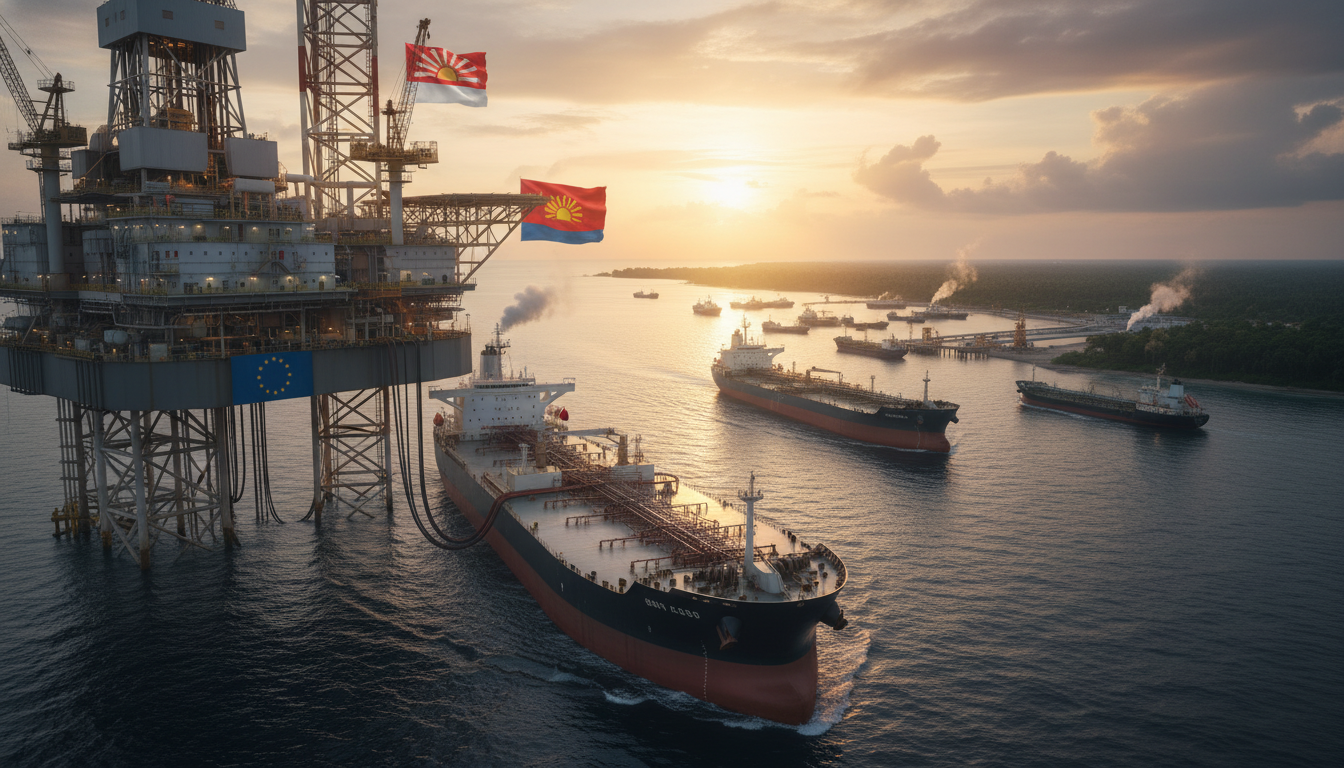
EU Presses Southeast Asia on Oil Diversification Amid Russian Inflows
The intricate dance of global energy geopolitics continues to redefine supply chains, directly impacting investment strategies across the oil and gas sector. European Union officials are actively urging Southeast Asian nations to strategically diversify their crude oil procurement, specifically advocating for a reduction in reliance on Russian supplies. This push comes despite the immediate and acute logistical and economic pressures currently challenging these vibrant Asian economies, highlighting a broader geopolitical struggle that profoundly influences global crude flows and the underlying financial mechanisms.
Southeast Asia Grapples with Supply Shocks
Nations across Southeast Asia, including significant players like the Philippines, Indonesia, Malaysia, and Vietnam, have recently contended with severe and unprecedented fuel shortages. This critical situation stems from extended disruptions to the vital Strait of Hormuz shipping lane, which historically served as the primary conduit for a substantial portion of their crude and refined fuel imports from the Middle East. The Philippines, a nation that previously sourced an extraordinary 98% of its total oil imports from the Middle East, responded by declaring a national energy emergency as early as mid-March. This stark reality underscores the magnitude of the supply shock, compelling many in the region to seek out alternative suppliers. Russian crude, despite its political sensitivities, has emerged as a significant, albeit controversial, option.
The Russian Oil Conundrum and EU Opposition
A crucial factor enabling this pivot to Russian supplies was a waiver from the U.S. Treasury, which permitted the unsanctioned sale of Russian oil. This allowance, extended in April by the Trump Administration, remained valid until May 16, providing a critical window for countries facing severe shortages to access Russian barrels without directly contravening Western sanctions. However, this shift in procurement patterns has drawn considerable scrutiny from the European Union, which views Russia’s increased oil revenues with significant disapproval.
During recent high-level meetings with ASEAN representatives in Brunei, Kaja Kallas, the EU’s High Representative for Foreign Affairs and Security Policy, directly conveyed the Union’s profound concerns. She explicitly noted that while a global energy crisis is undeniable, “unfortunately, this energy crisis is benefiting Russia.” Kallas underscored that this financial windfall directly bolsters the Kremlin’s capacity to fund its ongoing military operations in Ukraine. “We want wars to end. We want peace and then we do not have these kind of problems. So, that is why we are advocating for diversifying resources and finding them elsewhere, not from Russia,” the top EU diplomat stated, emphasizing the strategic imperative behind the EU’s guidance. For energy companies and investors, this firm position from the EU introduces a complex layer of geopolitical considerations when evaluating supply chain resilience and national energy security across the Asian continent.
Key Transactions Highlight Urgent Need
The practical implications of these turbulent market dynamics are vividly illustrated by recent transactions involving Russian crude. Petron, the sole refinery operator in the Philippines, reportedly secured nearly 2.5 million barrels of Russian crude towards the close of last month. The company was explicit in characterizing this procurement as an act of “extreme necessity,” asserting that it represents a significant departure from its standard sourcing practices. Petron underscored its position by stating: “The Corporation wishes to emphasize that the procurement of Russian crude oil is not part of the Corporation’s business-as-usual sourcing strategy, and the purchases were undertaken strictly out of extreme necessity as an extraordinary emergency measure in response to unprecedented geopolitical and supply-chain disruptions and only after exhausting all commercially and operationally viable alternatives.” This declaration starkly reveals the dire circumstances compelling such decisions within Southeast Asia’s energy landscape.
Indonesia, the largest economy within the Southeast Asian bloc, also announced ambitious plans to import 150 million barrels of crude from Russia throughout the current year. This substantial commitment aims directly at offsetting the considerable deficit created by reduced Middle Eastern supplies. Concurrently, Malaysia and Vietnam are actively exploring opportunities for Russian oil imports, reacting decisively to a Strait of Hormuz blockade that has now persisted for over eight weeks, severely disrupting the once reliable and free flow of crude to key Asian markets.
Investor Outlook: Navigating Geopolitical Energy Markets
For investors deeply entrenched in the oil and gas sector, these developments underscore a persistent fragmentation of global crude markets and signal heightened geopolitical risk premiums. The concerted pressure from the EU for diversification away from Russian oil, juxtaposed against the immediate energy security imperatives of rapidly expanding Southeast Asian economies, cultivates a complex and often contradictory investment environment. Companies boasting diverse global upstream assets or those strategically positioned in midstream logistics outside of contested choke points may find themselves in a more robust and resilient position.
Furthermore, the explicit statements from Asian refiners regarding “extreme necessity” powerfully highlight the urgent, non-negotiable demand for crude, often overriding political preferences and strategic alliances in the short term. The ongoing disruption in a vital transit route like the Strait of Hormuz, now impacting supplies for over two months, powerfully reinforces the inherent fragility of traditional supply chains and elevates the critical importance of agile and flexible sourcing strategies.
Investors must remain vigilant, closely monitoring evolving EU foreign policy directives, the nuances of U.S. Treasury waivers, and the intricate dynamics of energy diplomacy unfolding across Southeast Asia. The narrative surrounding crude oil procurement has transcended mere economics; it is now inextricably intertwined with international relations, national security, and the funding mechanisms of global geopolitical conflicts. Astute analysis of these interconnected dynamics will prove indispensable for identifying both investment opportunities and mitigating risks within the volatile global energy markets.


