Navigating Europe’s Carbon Crossroads: Investment Implications of ETS Reinvestment Gaps
Europe’s ambitious decarbonization agenda, spearheaded by its Emissions Trading System (ETS), stands at a critical juncture. While the system has demonstrably driven down industrial emissions, a significant disparity in the reinvestment of its substantial revenues poses a growing challenge for energy-intensive sectors and, by extension, for investors. The European Commission is urging member states to dramatically increase their national-level reinvestment of ETS proceeds back into industrial innovation, a move that could fundamentally reshape the competitive landscape for heavy industry across the continent. For oil and gas investors, understanding these evolving regulatory and financial dynamics is crucial for identifying both risks and nascent opportunities within the continent’s green transition.
The ETS Paradox: Climate Success Meets Industrial Competitiveness Concerns
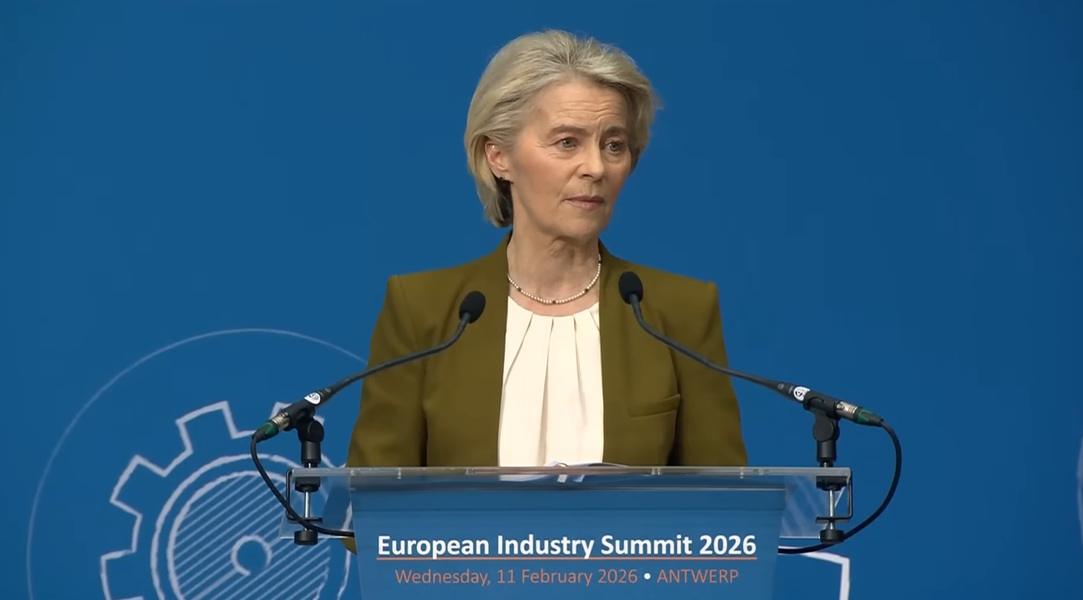
Since its inception in 2005, the EU ETS has been a cornerstone of Europe’s climate policy, putting a price on carbon for sectors spanning electricity, heat generation, oil refining, steel, cement, paper, and chemicals. The system’s effectiveness is undeniable; emissions from covered sectors have plummeted by 39% while simultaneously achieving a remarkable 71% economic growth. This success, championed by European Commission President Ursula von der Leyen, demonstrates that decarbonization and economic expansion are not mutually exclusive. However, this progress comes with a significant caveat: the financial burden on industries. Companies across these sectors frequently voice concerns over the high, often unpredictable cost of carbon allowances and the risk of “carbon leakage,” where production shifts to regions with less stringent environmental policies. The core of this tension lies in the reinvestment gap: while 100% of ETS revenues are channeled into industrial innovation at the EU level, less than 5% is reinvested at the national level. This creates a critical funding deficit for on-the-ground decarbonization projects, leaving many European heavy industries struggling to absorb escalating compliance costs without sufficient financial support for transformation.
Market Volatility and Carbon Costs: A Dual Headwind for Energy Investors
The financial pressures on energy-intensive industries are compounded by the inherent volatility of global commodity markets. As of today, Brent crude trades at $92.99 per barrel, marking a significant increase of 2.83% within the day, though this follows a substantial downturn. Our proprietary data shows Brent has fallen from $118.35 on March 31st to $94.86 just yesterday, representing a nearly 20% drop over two weeks. WTI crude also stands at $89.4 per barrel, up 2.26% today. This recent downward trend in crude prices, despite today’s rebound, impacts the revenue streams and operational costs for segments of the oil and gas sector and related industries. While lower input costs might offer some relief, the underlying uncertainty in energy pricing adds another layer of complexity for companies already grappling with the rising, and often unpredictable, costs associated with carbon allowances. For investors, this dual challenge means assessing not only a company’s operational efficiency and market position but also its exposure to carbon pricing and its strategic response to decarbonization mandates. Businesses without robust, funded plans for emissions reduction face increased financial risk in this environment.
Upcoming Reforms and the Future of Industrial Decarbonization Funding
The call for increased national reinvestment is not merely rhetoric; it signals a concrete shift in policy focus. The European Commission has explicitly stated that channeling more ETS revenues back to industry will be a core focus of upcoming reforms to the Emissions Trading System, planned for later this summer. This legislative push is poised to be a pivotal moment for European heavy industry. Investors should closely monitor these developments, as a successful reform could unlock significant capital for greening existing industrial infrastructure and fostering innovation. Furthermore, the expansion of the ETS, known as ETS2, which will extend carbon pricing to fuel used for road transport and heating buildings, is now expected in 2028, a year later than initially planned. This delay, while providing a short reprieve, underscores the political complexities and the need for robust support mechanisms for affected sectors. For those looking ahead, the EIA’s Short-Term Energy Outlook, scheduled for release on May 2nd, will offer crucial insights into broader energy market trends that will frame these policy discussions. Companies positioned to effectively utilize future reinvestment funds, particularly in sectors like cement, steel, and refining, stand to gain a competitive edge.
Investor Sentiment and the Long-Term Energy Outlook
Our proprietary reader intent data reveals a clear focus among investors: the direction of WTI crude and the long-term price outlook for oil. Questions like “is WTI going up or down?” and “what do you predict the price of oil per barrel will be by end of 2026?” highlight a strong desire for clarity amidst market fluctuations. The EU’s aggressive decarbonization drive, particularly through the ETS, directly influences this long-term outlook. While the immediate focus might be on supply-side dynamics – such as the upcoming OPEC+ JMMC Meeting on April 21st or the weekly EIA Petroleum Status Reports – the structural demand erosion driven by carbon pricing and industrial transformation cannot be overlooked. Investors must consider how EU policies, aimed at accelerating the energy transition, will impact long-term demand for fossil fuels and the profitability of companies that rely on them. Those companies actively investing in carbon capture, hydrogen production, or other green technologies, potentially leveraging future ETS reinvestment, are likely to be viewed more favorably by the market. The broader shift towards a carbon-neutral economy suggests that while short-term price movements are important, a company’s long-term viability will increasingly be tied to its decarbonization strategy and its ability to adapt to a world with escalating carbon costs.


