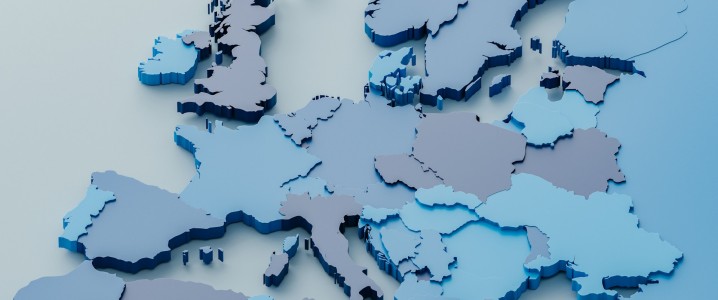
The European Union is embarking on a monumental infrastructure overhaul, targeting critical bottlenecks within its electricity grid to stabilize surging power costs and reduce market volatility. This ambitious initiative, spearheaded by European Commission President Ursula von der Leyen, aims to unify disparate energy markets across the continent where electricity prices can vary threefold between member states. For oil and gas investors, this isn’t just a story about electrons; it’s a significant long-term structural play that promises to reshape European energy demand, particularly for natural gas, and influence global energy market dynamics for decades to come.
The Trillion-Euro Grid Fix: A Structural Shift for Europe
Europe’s fragmented electricity infrastructure has long been a source of inefficiency and price instability. The Commission’s plan directly confronts this issue, acknowledging that many price spikes could be mitigated if energy flowed more freely to areas of need. Key to this strategy is improved interconnection and more efficient utilization of existing links. Progress is already underway with projects like the Celtic interconnector, designed to integrate Ireland more closely into the European grid, and the Biscay Bay project, which aims to double France-Spain capacity. Looking ahead, the Commission is set to propose a comprehensive “Grids Package” and a new “Energy Highways” initiative by year-end, focusing on eight critical bottlenecks across the EU. These initiatives underscore a commitment to liberate these constraints, backed by necessary funding. This isn’t merely a repair job; it’s a foundational rebuild, with the European Court of Auditors estimating a staggering investment of €2 trillion to €2.3 trillion required to meet grid needs through 2050. The urgency was underscored by a significant blackout in Spain and Portugal in late April, serving as a stark reminder that robust, flexible grids are paramount, regardless of the pace of renewable energy deployment, to ensure secure power supply and meet rising demand.
Market Realities and the Cost of Energy Transition
The EU’s grid ambitions unfold against a backdrop of an evolving global energy market. As of today, Brent crude trades at $98.38 per barrel, marking a 1.02% dip, with WTI crude following a similar trajectory at $90.05, down 1.23%. This current snapshot contrasts sharply with recent trends; our proprietary data indicates Brent crude has shed significant value over the past two weeks, falling from $112.57 on March 27th to $98.57 on April 16th, representing a 12.4% decline. While current gasoline prices hover around $3.08, down 0.32% for the day, the broader market sentiment reflects a complex interplay of supply, demand, and geopolitical factors. For the EU, a strong, integrated grid promises to insulate member states somewhat from these global price swings by allowing for more efficient distribution of diversified energy sources, including renewables. However, the sheer scale of investment required — €2-2.3 trillion — highlights the immense capital commitment needed to achieve this resilience. This capital allocation will have ripple effects across the financial landscape, potentially drawing investment away from other sectors or requiring innovative financing mechanisms. Investors are keenly watching how this massive expenditure will be financed and what returns it promises, not just in terms of energy stability, but also economic growth and reduced reliance on volatile external energy sources.
Investor Insights: Gas Demand and Supply Implications
A recurring theme in inquiries from OilMarketCap.com readers revolves around the future of natural gas demand and the influence of global supply decisions, with questions like “What are OPEC+ current production quotas?” frequently appearing in our data. The EU’s grid modernization directly impacts these considerations. By enabling more efficient integration of renewables and facilitating freer energy flow, the initiative aims to reduce reliance on gas as a swing fuel for electricity generation. If successful, this could translate to a structural decrease in European natural gas demand over the long term. While gas will undoubtedly remain a crucial component of the energy mix for years to come, particularly for industrial processes and as a backup for intermittent renewables, a truly unified and smart grid diminishes its role in balancing regional power supply. This shift could exert downward pressure on European gas prices, affecting the profitability of LNG imports and pipeline gas suppliers. Energy investors must consider the potential for a gradual but significant rebalancing of Europe’s energy portfolio, where gas demand becomes less elastic to power generation needs and more tied to industrial consumption and strategic reserves.
Forward Outlook: Navigating Upcoming Catalysts
The EU’s grid strategy will unfold alongside a series of critical energy events that demand investor attention. The upcoming OPEC+ Joint Ministerial Monitoring Committee (JMMC) meeting on April 18th, followed by the Full Ministerial meeting on April 20th, will set the tone for global crude supply. While these meetings directly address oil production, their outcomes invariably influence the broader energy complex, including natural gas markets, through sentiment and relative pricing. Significant decisions on crude output could impact the economic calculus of EU grid investments, particularly in the context of overall energy costs. Closer to home, the weekly API and EIA crude inventory reports on April 21st/22nd and April 28th/29th will offer real-time insights into supply-demand balances in the critical North American market, providing further global market context. More directly relevant to the EU’s plans, however, will be the detailed proposals for the “Grids Package” and “Energy Highways” initiatives expected by the end of the year. These documents will outline concrete policy steps, funding mechanisms, and timelines, acting as pivotal catalysts for investors to assess the practical implementation and potential impact of this trillion-euro undertaking. The success of these initiatives will not only redefine Europe’s energy security but also reshape the long-term demand profile for traditional hydrocarbons, particularly natural gas, prompting a strategic re-evaluation for investors across the oil and gas sector.


