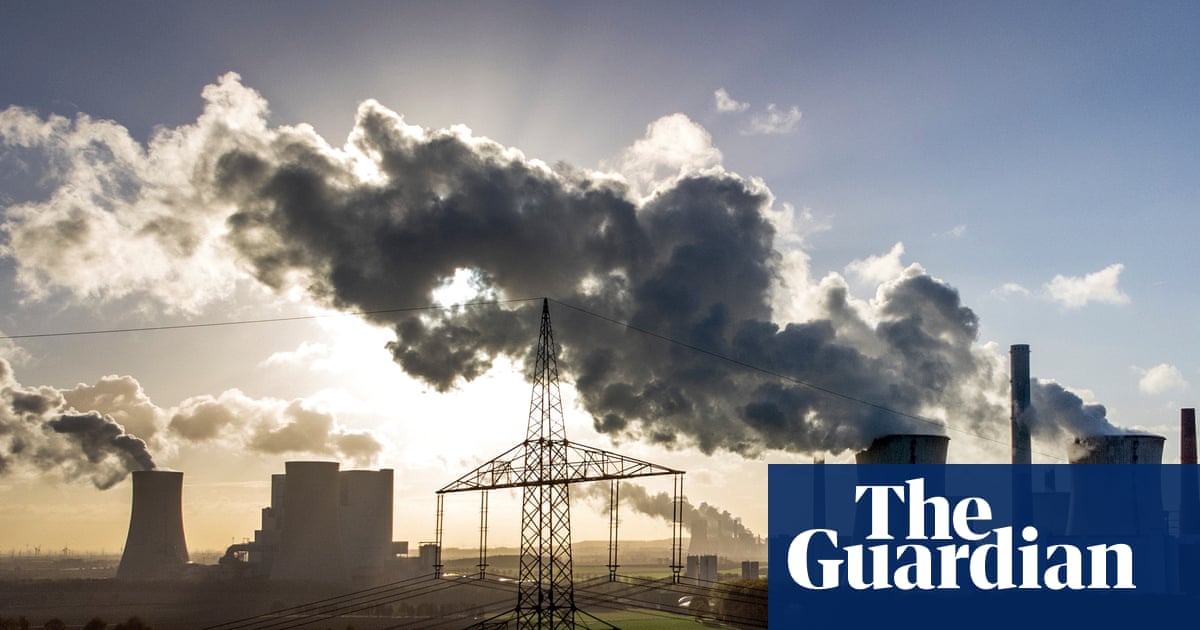
The European Union’s internal struggle to finalize its next round of climate commitments poses a significant and evolving policy risk for global oil and gas investors. With the critical COP30 climate summit fast approaching in Brazil, the bloc’s current inability to agree on concrete greenhouse gas emissions targets for 2035 and beyond creates a palpable sense of uncertainty. This impasse is not merely an environmental debate; it directly impacts long-term demand projections, capital allocation decisions, and the overall trajectory of the energy transition, demanding close attention from market participants.
The EU’s Internal Climate Tug-of-War and its Global Ripple Effect
Europe’s ambition to lead global climate action is currently facing a formidable challenge from within. Leaked draft texts reveal a stark lack of agreement among member states and the European Commission on the crucial numbers for future emissions reductions. Specifically, the absence of any provisional or even range-bound targets for the 2035 Nationally Determined Contribution (NDC) and a 2040 emissions goal is particularly concerning at this late stage. The EU’s existing commitment is a 55% reduction in greenhouse gas emissions by 2030 compared to 1990 levels. However, to align with its overarching net-zero by 2050 objective, analysis suggests a significantly steeper trajectory, implying reductions of approximately 74% to 78% by 2035, and 90% to 95% by 2040. The current internal discussions, which reportedly lean towards a simple linear path between 2030 and 2040, are criticized for delaying critical near-term action. This lack of a clear, aggressive target from a major economic bloc like the EU not only undermines its leadership role but also potentially slows the momentum for other nations to submit their own updated NDCs ahead of the UN’s September 24th deadline. The implications for the oil and gas sector are clear: delayed or weaker EU targets could translate to a longer runway for fossil fuel demand in the short-to-medium term, albeit with increased uncertainty over the longer horizon.
Market Volatility and the Policy Premium for Oil & Gas
Against this backdrop of policy uncertainty, global energy markets continue to exhibit dynamic shifts, reflecting a complex interplay of supply, demand, and geopolitical factors. As of today, Brent crude trades at $98.17 per barrel, marking a 1.23% decline within a day range of $97.92-$98.58. Similarly, WTI crude is priced at $89.89, down 1.4%, moving between $89.57 and $90.21. This recent daily dip follows a more significant trend; Brent crude has seen a notable correction over the past two weeks, dropping from $112.57 on March 27th to $98.57 on April 16th—a substantial $14 or 12.4% decrease. This downward trajectory reflects a market grappling with various inputs, including demand signals, ongoing supply considerations, and growing economic concerns. The EU’s internal wrangling adds a layer of ‘policy premium’ or ‘discount’ to future demand projections. Investors are tasked with assessing how delayed or diluted climate targets might impact the pace of demand destruction or, conversely, extend the lifespan of certain fossil fuel assets. Gasoline prices, currently at $3.09 per gallon, down 0.32% today, offer a consumer-level snapshot of market sentiment and demand elasticity under current conditions, further highlighting the interconnectedness of policy, price, and consumption.
Investor Clarity Amidst Policy Haze: What Our Readers Are Asking
In an environment characterized by both market volatility and policy ambiguity, our proprietary data reveals that investors are actively seeking clarity on fundamental market drivers. Specifically, our AI assistant’s query logs show a high volume of questions related to immediate supply-side dynamics, such as “What are OPEC+ current production quotas?” and “What is the current Brent crude price?” This consistent focus underscores an investor community acutely aware of the macroeconomic and geopolitical forces shaping daily price action, while simultaneously navigating the long-term strategic implications of evolving climate policy. The demand for real-time, reliable data and analytical tools is paramount when fundamental policy shifts are in flux. Investors are looking to cut through the noise of protracted political negotiations to understand how immediate supply decisions, global inventory levels, and real-time pricing impact their portfolios. The emphasis on data integrity and transparent modeling signals a sophisticated approach to risk management, where robust market intelligence provides a critical edge against the backdrop of an uncertain energy transition path.
Upcoming Events and the Path to COP30: Policy Catalysts and Investment Decisions
The coming weeks and months present a series of critical junctures that will shape both the immediate energy market outlook and the long-term policy landscape. In the very near term, investors are keenly awaiting the outcomes of the OPEC+ Joint Ministerial Monitoring Committee (JMMC) meeting on April 18th, followed by the full Ministerial meeting on April 20th. These gatherings are pivotal for understanding global crude supply strategies and their potential impact on prices. While OPEC+ decisions primarily address short-to-medium-term supply, they cannot ignore the broader demand implications of the EU’s climate policy debates. A delayed or weakened EU emissions target could signal a slower pace of demand reduction, potentially influencing OPEC+’s production calculus. Looking further ahead, the UN’s September 24th deadline for countries to submit their updated NDCs looms large. The EU’s ability to present a robust, unified target at this stage could reignite global momentum ahead of COP30 in Brazil later this November. For oil and gas companies, these upcoming events create a complex decision matrix. Investment strategies must account for potential scenarios ranging from accelerated energy transition, driven by strong EU targets, to a more protracted fossil fuel era if policy ambition wanes. This necessitates agile capital allocation, focusing on projects with robust economics and the flexibility to adapt to an evolving regulatory and market environment, ultimately shaping the risk-reward profile for the entire sector.


