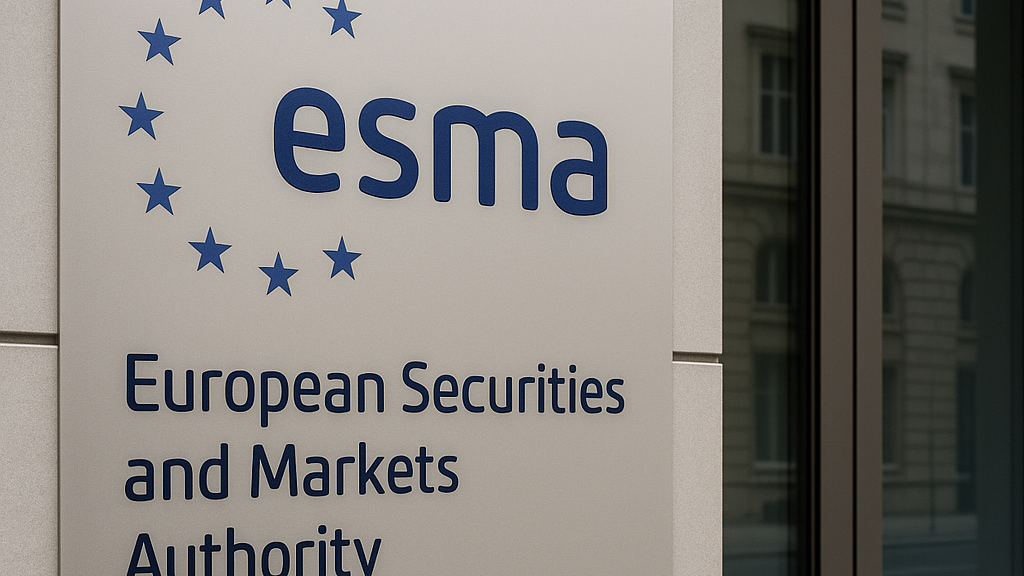
The European Union has signaled a significant escalation in its commitment to sustainable finance, with a new pact between the European Securities and Markets Authority (ESMA) and the European Environment Agency (EEA). This agreement is poised to fundamentally reshape how environmental data is integrated into financial oversight and enforcement across the bloc. For the oil and gas sector, this isn’t merely a procedural update; it represents a substantial tightening of capital risk, demanding immediate attention from investors and corporate strategists alike. The coordination aims to reduce duplication and strengthen the EU’s climate and biodiversity objectives, but its practical implication is a much sharper regulatory lens on environmental claims and performance, directly impacting funding access and valuation for energy companies.
The Regulatory Hammer: Integrating Environmental Data into Financial Oversight
The memorandum of understanding between ESMA and the EEA marks a pivotal moment in the EU’s sustainable finance agenda. This isn’t just about greenwashing anymore; it’s about embedding environmental data directly into the core framework of financial monitoring and enforcement. The agreement facilitates information sharing, technical expertise exchange, and joint training initiatives, while critically, also coordinating national-level regulators and environmental authorities. This cross-border collaboration is designed to iron out inconsistencies in what has been a fragmented policy landscape, ensuring a unified and robust approach to environmental claims tied to financial products. For oil and gas companies operating or seeking capital in Europe, this means an unprecedented level of scrutiny on their environmental impact. From emissions reporting to biodiversity impact assessments, the data supplied will need to be verifiable, consistent, and integrated into financial disclosures, moving beyond mere narrative to hard, auditable facts. Companies that fail to adapt to this enhanced data integration will likely face significant hurdles in accessing capital and maintaining investor confidence.
Market Volatility and the ESG Premium: What Today’s Prices Tell Us
As of today, April 18, 2026, the crude market is experiencing notable volatility, with Brent Crude trading at $90.38, a sharp decline of 9.07% within the day’s range of $86.08 to $98.97. Similarly, WTI Crude stands at $82.59, down 9.41% from its daily high. This follows a broader trend where Brent has shed $20.91, or 18.5%, over the past two weeks, falling from $112.78 on March 30. Gasoline prices have also dipped, now at $2.93, a 5.18% drop. While these significant price movements are undoubtedly influenced by a complex interplay of supply-demand dynamics and geopolitical factors, the EU’s tightening grip on green finance adds a distinct layer of systemic risk for the oil and gas sector. The increasing regulatory pressure means that even amidst favorable traditional market fundamentals, companies with inadequate environmental data disclosure or poor ESG performance could see their valuations disproportionately penalized. Investors are increasingly factoring in regulatory exposure as a core risk, and this enhanced EU scrutiny will undoubtedly contribute to a wider “ESG discount” for firms perceived as laggards, potentially exacerbating downward pressure on their market capitalization despite the underlying commodity price.
Investor Concerns: Navigating a Shifting Capital Landscape
Our proprietary reader intent data reveals a clear focus from investors on the future trajectory of oil prices and individual company performance, with common questions like “What do you predict the price of oil per barrel will be by end of 2026?” and “How well do you think Repsol will end in April 2026?”. These questions underscore a fundamental desire for clarity in a volatile market. The EU’s intensified scrutiny directly impacts these concerns. The agreement between ESMA and the EEA means that the environmental performance and disclosure of companies like Repsol will be under a much brighter spotlight. It will become increasingly difficult for oil and gas companies to secure “green” funding or even maintain existing ESG-aligned investments if their environmental claims and data are not robust, verifiable, and compliant with evolving EU standards. This directly impacts their cost of capital, access to new projects, and ultimately, their financial performance. Investors are actively seeking reliable data sources to inform their decisions, and the EU’s move effectively mandates that companies provide precisely this type of granular, auditable environmental information, transforming how capital is allocated within the energy sector. Companies that proactively integrate environmental data into their financial reporting will be better positioned to attract and retain capital, distinguishing themselves in a crowded and increasingly scrutinized market.
Upcoming Events and Forward Capital Planning for O&G
The coming weeks are packed with critical energy market events, including the OPEC+ Joint Ministerial Monitoring Committee (JMMC) meeting today, April 18th, followed by the Full Ministerial OPEC+ Meeting tomorrow, April 19th. We also anticipate key inventory reports from API and EIA on April 21st and 22nd, respectively, with Baker Hughes Rig Count data following on April 24th. While these events traditionally focus on supply, demand, and production quotas – topics of keen interest to investors asking about “OPEC+ current production quotas” – the EU’s enhanced green finance scrutiny introduces a new dimension to forward capital planning for oil and gas. Even if OPEC+ decides on favorable production quotas that support crude prices, the ability of individual O&G companies to capitalize on these conditions will increasingly depend on their verifiable sustainability credentials. The long-term implications of the ESMA-EEA pact mean that securing funding for exploration, development, or even maintenance capital expenditure will be scrutinized through an ESG lens. Companies must not only navigate the immediate market dynamics driven by OPEC+ decisions and inventory levels but also proactively adapt their financial disclosures and environmental performance to meet these escalating EU standards. Failure to do so could result in higher capital costs, restricted access to finance, and a diminished competitive standing, regardless of the prevailing crude price environment. This creates a dual challenge: managing traditional market fundamentals while simultaneously de-risking ESG exposure through transparent, data-driven sustainability strategies.


