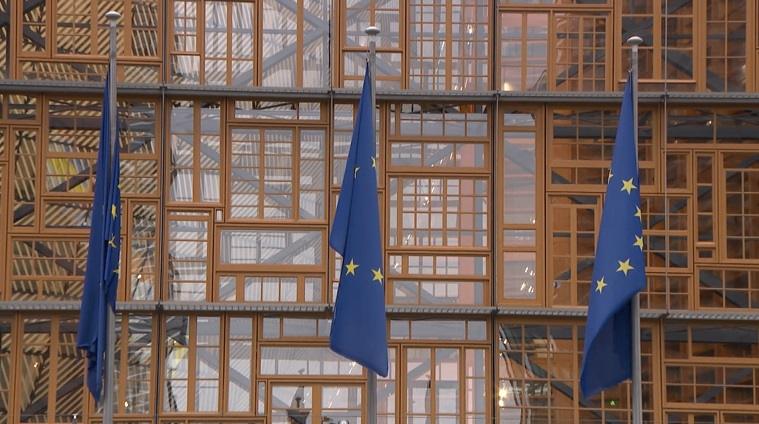
The European Union has signaled a notable shift in its regulatory approach to corporate sustainability, with the Council reaching an agreement to significantly reduce the scope and complexity of reporting and due diligence requirements. This move, stemming from a comprehensive legislative package, aims to alleviate the compliance burden on businesses across the bloc. For investors in the oil and gas sector, this development carries substantial implications, potentially freeing up capital, re-shaping operational strategies, and influencing long-term investment decisions within a critical market. Understanding the nuances of these changes is paramount for assessing the competitive landscape and future profitability of European energy players.
A Strategic Retreat from Onerous Reporting
At the heart of the EU’s recent consensus is a targeted scaling back of key sustainability directives. The most impactful adjustments concern the Corporate Sustainability Reporting Directive (CSRD) and the Corporate Sustainability Due Diligence Directive (CSDDD). Initially, the CSRD was set to apply to companies with as few as 250 employees. The new agreement, however, dramatically raises this threshold to enterprises employing over 1,000 individuals and generating more than €450 million in annual revenue. This represents a significant pruning, effectively removing an estimated 80% of companies from the regulation’s sustainability reporting obligations.
Even more pronounced are the changes to the CSDDD, a directive designed to compel companies to address their negative impacts on human rights and the environment across their value chains. While the Commission’s initial proposal did not alter its scope, the Council’s position establishes a far higher bar, applying only to companies with 5,000 employees and €1.5 billion in revenue. This recalibration is a clear indication that Brussels intends to focus its most stringent due diligence requirements exclusively on the largest corporate entities, offering substantial relief to a vast majority of other businesses. For energy firms operating in Europe, this means a tangible reduction in compliance costs and administrative overhead, potentially allowing for greater allocation of resources to core operational and strategic initiatives.
Capital Allocation in a Shifting Market Landscape
This regulatory recalibration arrives at a critical juncture for the global energy market. As of today, Brent crude trades around $93.22 per barrel, reflecting an 8.8% decline from its $102.22 peak just 14 days ago. This downward trend underscores the persistent volatility and pricing pressures faced by upstream and downstream operators alike. In such an environment, every dollar saved on compliance costs can have a magnified impact on financial performance and capital allocation strategies. Investors are keenly watching these dynamics, with many asking for a base-case Brent price forecast for the next quarter and the consensus 2026 outlook. The freed-up capital from reduced reporting could, in theory, be re-deployed into higher-yield projects, enhance shareholder returns, or bolster balance sheets in anticipation of further market fluctuations.
For European energy companies, the eased burden could improve their competitive standing relative to non-EU counterparts who do not face similar comprehensive sustainability reporting frameworks. With less administrative drain, these firms might find themselves better positioned to invest in critical infrastructure, explore new resource opportunities, or accelerate their own energy transition initiatives with greater efficiency. The question for investors now is whether this regulatory relief translates directly into increased investment in traditional oil and gas assets, or if it primarily optimizes the financing of renewable and low-carbon projects, albeit with less compliance friction.
Forward Outlook: Strategy Amidst Upcoming Market Events
Looking ahead, the interplay between these regulatory adjustments and upcoming market events will be crucial for shaping investment strategies. The next two weeks are packed with key energy indicators: the Baker Hughes Rig Count on April 17th and 24th, followed by pivotal OPEC+ meetings on April 18th (JMMC) and April 20th (Full Ministerial), and then the API and EIA weekly crude inventory reports on April 21st/22nd and April 28th/29th. Any signals from OPEC+ regarding production levels, coupled with fresh inventory data, will significantly influence crude price trajectories. European energy companies, now potentially operating with a lighter compliance load, may adjust their investment postures based on these supply-demand signals.
Furthermore, the Council’s agreement includes a “review clause” for the CSRD, tasking the Commission with analyzing the need for sustainability data to mobilize private investments towards EU Green Deal objectives, and considering the competitiveness of EU undertakings. This clause also opens the door for a “simplified reporting regime” in future extensions. This forward-looking mechanism suggests that while the immediate burden is reduced, the EU maintains an adaptive stance. Investors should monitor this review, as it will dictate the long-term trajectory of sustainability obligations and could provide further clarity on how European policy seeks to balance green objectives with economic competitiveness.
Investor Sentiment and The Path to Green Growth
Proprietary data indicates that investors are deeply engaged with questions surrounding the future of the energy market, from Chinese refinery runs to Asian LNG spot prices. These broad market inquiries highlight a desire for clarity amidst global uncertainties. The EU’s decision to streamline sustainability reporting, while seemingly a technical adjustment, addresses a core concern: the cost and complexity of operating within an increasingly regulated environment. By reducing the number of companies subject to extensive reporting, the EU aims to foster an environment where capital can be deployed more efficiently.
For energy investors, this translates into a potential re-evaluation of European exposure. Does a reduced administrative burden make European energy majors more attractive, potentially improving their operational margins and freeing up capital for growth or shareholder returns? Or will the market still demand high levels of voluntary transparency, pushing companies to maintain robust sustainability reporting regardless of regulatory mandates? The nuanced answer likely lies in a hybrid approach, where companies continue to embrace sustainable practices but can now do so with greater strategic flexibility and less prescriptive oversight. The simplified regime, if implemented, could further refine this balance, offering a more tailored approach to sustainability disclosure that aligns with both investor expectations and corporate capabilities.


