EC 2040 Emissions Target: Long-Term O&G Headwind
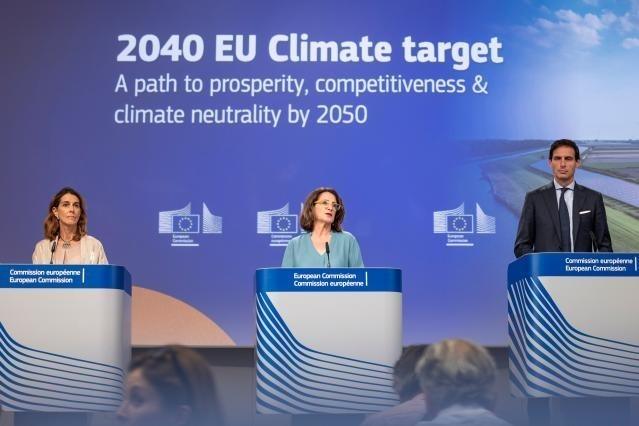
The European Commission’s recent proposal to achieve a 90% net greenhouse gas (GHG) emissions reduction by 2040, compared to 1990 levels, casts a long shadow over the future of oil and gas investment, particularly within Europe. While short-term market dynamics often capture headlines, this ambitious target solidifies Europe’s unwavering commitment to decarbonization, signaling a structural shift that demands careful consideration from energy investors. This isn’t merely a political declaration; it’s a strategic directive that will increasingly shape capital allocation, asset valuations, and demand trajectories for decades to come, extending the headwinds for traditional hydrocarbon assets far beyond the immediate horizon.
The Weight of European Policy on Future Demand
The 2040 target, a significant step towards the EU’s overarching 2050 climate neutrality goal, underscores a persistent policy push away from fossil fuels. The Commission has outlined a comprehensive strategy, building on the “Fit for 55” initiative and the 2021 EU Climate Law, which already mandates a 55% GHG reduction by 2030. What’s particularly noteworthy for investors is the sheer scale of the transformation envisioned. Initial estimates suggest an average annual investment of approximately €660 billion from 2031 to 2050 will be required in the energy system alone, with an additional €870 billion per year earmarked for the transport sector. These figures represent an unprecedented redirection of capital towards electrification, energy efficiency, industrial decarbonization, and sustainable alternative fuels. For oil and gas, this translates into a sustained, multi-decade erosion of demand in one of the world’s largest economic blocs, making traditional growth-oriented investment theses increasingly challenging.
Current Market Dynamics and Policy Headwinds
As of today, Brent crude trades at $94.78, reflecting a marginal -0.01% dip within a daily range of $91 to $96.89. WTI crude similarly hovers around $91.22. This relative stability, however, comes after a notable correction in recent weeks, with Brent having shed approximately 8.8% over the past fortnight, falling from $102.22 on March 25th to $93.22 yesterday. This recent softness, while influenced by immediate supply-demand balances and geopolitical developments, exists within a broader context where long-term demand growth expectations are being consistently re-evaluated. Our proprietary reader intent data highlights a strong investor focus on building a base-case Brent price forecast for the next quarter. While immediate price action will undoubtedly be driven by supply-side catalysts, the EU’s 2040 target introduces a fundamental long-term demand ceiling. This structural headwind suggests that any sustained bull run for crude prices will increasingly face resistance from the accelerating energy transition, particularly as major demand centers like Europe commit to aggressive decarbonization.
The Pragmatic Shift: Nuances for O&G Investment
The Commission characterized its proposal as a “more pragmatic and flexible way to reach the target,” acknowledging the current economic, security, and geopolitical landscape. This “pragmatic” approach introduces key mechanisms such as the ability to utilize international carbon credits and for carbon-intensive industries within the EU Emissions Trading System (EU ETS) to use domestic carbon removals. For investors, this flexibility is crucial: it does not signal a retreat from the decarbonization goal, but rather a recognition that the path may involve a broader suite of solutions. This could imply a slightly more extended role for natural gas as a transition fuel in certain sectors, or an increased focus on carbon capture and storage (CCS) technologies to abate emissions from hard-to-abate industries. However, the overarching message remains clear: the EU is already making significant progress, having achieved a 37% GHG emissions reduction as of late 2023 (compared to 1990 levels) despite 68% economic growth over the same period. This demonstrated capacity reinforces the credibility of their long-term targets and means investors cannot afford to view “flexibility” as an excuse to delay strategic shifts away from high-carbon exposure.
Navigating Upcoming Catalysts in a Decarbonizing World
While the 2040 target is a long-term policy signal, investors must still navigate immediate market catalysts. Looking ahead, the Baker Hughes Rig Count on April 17th and 24th will offer critical insights into North American supply dynamics. Furthermore, the API and EIA Weekly Crude Inventory reports on April 21st/22nd and April 28th/29th will provide essential snapshots of U.S. stock levels, influencing short-term price movements. Crucially for global supply, the OPEC+ Joint Ministerial Monitoring Committee (JMMC) meeting on April 18th, followed by the Full Ministerial meeting on April 20th, will be closely watched for any potential adjustments to production quotas. These events are often the primary drivers of near-term price volatility. However, for the astute oil and gas investor, these short-term movements must be assessed against the backdrop of Europe’s accelerating energy transition. Even if OPEC+ decides on cuts that temporarily bolster prices, the persistent erosion of demand in major consumption zones like the EU, driven by policies like the 2040 target, will continue to exert a structural downward pressure on the long-term investment horizon for traditional oil and gas assets. This dual perspective – balancing immediate catalysts with profound structural shifts – is paramount for successful investment strategies in the current energy landscape.


