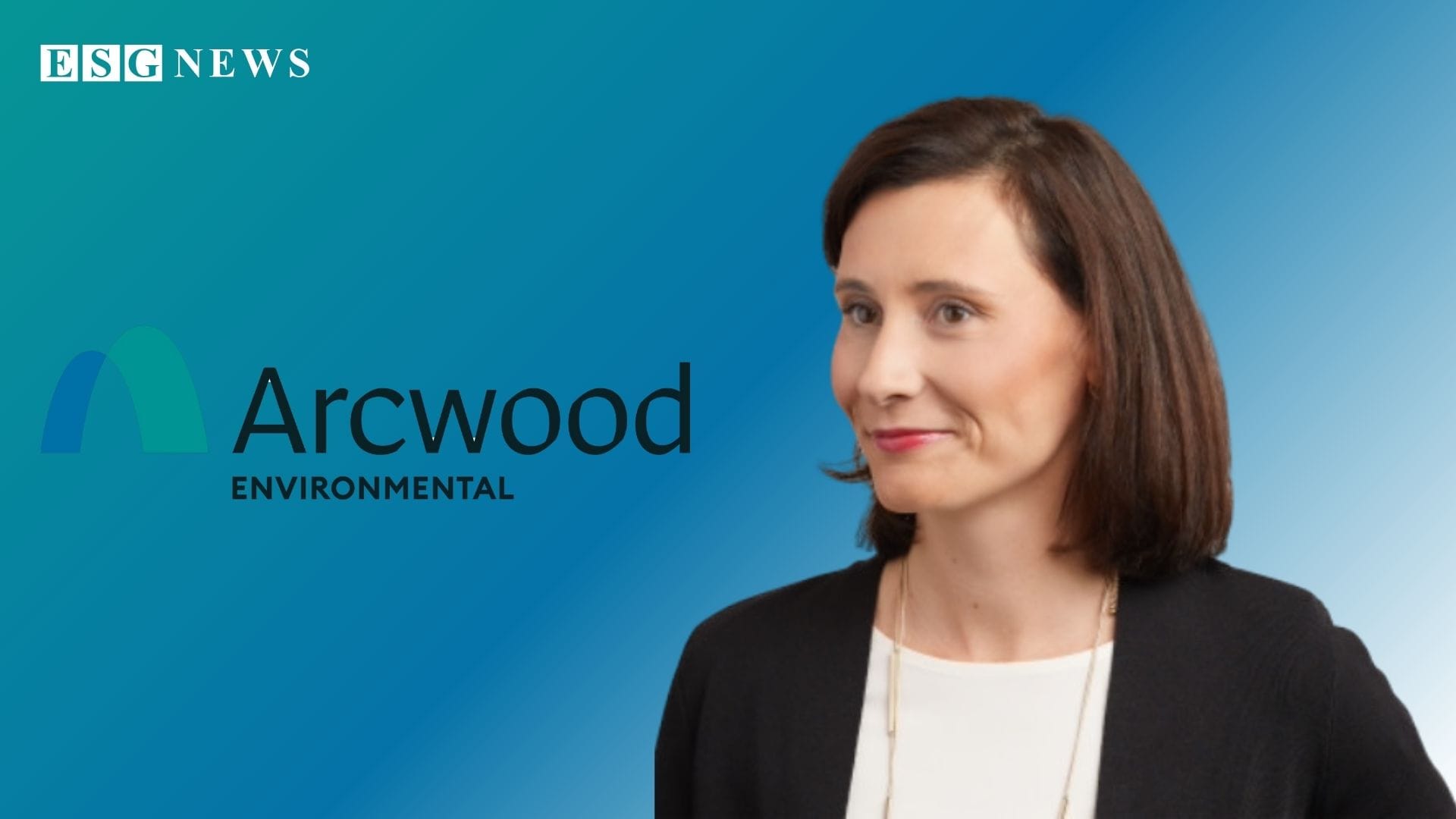
The strategic appointment of Carol Roos as Chief Communications and Sustainability Officer (CCSO) at Arcwood Environmental, an EQT Infrastructure portfolio company, effective October 13, 2025, signals a profound shift in how energy and infrastructure firms are approaching long-term value creation. This move transcends a mere personnel change; it underscores the increasing convergence of environmental, social, and governance (ESG) strategy, stakeholder engagement, and investor relations. In an investment landscape marked by both immediate market volatility and persistent demand for sustainable solutions, Arcwood’s decision reflects a proactive stance by EQT to embed sustainability deep within its corporate purpose, ensuring resilience and attracting capital in a rapidly evolving global economy.
The Strategic Imperative of Integrated ESG Leadership
Arcwood Environmental’s decision to integrate communications and sustainability under a single leadership role, particularly with an executive of Carol Roos’s caliber, highlights a critical evolution in corporate strategy. Roos brings a robust background from Invenergy, a major clean energy developer, where she managed corporate affairs, brand, and local impact across significant renewable energy and infrastructure projects. Her prior experience as a Partner at Brunswick Group, advising Fortune 500 companies on reputation management and stakeholder engagement during pivotal market events, further solidifies her ability to navigate complex corporate narratives.
This appointment is not simply about ticking ESG boxes; it’s about building and sustaining stakeholder trust, a paramount factor for companies operating in the infrastructure and environmental services sectors. Arcwood, which specializes in waste management, recycling, and resource recovery, positions itself as a key player in the circular economy. By aligning sustainability, communications, and public affairs, Arcwood, under EQT’s ownership, aims to articulate its long-term value proposition more effectively to investors, regulators, and customers. CEO HP Nanda’s emphasis on Roos’s deep understanding of how “stakeholder trust is built and sustained” underscores the strategic intent: to align corporate purpose with operational transparency and environmental innovation, thereby enhancing long-term capital attractiveness and market differentiation.
Navigating Volatility: ESG as a Long-Term Anchor
The timing of such a strategic sustainability-focused appointment is particularly noteworthy when viewed against the backdrop of current energy market dynamics. As of today, Brent crude trades at $96.3 per barrel, reflecting a 3.11% decline, with an intraday range of $95.59 to $98.97. Similarly, WTI crude stands at $87.83, down 3.66% within a $87.02 to $90.34 daily range. This daily dip follows a more significant trend, with Brent having shed $14, or 12.4%, over the past two weeks, falling from $112.57 on March 27 to $98.57 on April 16. Gasoline prices have also seen a decline, currently at $3.03, down 1.94%.
This persistent volatility in crude and refined product prices highlights the inherent short-term risks in traditional energy investments. In such an environment, companies demonstrating robust, forward-thinking sustainability strategies like Arcwood’s can offer a compelling narrative for investors seeking stability and resilience beyond daily price swings. While the immediate focus might be on the fluctuations of the barrel, the underlying strategic shifts towards integrated sustainability leadership are about building enduring value and attracting capital that prioritizes long-term, responsible growth. Arcwood’s move signals to the market that even as energy prices ebb and flow, its commitment to environmental innovation and stakeholder trust remains a constant, potentially insulating it from some of the more severe market turbulence.
Investor Focus Beyond the Barrel: Responding to Evolving Demands
Our proprietary investor intent data reveals a keen market focus on immediate price drivers and data transparency. Investors are frequently asking questions such as “What are OPEC+ current production quotas?” and “What is the current Brent crude price?”, indicating a strong appetite for real-time market pulse checks. However, alongside these short-term inquiries, there’s a growing sophistication in investor questions, extending to the methodologies and data sources powering market analysis.
This dual focus—on immediate price action and underlying data integrity—underscores a market that is both reactive to news and increasingly discerning about long-term value. Arcwood’s appointment of a CCSO directly addresses this evolving investor psyche. While daily crude prices and OPEC+ decisions dominate immediate headlines, savvy investors are simultaneously scrutinizing a company’s ESG framework, its ability to communicate sustainability initiatives effectively, and its broader corporate purpose. Roos’s role is designed to bridge this gap, ensuring that Arcwood’s operational sustainability achievements are not just implemented but also effectively articulated to a market that is increasingly demanding both financial returns and environmental responsibility. This strategic communication of ESG value becomes a critical differentiator in attracting sophisticated institutional capital.
Anticipating Future Drivers: ESG in an Event-Rich Landscape
The coming weeks are packed with events poised to influence the immediate trajectory of the energy markets. The OPEC+ Joint Ministerial Monitoring Committee (JMMC) meeting on April 17, followed by the full Ministerial meeting on April 18, will be closely watched for any signals regarding production quotas and supply strategies. These decisions can trigger significant short-term price movements in crude. Further, the API Weekly Crude Inventory reports on April 21 and 28, alongside the EIA Weekly Petroleum Status Reports on April 22 and 29, will provide crucial insights into U.S. supply and demand dynamics, impacting trading sentiment. The Baker Hughes Rig Count on April 24 and May 1 will offer a snapshot of upstream activity levels.
Against this backdrop of short-term, supply-demand driven market catalysts, strategic appointments like Carol Roos’s at Arcwood represent a fundamental, long-term re-evaluation of value. While investors will undoubtedly react to the outcomes of OPEC+ discussions or inventory data, the investment thesis for companies like Arcwood is built on a longer horizon. EQT’s move signals a proactive strategy to secure future capital flows by aligning with global sustainability mandates and evolving investor preferences, regardless of immediate oil market gyrations. This foresight, especially when short-term events can introduce significant volatility, positions Arcwood as a leader in attracting capital that seeks both robust financial performance and demonstrable commitment to environmental stewardship over the long haul.


