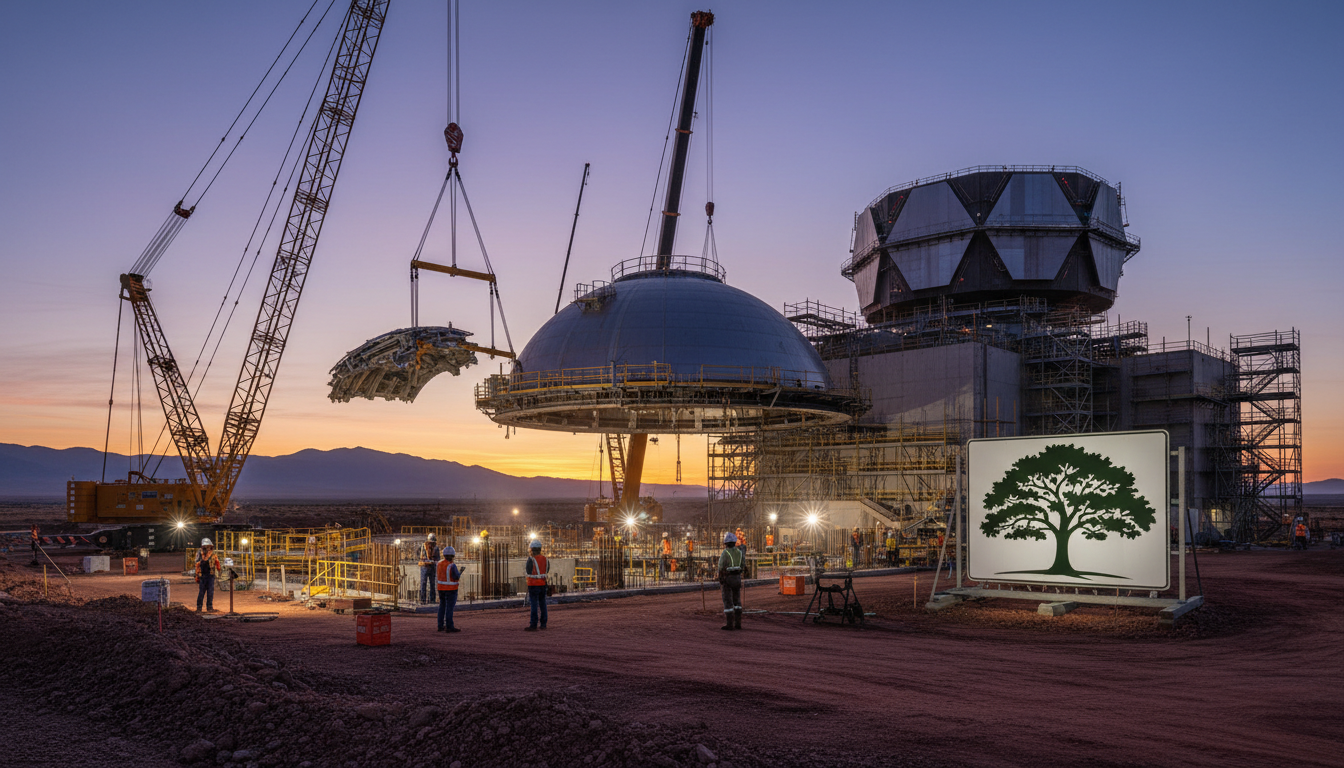
The United States energy landscape is witnessing a pivotal shift as TerraPower initiates construction on its groundbreaking Natrium plant, Kemmerer Unit 1. This marks a monumental moment for advanced nuclear power, transitioning innovative reactor designs from drawing boards to utility-scale deployment. For investors monitoring the evolving energy matrix, this project signifies a tangible leap in diversifying baseload power generation, offering robust, dispatchable capacity with a low-carbon footprint.
The commencement of work follows rigorous regulatory approval from the U.S. Nuclear Regulatory Commission, culminating years of intensive engineering and site development efforts. This milestone effectively moves advanced nuclear technology beyond demonstration phases, positioning it for commercial scalability and widespread adoption, a development keenly watched by capital markets.
Advanced Nuclear: A Game Changer for Grid Stability and Investor Returns
TerraPower’s flagship Natrium reactor, Kemmerer Unit 1, is set to deliver an initial 345 megawatts (MW) of power, capable of scaling up to an impressive 500 MW with integrated energy storage. This capacity can reliably power approximately 400,000 homes, underscoring its significant contribution to regional energy needs. From an investment perspective, the project represents a strategic play in firm, flexible power generation, an increasingly valuable asset in grids integrating higher levels of intermittent renewables.
Industry leaders are quick to emphasize the transformative nature of this venture. Chris Levesque, President and CEO of TerraPower, highlighted that the industry has been building towards this moment for decades. He stated that this isn’t merely the groundbreaking for a new plant in Wyoming but the foundational work for America’s next generation of energy infrastructure. The Natrium plant promises not only reliable, dispatchable power but also serves as a commercial blueprint for a fleet of similar plants domestically and internationally.
Robust Federal Backing De-Risks Advanced Reactor Investment
The Kemmerer Unit 1 project is a powerful illustration of the synergy between U.S. energy policy and private sector innovation in advanced nuclear technology. Operating under the Department of Energy’s Advanced Reactor Demonstration Program, the initiative benefits from substantial federal backing designed to accelerate the commercialization of next-generation reactors. This public-private partnership model significantly de-risks initial capital deployment and provides a clear pathway for future projects.
Dr. Rian Bahran, Deputy Assistant Secretary for the U.S. Department of Energy’s Office of Nuclear Energy, lauded the construction start as a testament to federal investment in American innovation. He affirmed that such collaborations are crucial for building a future powered by nuclear energy. This commitment signals a strong governmental desire to bolster energy security and maintain industrial competitiveness, directly benefiting entities invested in advanced nuclear solutions.
Wyoming Governor Mark Gordon underscored the state’s continued leadership in energy, now extending to cutting-edge nuclear technology. Similarly, U.S. Senator John Barrasso highlighted the pressing need for reliable baseload power and the project’s role in creating jobs and strengthening Wyoming’s robust energy economy. These endorsements from key state and federal officials provide further confidence for investors looking at the long-term viability and political support for advanced nuclear.
Technology Designed for Grid Flexibility: A Key Investor Advantage
The Natrium system features a 345-megawatt sodium-cooled fast reactor seamlessly integrated with molten salt-based energy storage. This innovative hybrid architecture provides unparalleled grid flexibility, allowing the plant to sustain a consistent baseline output while rapidly ramping up to 500 MW during periods of peak demand. This capability is particularly attractive for grid operators and investors seeking solutions that can effectively complement and stabilize grids heavily reliant on intermittent renewable sources like wind and solar.
Unlike conventional reactors, the integrated storage system enables agile dispatchability, offering a dynamic response to fluctuating energy needs. Dick Garlish, President of Rocky Mountain Power, articulated support for a balanced, all-of-the-above energy strategy, emphasizing the critical role of baseload power and the promising potential of advanced nuclear technologies like Natrium. For capital allocators, this means investing in a technology that not only provides consistent power but also enhances grid resilience and market responsiveness.
This unique combination of steady generation and on-demand surge capacity addresses a fundamental challenge in modern energy planning: balancing reliability with flexibility. Companies pioneering such hybrid solutions are poised for significant growth as grids worldwide grapple with energy transition complexities and increased demand for stable, clean power.
Economic Impact and Blueprint for Industrial Scaling
The construction phase of the Kemmerer Unit 1 project is projected to create approximately 1,600 jobs, providing substantial economic stimulus to the region. Upon completion, the plant will support around 250 permanent, high-skill positions, establishing a long-term economic footprint. This initiative further solidifies Wyoming’s strategic importance as a national energy hub, particularly given its status as the leading uranium producer in the United States, positioning it centrally in the advanced nuclear fuel cycle.
U.S. Senator Cynthia Lummis praised the project for delivering good-paying jobs, lasting economic strength, and reliable, affordable baseload power to Wyoming communities. Beyond its immediate local impact, the Kemmerer plant is designed as a scalable commercial model. TerraPower’s ambitious plans include deploying up to eight Natrium plants by 2035, signaling robust early market demand and a clear vision for industrial expansion. This aggressive rollout strategy suggests a burgeoning market for advanced nuclear, presenting significant growth opportunities for investors in the broader nuclear supply chain.
Execution Excellence and Repeatable Delivery Strategy
The engineering, procurement, and construction (EPC) responsibilities for the Natrium advanced reactor are entrusted to Bechtel, a global leader in complex infrastructure projects. Bechtel is committed to deploying standardized processes and leveraging digital tools to enhance efficiency and mitigate execution risks commonly associated with large-scale nuclear developments. This focus on repeatable delivery models is paramount for building investor confidence and overcoming historical challenges of cost overruns and timeline uncertainties in nuclear projects.
Dena Volovar, President of Bechtel’s Nuclear, Security & Environmental business, affirmed the partnership with TerraPower, emphasizing that combining TerraPower’s innovation with Bechtel’s proven execution model will ensure consistent, safe, and scalable delivery of these nuclear projects. For institutional investors and financial analysts, this collaboration between an innovative technology developer and an experienced EPC firm provides a critical layer of de-risking, enhancing the attractiveness of advanced nuclear investments.
Strategic Implications for the Global Energy Transition
The initiation of construction at Kemmerer represents a profound shift in the perception and role of nuclear energy within global decarbonization strategies. Advanced reactors are increasingly recognized as an indispensable solution for providing firm, low-carbon power, working in tandem with growing renewable energy portfolios. As global energy demand continues its upward trajectory and grid stability becomes a more complex challenge, hybrid technologies like Natrium, which integrate generation with storage, offer a compelling investment thesis.
For policymakers, this project serves as a crucial test case for streamlining nuclear regulatory approvals and optimizing public-private financing mechanisms. For investors, it offers early, tangible insights into the commercial viability and operational performance of next-generation reactors. If successful, Kemmerer Unit 1 could establish the definitive template for a new era of nuclear infrastructure development, not just in the United States, but across the international energy landscape. This heralds a significant long-term investment opportunity in a sector poised for a renaissance.


