Eni’s Libyan Re-engagement: A Critical Catalyst Amidst Market Volatility
The recent announcement of Italy’s Eni restarting drilling operations offshore Libya after a five-year hiatus marks a pivotal moment for the North African nation’s energy sector and carries significant implications for global oil markets. This move is not an isolated incident; it signals a broader re-engagement by major international oil companies, including Shell, BP, and Exxon, all eyeing Libya’s substantial hydrocarbon potential. For investors, this renewed interest in Libya’s upstream opportunities presents a compelling, albeit complex, case for future supply growth and potential market shifts, particularly as global crude prices navigate a period of pronounced volatility.
Libya’s Comeback Bid Against a Challenging Price Backdrop
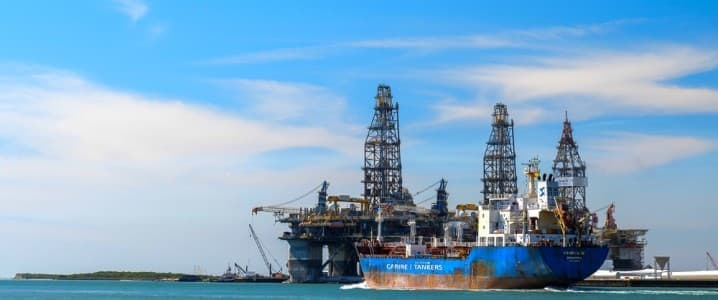
Eni’s return to Block 16/4 in Libyan territorial waters, picking up an exploration well initiated in 2020, underscores a growing confidence in the country’s operational environment. This follows similar strategic agreements by BP to assess Messla and Sarir fields, and Shell to evaluate the al-Atshan field, reflecting a calculated bet by Big Oil on Libya’s improving political stability. However, this bullish sentiment for Libyan supply emerges amidst a challenging global crude market. As of today, Brent crude trades at $90.38 per barrel, marking a sharp decline of 9.07% within the day’s range, which saw prices dip from a high of $98.97. WTI crude similarly fell to $82.59, down 9.41%. This recent downturn compounds a significant trend, with Brent having shed nearly $22.40, or approximately 19.9%, from its $112.78 high just two weeks ago. The re-entry of major players into Libya, promising potential new barrels, will undoubtedly be scrutinized by investors wondering how this additional supply might interact with an already volatile and declining market.
Ambitious Output Targets and the Looming OPEC+ Decision
Libya’s National Oil Corporation (NOC) has set ambitious production targets, aiming to significantly boost crude output from its late September level of 1.39 million barrels daily. Initial projections from August pointed to 2 million barrels daily by 2028, a target reiterated just a month later, with some even eyeing this milestone by the end of the current year. Achieving such an aggressive ramp-up would necessitate substantial and sustained investment, technological expertise, and, crucially, continued political stability – all factors that Big Oil’s return aims to address. Investors are keenly watching upcoming events that could reshape the supply narrative. The OPEC+ Ministerial Meeting, scheduled for this Sunday, April 19th, will be particularly critical. As a non-OPEC+ member, Libya’s potential output increases are not bound by the group’s quotas, posing a potential challenge to OPEC+’s efforts to manage global supply and stabilize prices. The market will be watching to see how the cartel responds to the prospect of additional unconstrained barrels entering the global supply pool. Further real-time insights into supply and demand balances will come from the API and EIA Weekly Petroleum Status Reports on April 21st, 22nd, 28th, and 29th, alongside the Baker Hughes Rig Count on April 24th and May 1st, providing crucial context for Libya’s output trajectory and the broader market sentiment.
Navigating Geopolitical Risk and Growth Potential for Investors
A recurring question from our readers this week, “What do you predict the price of oil per barrel will be by end of 2026?”, underscores the market’s uncertainty regarding future price trajectories. Libya’s ability to significantly increase its production could be a major bullish catalyst for the nation’s economic stability but presents a potential bearish factor for global oil prices, particularly if not met by commensurate demand growth or proactive adjustments from OPEC+. Another query, “What are OPEC+ current production quotas?”, highlights the complex interplay between cartel policy and non-member supply. As Libya’s output grows outside of OPEC+’s direct control, it could necessitate difficult decisions from the alliance to maintain market balance. For investors, evaluating the opportunities in Libya means weighing substantial resource potential against a history of geopolitical instability. The return of international supermajors signals a tangible improvement in confidence regarding the operational environment. However, the path to consistently achieving and sustaining 2 million barrels per day is fraught with historical challenges, requiring careful due diligence on the part of capital allocators.
Big Oil’s Strategic Re-engagement: A Long-Term Play
The strategic re-engagement of Eni, Shell, BP, and Exxon in Libya is a testament to the country’s vast, largely untapped hydrocarbon reserves and the potential for low-cost production. For these majors, it represents an opportunity to diversify their portfolios, secure long-term resource access, and capitalize on improving regional stability. While the immediate impact on global supply from Eni’s single restarted drilling operation might be modest, the collective return of Big Oil signals a longer-term commitment that could fundamentally alter Libya’s role in the global energy landscape. Investors should monitor not just the drilling activities and production figures, but also the evolving political stability within Libya, the broader dynamics of OPEC+ policy, and the global demand outlook. The success of these ventures will not only shape Libya’s economic future but also influence the supply-demand balance in international oil markets for years to come.


