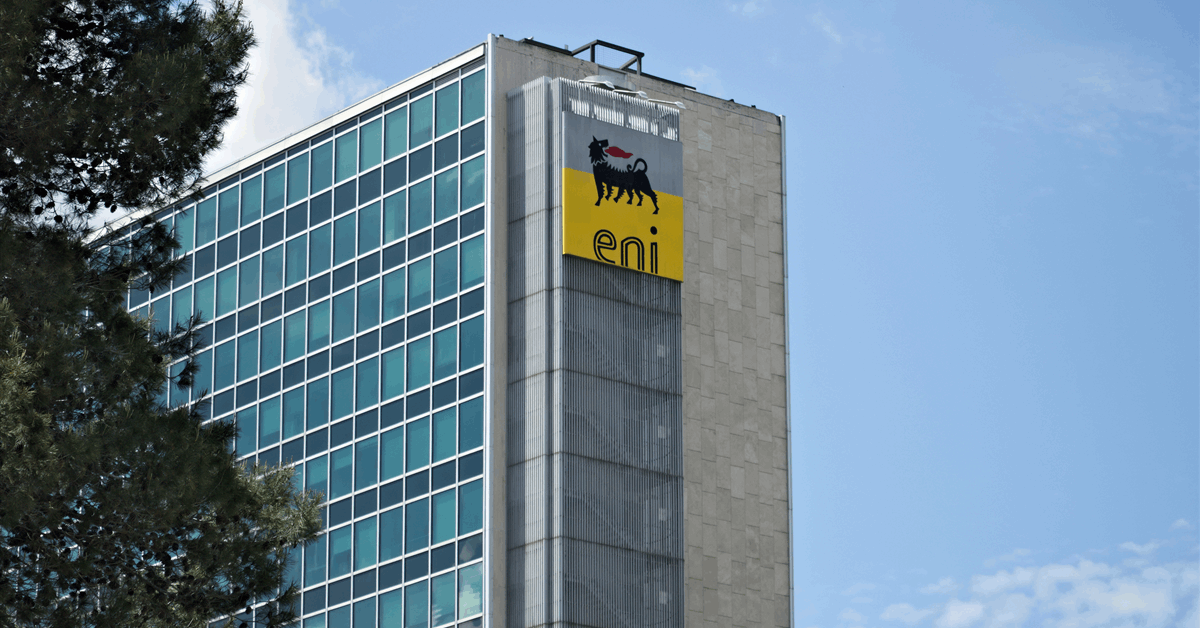
Eni, Ghana Pact Eyes Oil & Gas Growth
The recent memorandum of intent signed between Eni SpA, its Offshore Cape Three Points (OCTP) project partners, and the Ghanaian government marks a significant strategic move in West Africa’s energy landscape. This agreement is poised to accelerate Ghana’s oil and gas production, while simultaneously pursuing sustainable energy initiatives. For investors, this collaboration signals a robust commitment to expanding a vital energy hub, offering long-term growth potential and enhanced energy security for the nation. It underscores a strategic investment in existing infrastructure and the exploration of new, substantial discoveries, positioning Ghana as a key player in regional energy supply and Eni as a driving force in its development.
Expanding Ghana’s Energy Footprint and Eni’s Strategic Play
The core of this new agreement centers on a comprehensive and integrated investment plan designed to increase OCTP project production capacity and leverage synergies between offshore and onshore upgrades. A key initiative involves the evaluation of exploration activities and the potential development of the Eban-Akoma field within Cape Three Points Block 4. This block, where Eni holds a 42.47% operating stake, saw a “significant” oil discovery with the Eban-1X well in 2021, building on the earlier Akoma discovery. Preliminary estimates suggest the Eban-Akoma complex holds between 500 and 700 million barrels of oil equivalent in place. Crucially, the plan aims to utilize existing infrastructure for the Eban-Akoma development, promising both value creation and an expedited time to market following its declaration of commerciality in July 2025.
The OCTP project currently produces 33 billion cubic feet of natural gas and four million barrels of oil and condensate annually, totaling 11 million barrels of oil equivalent. This output is critical for Ghana, as the OCTP project has supplied over 480 billion standard cubic feet of gas since 2018, meeting approximately 70 percent of the country’s gas demand for power generation. Eni’s net production from Ghana stands at about 34,000 boe per day, reflecting its significant operational footprint. With Eni holding a 44.44% operating stake in OCTP, alongside partners like Vitol Group (33.98%), Ghana National Petroleum Corp (10%), Woodfields Upstream Ltd (9.56%), and Explorco (4%), this expansion not only bolsters Ghana’s domestic energy supply but also reinforces Eni’s position in a strategically important region focused on “reliable, affordable and low-impact access to energy.”
Navigating Current Market Headwinds with Strategic Upstream Investment
Investing in new upstream capacity like the Ghana expansion requires a clear-eyed view of the prevailing market conditions. As of today, Brent crude trades at $98.15, marking a 1.25% decrease, with WTI crude following at $89.8, down 1.5%. This current snapshot reflects a continuation of recent volatility, with Brent having declined by $14, or 12.4%, from $112.57 on March 27 to $98.57 on April 16. Despite these short-term price fluctuations, the Eni-Ghana pact underscores a long-term strategic commitment. Projects focused on domestic energy demand, particularly natural gas for power generation, often exhibit greater resilience against global crude price swings. Ghana’s increasing energy needs provide a stable off-take market, mitigating some of the exposure to international commodity price volatility that other export-oriented projects face. Investors evaluating this development should consider the foundational stability provided by Ghana’s internal demand, which offers a degree of insulation from the broader market’s daily gyrations and provides a predictable revenue stream for the gas component of the OCTP project.
Investor Focus: Supply Dynamics, Growth Drivers, and Portfolio Diversification
Our proprietary reader intent data reveals a consistent investor focus on global supply dynamics, with frequent inquiries about “OPEC+ current production quotas” and the “current Brent crude price.” While Ghana operates outside the OPEC+ framework, its increased production capacity directly contributes to the global non-OPEC+ supply, influencing the overall market balance. In an environment where major producers may adjust quotas, significant new production from regions like West Africa becomes even more critical for portfolio diversification. Investors are actively seeking growth avenues that are not solely dictated by cartel decisions. The Eban-Akoma development, with its substantial resource potential of 500-700 million barrels of oil equivalent, represents such an opportunity for long-term value creation. The strategic leveraging of existing infrastructure for this new field, declared commercial in July 2025, highlights an efficient capital deployment strategy that aims to minimize development timelines and costs, appealing to investors looking for both scale and operational efficiency in their upstream holdings.
Forward-Looking Catalysts and Key Dates for Energy Investors
For discerning investors, the coming weeks present several crucial events that will shape the broader oil and gas investment landscape and provide context for projects like the Ghana expansion. The OPEC+ Joint Ministerial Monitoring Committee (JMMC) meeting tomorrow, April 17, followed by the full Ministerial meeting on April 18, will be closely watched for any signals regarding future production policy. Decisions made here could significantly impact global crude prices and, consequently, the long-term economics of new upstream developments. Furthermore, the weekly API and EIA crude inventory reports on April 21-22 and April 28-29, alongside the Baker Hughes Rig Count on April 24 and May 1, will offer vital insights into demand trends and drilling activity in key basins. While these are macro indicators, they provide the essential backdrop against which the micro-level progress in Ghana should be evaluated. The ongoing development work, such as the drilling for Sankofa East 1X Side Track 2 which commenced on May 29, 2025, demonstrates Eni’s active commitment to growing its Ghanaian portfolio, presenting tangible milestones for investors to monitor as the country moves towards achieving its enhanced energy goals.


