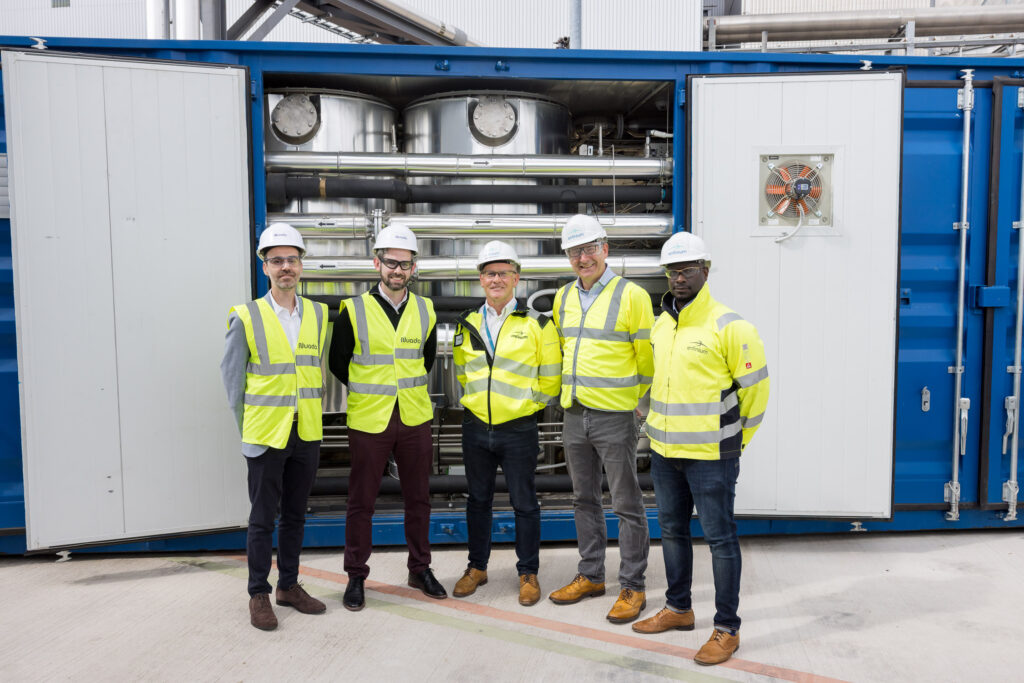
In a period marked by significant shifts in global energy markets, the latest advancements in carbon capture technology are increasingly drawing the attention of savvy oil and gas investors. A recent trial by enfinium, a prominent player in the UK’s waste-to-energy sector, represents a crucial step towards deploying carbon capture at scale across its portfolio of six facilities. This initiative is not merely a technical demonstration; it signals a robust investment pathway in decarbonization, positioning enfinium as a frontrunner in transforming waste into a net carbon removal opportunity. For investors navigating volatile crude markets, understanding the strategic importance and technological innovation behind such projects is paramount to identifying long-term value in the evolving energy landscape.
The Strategic Imperative of Waste-to-Energy Carbon Capture
enfinium’s ambition to implement carbon capture across its entire UK fleet underscores a fundamental shift in how the waste sector can contribute to net-zero targets. The waste-to-energy (WtE) model is uniquely positioned to address the challenge of unrecyclable waste while simultaneously generating significant carbon removals. By capturing CO2 emissions from facilities processing this waste, especially its biogenic content, the process moves beyond simply reducing emissions to actively removing carbon from the atmosphere. Approximately 50% of society’s unrecyclable waste consists of biogenic materials like food waste, plants, and paper. Capturing CO2 from these sources results in a net carbon removal, offering a compelling environmental and economic proposition.
Analyses from respected bodies such as the Climate Change Committee and The Oxford Institute for Energy Studies project that the energy from waste sector could contribute between 5 and 8 million tonnes of carbon removals annually by 2050. This substantial potential makes WtE carbon capture a critical component of the broader energy transition, offering a diversified and often more predictable revenue stream compared to traditional fossil fuel plays. Investors are increasingly seeking assets that align with global decarbonization mandates, and enfinium’s strategic move places it squarely in this high-growth segment.
Innovation Driving Efficiency: The Nuada MOF Technology
The success of large-scale carbon capture hinges on technological efficiency and cost-effectiveness. enfinium’s trial features Nuada’s next-generation carbon capture technology, which utilizes metal-organic framework (MOF) technology combined with a vacuum swing process. This innovative approach holds the promise of delivering significant energy and cost savings compared to conventional carbon capture methods. For investors, this efficiency is a critical de-risking factor, improving the economic viability and scalability of carbon capture projects. Lower operational costs translate directly into higher potential returns and broader commercial deployment.
Understanding the underlying technology is key to assessing investment potential. The MOF-based system’s ability to efficiently capture CO2 from point sources, coupled with its potential for commercial scale deployment, positions it as a transformative solution for heavy industry and energy from waste. As energy markets continue to prioritize sustainability and operational efficiency, technologies that can reduce the capital and operational expenditure of carbon capture will naturally attract significant investor interest. This trial at Ferrybridge is not just about capturing carbon; it’s about proving a more economically attractive pathway to achieving net carbon removals.
Navigating Market Volatility with Green Investments
In a dynamic energy landscape, investors are constantly recalibrating their portfolios. As of today, Brent crude trades at $98.2 per barrel, marking a 1.2% decline, with a day range between $97.92 and $98.38. Similarly, WTI crude sits at $89.81, down 1.49%, fluctuating between $89.57 and $90.09. This recent softening is part of a broader trend; over the last 14 days, Brent crude has seen a significant drop, moving from $108.01 on March 26th to $94.58 on April 15th, representing a 12.4% decrease. Gasoline prices have also seen a slight dip, currently at $3.08 per gallon.
This market volatility, particularly in crude prices, highlights a key investor dilemma. Many are keenly asking about current Brent prices and the latest OPEC+ production quotas, signaling their focus on short-term market fundamentals. However, smart capital is increasingly diversifying into more resilient, long-term growth sectors that are less susceptible to geopolitical shocks and daily supply-demand swings. Projects like enfinium’s carbon capture initiative offer a compelling alternative, providing exposure to the robust growth of the energy transition. Investing in proven, scalable decarbonization technologies offers a hedge against traditional energy market fluctuations, aligning portfolios with future global energy mandates and potentially delivering more stable, predictable returns.
Forward Outlook: Policy Tailwinds and Long-Term Catalysts
The strategic importance of carbon capture, particularly in the waste-to-energy sector, is amplified by strong policy tailwinds aimed at achieving net-zero emissions. The UK’s ambitious decarbonization targets provide a fertile ground for projects like enfinium’s, ensuring continued regulatory support and potential incentives. For investors, this creates a more predictable operating environment for CCUS deployments.
While the immediate focus for many in the oil and gas sector will be on upcoming events like the Baker Hughes Rig Count on April 17th and 24th, and the critical OPEC+ meetings on April 18th and 20th, these events, while shaping short-term crude market sentiment, also underscore the broader need for long-term energy solutions. The stability (or instability) discussed at OPEC+ directly impacts the investment appetite for energy assets across the board. A market seeking stability will find the predictable growth trajectory of decarbonization projects increasingly attractive. The continuous flow of data from API and EIA weekly inventory reports on April 21st, 22nd, 28th, and 29th will provide further insights into short-term supply dynamics, but it is the foundational progress in areas like waste-to-energy carbon capture that will define the next decade of energy investing. As enfinium deepens its partnership with Nuada, proving out the commercial viability of next-gen carbon capture, it sets a powerful precedent for future investment in sustainable energy infrastructure, irrespective of the daily crude price movements.