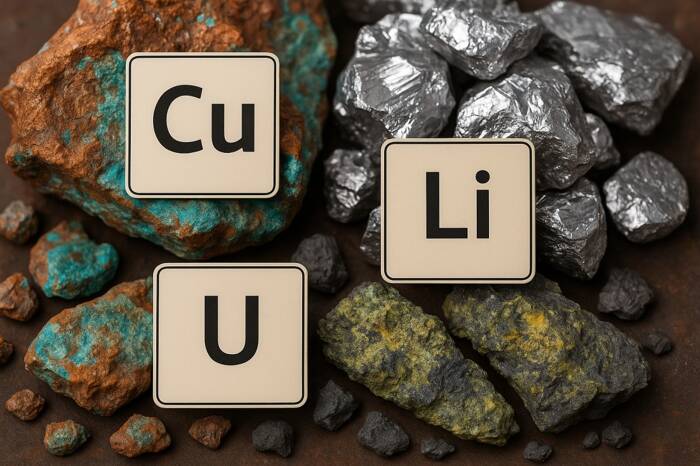
The Shifting Sands of Energy Investment: Beyond Crude Volatility
The global energy landscape is undergoing a profound transformation, one that is increasingly creating a dichotomy between the traditional fossil fuel complex and the foundational materials of the new energy economy. While attention often fixates on the daily gyrations of crude oil prices, a more structural and compelling narrative is unfolding in the markets for critical minerals like lithium, copper, and uranium. As of today, April 18, 2026, Brent crude trades at $90.38, reflecting a notable -9.07% drop within a day range of $86.08 to $98.97. Similarly, WTI crude sits at $82.59, down -9.41%. This immediate weakness extends a trend, with Brent having shed $20.91, or 18.5%, since March 30, when it traded at $112.78. This volatility in conventional energy stands in stark contrast to the burgeoning demand and price appreciation seen in the commodities essential for electrification and decarbonization, suggesting a critical re-evaluation of investment priorities for the decade ahead.
Lithium: Powering the Electric Future Amidst Investor Queries
For investors accustomed to scrutinizing every nuance of oil market dynamics, often asking “what do you predict the price of oil per barrel will be by end of 2026?” or delving into specific oil company performance like Repsol, the lithium market presents a different, yet equally vital, long-term thesis. Lithium, the core component of electric vehicle (EV) batteries and grid-scale energy storage solutions, has emerged from a period of consolidation with renewed vigor. Proprietary data indicates a sharp rebound in prices, driven by tightening supply fundamentals and robust demand from the accelerating electrification of transport and grid infrastructure. The significant rallies observed in lithium-focused ETFs, with some experiencing over 70% gains, underscore strong investor confidence in this sector’s sustained growth. This isn’t merely a cyclical upturn; it’s a reflection of lithium’s indispensable role in a future powered by clean energy, positioning it as a strategic asset for any forward-looking portfolio.
Copper: The Unsung Conductor of Global Electrification
Often referred to as “Dr. Copper” for its perceived ability to diagnose the health of the global economy, copper’s role in the energy transition is less about cyclical indicators and more about fundamental, structural demand. Electrification is inherently copper-intensive. From the motors that drive EVs to the extensive grid infrastructure required to transmit renewable energy and power data centers, copper is the circulatory system of the new energy economy. Technical analysis reveals a robust market, with long-term charts showing an ascending channel and prices demonstrating strong bounces from key support levels. This resilience is a testament to the surging demand that far outstrips conventional supply growth. The sheer scale of global electrification, from industrial applications to residential smart grids, ensures that copper will remain a critical bottleneck and a high-value commodity for years to come. Investors are increasingly recognizing that copper’s current trajectory is not just another market cycle, but a reflection of its foundational role in building a sustainable future.
Uranium: Nuclear’s Comeback and AI’s Energy Appetite
While the traditional energy sector keenly anticipates events like the upcoming OPEC+ JMMC meeting on April 18th and the full Ministerial on April 19th, alongside the weekly API and EIA inventory reports, the uranium market operates on entirely different drivers with a longer-term horizon. Uranium, the fuel for nuclear power, is experiencing a structural recovery after a decade-long slump. This resurgence is fueled by a global pivot back to nuclear energy as a stable, carbon-free baseload power source, essential for achieving decarbonization goals. Adding a new dimension to demand, tech giants are increasingly exploring nuclear deals to power their energy-intensive AI data centers, recognizing the need for reliable, emissions-free electricity. Furthermore, supply disruptions from major producers like Kazatomprom and political instability in regions such as Niger have tightened an already constrained market, amplifying the bullish outlook. While the traditional energy market reacts to immediate supply-demand shifts and geopolitical maneuvers, uranium’s value proposition is underpinned by a global energy policy shift and a growing recognition of nuclear’s vital role in a secure, low-carbon future.
Strategic Assets for the Decisive Decade Ahead
The confluence of unprecedented electricity demand, driven by EVs, AI, data centers, and digitalization, with a global commitment to energy transition, has created an unparalleled structural demand for critical raw materials. Lithium, copper, and uranium are not merely commodities; they are strategic assets that form the very bedrock of this new energy economy. From a technical investment perspective, all three exhibit solid foundations for long-term accumulation. Lithium-related instruments are forming recovery patterns from multi-year bottoms, indicating renewed strength. Copper has reversed decisively from long-term support, signaling structural upside. Uranium, meanwhile, remains firmly in breakout mode, propelled by thin supply and escalating institutional demand. While many investors are justifiably focused on the immediate future of traditional oil and gas, closely monitoring crude price predictions for the end of 2026 or the impact of OPEC+ production quotas, the true long-term value creation lies in these indispensable transition metals. Investors should consider these materials not as tactical plays, but as core strategic holdings for the transformative decade that lies before us, recognizing that the race to secure these resources will define the global energy landscape.


