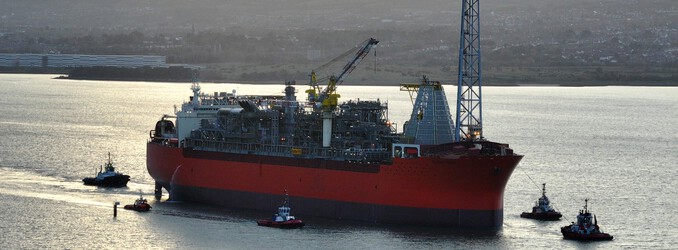
Canada’s 2025 federal budget has ignited a mix of optimism and apprehension within the nation’s energy sector, particularly for Newfoundland and Labrador. While signals from the budget suggest a potential policy pivot that could bolster offshore and renewable development, the critical missing piece remains definitive clarity on the federal emissions cap. For investors eyeing the Canadian energy landscape, understanding the nuances of these policy shifts, alongside prevailing market dynamics, is paramount to identifying both opportunity and risk in the coming months.
Navigating Policy Ambiguity: The Emissions Cap Conundrum
The sentiment from Energy NL, representing over 500 member organizations, is one of cautious optimism. CEO Charlene Johnson highlighted encouraging signs within the federal budget, particularly regarding infrastructure investment and support for resource projects. However, the industry’s primary concern—and a significant barrier to investment—remains the federal emissions cap. The call for a “firm commitment that the emissions cap is scrapped” is not merely rhetorical; it underscores a fundamental need for regulatory certainty that directly impacts the economic viability and long-term planning of energy projects, especially in the capital-intensive offshore sector. Without this clarity, investors face an elevated risk profile, making it challenging to allocate capital effectively into projects that could otherwise drive significant economic growth. Further, the federal government’s commitment to review proposed greenwashing legislation is a welcome development. Energy NL noted that current ambiguities in this area have created confusion, potentially hindering transparent emissions-reduction efforts and, by extension, investor confidence in genuinely sustainable projects.
Strategic Investments Amidst Volatility: A Look at Crude Markets
The backdrop for these policy discussions is a volatile global crude market. As of today, Brent Crude trades at $90.38, experiencing a significant single-day decline of 9.07%, while WTI Crude stands at $82.59, down 9.41%. This sharp correction follows a challenging fortnight for crude benchmarks, with Brent plummeting from $112.78 on March 30 to its current level, representing a substantial 19.9% drop. Such price swings underscore the inherent risks in long-cycle energy investments, yet also highlight the strategic value of stable policy environments. Despite this market turbulence, the federal budget offers a silver lining through specific commitments. Measures such as tax incentives for carbon capture, low-carbon LNG, and clean electricity, along with continued contracts for difference via the Canada Growth Fund, are designed to de-risk investments in key energy transition technologies. For investors, these incentives provide a crucial counter-cyclical buffer, signaling governmental support for projects that align with future energy demands, even as conventional commodity prices fluctuate.
Forward Momentum: Upcoming Catalysts and Investor Outlook
The coming weeks are packed with events that could further shape the oil and gas investment landscape, directly impacting sentiment towards regions like Newfoundland and Labrador. Investors are closely monitoring the upcoming OPEC+ Joint Ministerial Monitoring Committee (JMMC) Meeting on April 19, followed by the full OPEC+ Ministerial Meeting on April 20. These gatherings are critical, as decisions on production quotas directly influence global supply and, consequently, crude prices. Our proprietary data indicates a strong investor interest in “OPEC+ current production quotas” and “what do you predict the price of oil per barrel will be by end of 2026?” The clarity emerging from these OPEC+ meetings will be a key input into those long-term price predictions. Additionally, the weekly API and EIA inventory reports (April 21, 22, 28, 29) and the Baker Hughes Rig Count (April 24, May 1) will offer crucial insights into short-term supply-demand dynamics and drilling activity. For investors evaluating Canadian energy projects, particularly those in offshore Newfoundland and Labrador, these global and North American indicators, combined with domestic policy certainty, will dictate capital allocation decisions. The region’s advocacy for its “lower-carbon offshore oil” position aligns with a global shift towards emissions reduction, but its competitiveness hinges on predictable regulatory frameworks.
Unlocking Value: Regional Recognition and Green Transition Support
Energy NL’s continued advocacy for recognizing Newfoundland and Labrador’s lower-carbon offshore oil as a key investment opportunity is a strategic move. The province’s offshore resources, with their lower carbon intensity compared to some other global basins, present a compelling case for investment in a world increasingly focused on ESG metrics. The federal budget’s emphasis on infrastructure and economic growth through resource projects, combined with targeted support for carbon capture, low-carbon LNG, and clean electricity, creates a fertile ground for these opportunities. However, the industry’s ability to fully capitalize on this potential is directly tied to the federal government providing the requested clarity on the emissions cap. This is not just about reducing regulatory burden; it is about enabling long-term capital formation necessary for multi-billion dollar projects. Investors are seeking transparent pathways to participate in the energy transition, and clear policy signals on both traditional resource development and green technologies are essential for unlocking the full value of Canada’s energy sector.