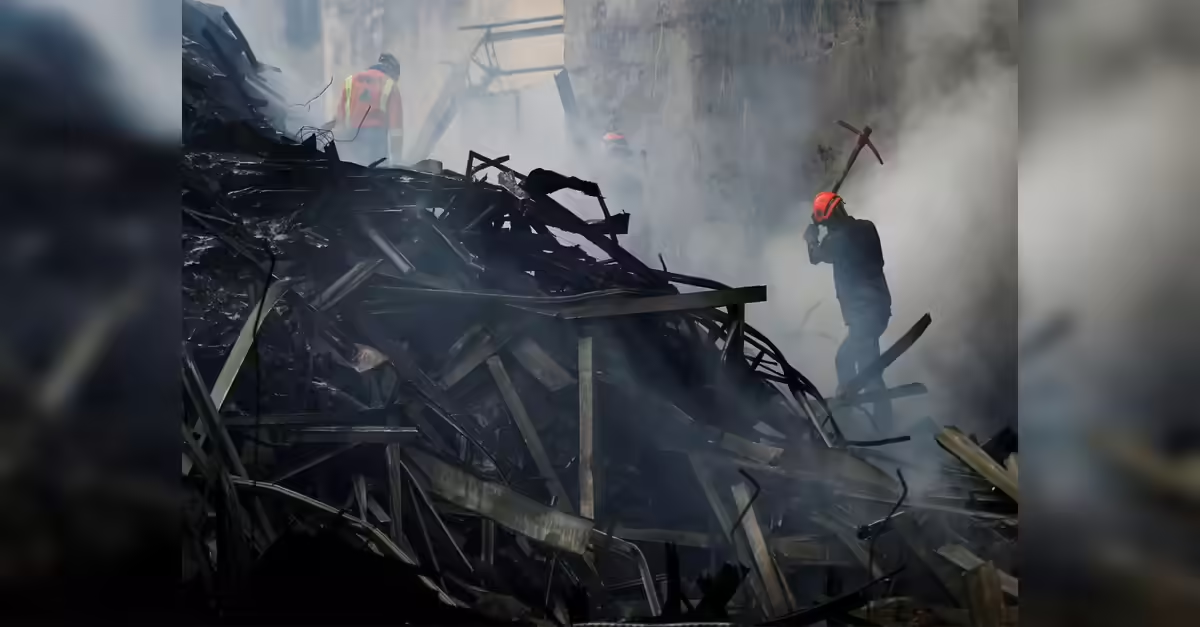
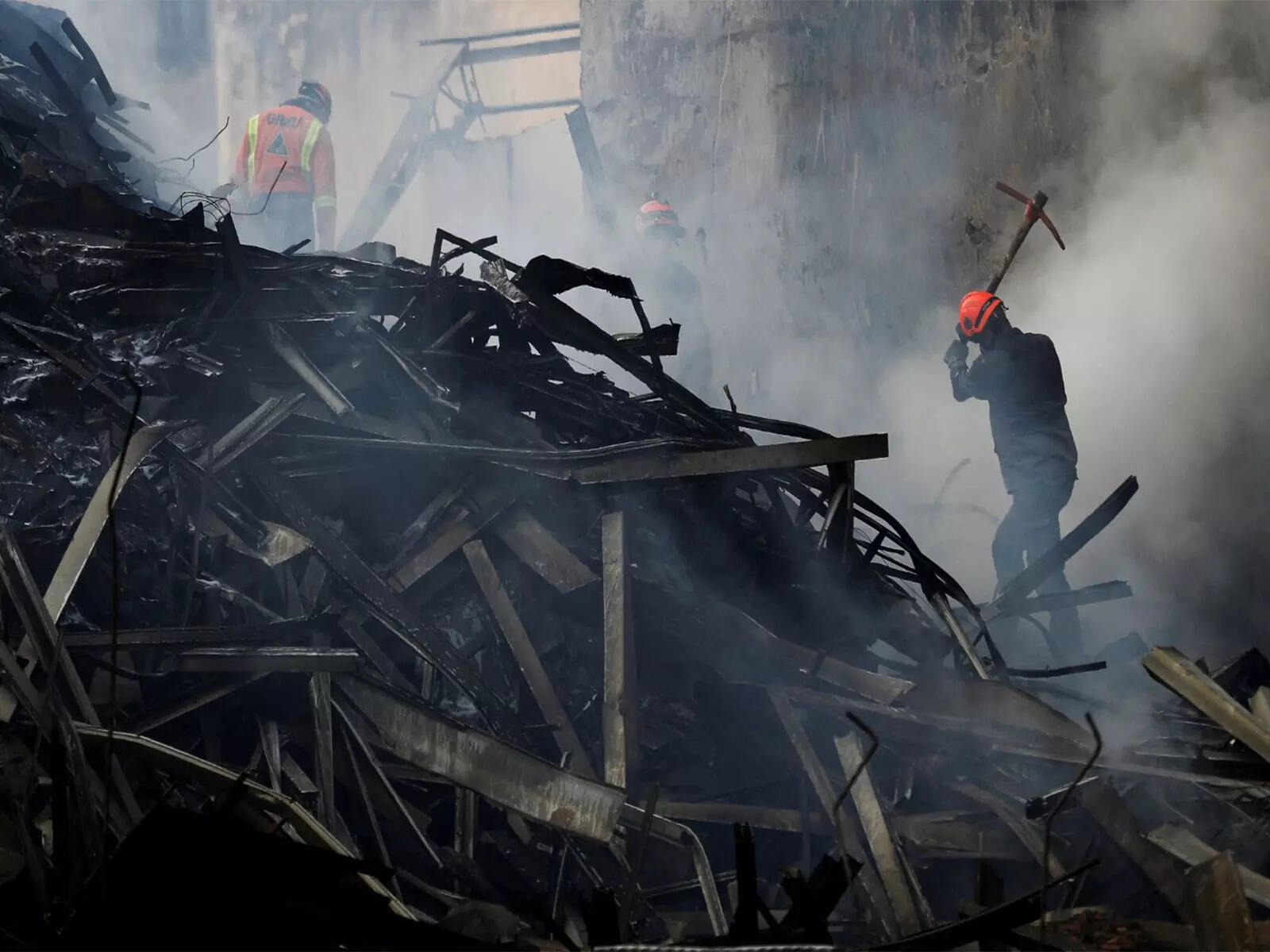
The war involving Iran has crossed a dangerous new threshold. What began as a strategic and military confrontation has now morphed into a direct assault on the arteries of the global economy. Energy infrastructure, once considered too critical to be touched, is now at the center of escalation. While earlier the concerns were only about oil and gas traffic in the Strait of Hormuz, Israel’s strike on Iran’s South Pars gas field and Iran’s sweeping retaliation across Gulf energy hubs have effectively turned oil and gas into instruments of war, with consequences that are already rippling across continents.
Iran war explodes into a new phase
The war took a turn when Israel targeted Iran’s South Pars gas field and facilities in Asaluyeh. This marked the first time that Iran’s core energy infrastructure was directly attacked in the ongoing war. South Pars is the backbone of Iran’s natural gas production and a critical node in global supply chains.
Iran’s response was swift and expansive. Within hours, it launched retaliatory strikes not just against Israeli-linked interests but across the Gulf’s energy landscape. Qatar’s Ras Laffan Industrial City, home to the world’s largest LNG processing facilities, suffered extensive damage according to QatarEnergy. The United Arab Emirates shut gas facilities after intercepting missiles early on March 19. Iran had already issued evacuation warnings for oil facilities across Saudi Arabia, the UAE and Qatar, signaling a broader campaign.
The escalation did not stop there. Two refineries in Kuwait were hit by drone strikes, triggering fires. One blaze erupted at the Mina Al-Ahmadi refinery, a crucial oil processing hub. Reuters also reported an aerial attack on Saudi Arabia’s Red Sea port of Yanbu, currently the only export outlfor Gulf Arab crude. While the impact there appeared minimal, the symbolic message was that no energy facility in the region is beyond reach now.
The global energy system under strain
The immediate market reaction has been severe. Brent crude surged more than six percent, jumping above $116 per barrel, driven by fears of supply disruptions. European gas prices spiked more than 30 percent following the strikes on Qatar’s LNG hub.
Qatar’s role in the global gas market makes the situation particularly alarming. The country produces 77 million metric tons of LNG annually and is the world’s second-largest exporter. Ras Laffan is central to that output, processing condensate into refined products including aviation fuel. Damage there threatens not just regional supply but the stability of global gas markets.
Saul Kavonic of MST Marquee told Reuters that attacks on Ras Laffan “could cause a lasting global gas shortage,” though he added that high prices may economically benefit the US, the biggest exporter of LNG.
With shipping lanes effectively disrupted, around 20 per cent of global oil and LNG supplies that normally pass through the strait are already at risk. This chokepoint has turned into a strategic lever, amplifying the economic fallout far beyond the Middle East. The latest attacks on energy facilities worsen the situation that emerged due to Hormuz disruption.
Europe’s vulnerability exposed
The consequences are already stark across Europe. According to a Reuters report, electricity prices in Eastern Europe and Italy have risen sharply in 2026, with Hungary, Italy and Romania seeing increases of at least 12 per cent compared to last year. These spikes contrast with declines in Spain and Portugal, underscoring how dependence on gas shapes vulnerability.
The root cause is structural. Italy sources about 38 per cent of its energy from gas, making it Europe’s most gas-reliant economy. Hungary and Romania follow closely, with gas accounting for roughly 32 percent and 30 per cent of their energy mix. These countries have also increased gas-fired power generation in 2026 compared to early 2025, deepening their exposure.
Europe’s benchmark gas prices have surged around 65 per cent in just a month since the war began. With Qatar’s LNG exports disrupted and Iran’s production hit, supplies from the Middle East are expected to remain constrained. This, in turn, is pushing electricity prices higher and squeezing industries.
European Union leaders are scrambling for solutions. At a summit on Thursday, they are expected to discuss emergency measures. Draft conclusions indicate plans for a “toolbox of targeted temporary measures,” including tweaks to emissions trading and potential tax cuts or state aid. However, none of these options are likely to significantly reduce prices while the Strait of Hormuz remains effectively closed.
India’s precarious position
Few major economies are as exposed as India. The country imports about 88 per cent of its crude oil, 50 percent of its natural gas and 60 per cent of its LPG. Nearly half of its LNG imports come from Qatar alone.
The disruption in the Persian Gulf has already created logistical bottlenecks. Twenty-two Indian-flagged ships carrying crude oil, LPG and LNG remain stranded, unable to transit the Strait of Hormuz. These vessels are carrying 1.67 million tonnes of crude oil, 3.2 lakh tonnes of LPG and about 2 lakh tonnes of LNG. Efforts are underway to secure safe passage, but the uncertainty is acute.
India had initially managed to offset some crude supply disruptions by sourcing oil from Russia, West Africa, the US and Latin America. However, gas and LPG are proving far harder to replace. Supplies to industrial and commercial users have already been curtailed, raising concerns about economic slowdown and inflation.
Before the war, more than half of India’s crude imports came from Gulf countries reliant on the strait. Up to 95 per cent of LPG and around 30 per cent of gas imports also flowed through this route. The current disruption therefore strikes at the heart of India’s energy security.
The US factor and rising geopolitical stakes
The United States has emerged as both a strategic actor and an economic beneficiary. President Donald Trump responded sharply to Iran’s actions, warning that any further attack on Qatar’s LNG facilities would trigger overwhelming retaliation. He stated that the US could “blow up the entirety of the South Pars Gas Field at an amount of strength and power that Iran has never seen.”
Trump also claimed that the US had no advance knowledge of Israel’s strike and that Qatar was not involved. However, The Wall Street Journal reported that he had approved Israel’s plan to target Iran’s gas infrastructure.
This contradiction highlights the murky nature of the conflict. While the US positions itself as a stabilising force, its economic interests align with higher global energy prices, particularly in LNG markets.
A war with no economic winners?
What makes this phase of the Iran war particularly dangerous is its systemic impact. By targeting energy infrastructure, both sides have expanded the battlefield into the global economy itself. The consequences are not confined to the Middle East but are being felt in Europe’s power grids, India’s supply chains and global financial markets.
The longer the disruption continues, the more entrenched the damage becomes. Supply chains will realign, prices will remain elevated and economies heavily dependent on imported energy will face sustained stress. Gas fields have become the new frontlines. And as long as they remain under fire, the world economy will remain hostage to a conflict with no clear off-ramp.
(With inputs from agencies)