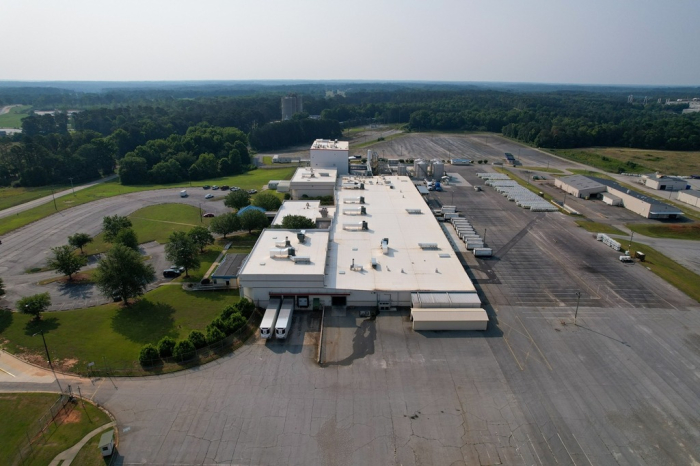
The recent decision by South Korean battery materials maker Enchem Co. to scrap its planned $143 million US plant in Tennessee is sending ripples through the energy sector, signaling a potential recalibration of the electric vehicle (EV) market’s trajectory. This move, driven by a protracted downturn in the US EV market, Ford Motor Co.’s significant EV division losses, and a shift in US policy, presents a critical juncture for investors. For oil and gas stakeholders, this development is not merely about battery production; it’s a powerful indicator of evolving demand dynamics that could have profound implications for conventional energy markets. Our analysis delves into what this means for crude prices, OPEC+ strategies, and the broader investment landscape, leveraging OilMarketCap’s proprietary data to provide unique insights.
The EV Slowdown: A Reality Check for the Energy Transition
Enchem’s withdrawal of a 200 billion won ($142.7 million) investment intended for a Tennessee production base, designed to supply electrolytes to the BlueOval SK LLC joint venture between SK On Co. and Ford, is a stark reminder of the challenges facing the EV sector. The core issue stems from a softening US EV market and Ford’s substantial losses, totaling $12 billion in its EV division, including $2.2 billion in the first half of 2025 alone. Further compounding these woes are recent US policy shifts, notably the elimination of the $7,500 EV tax credit and the softening of emissions rules. Ford CEO Jim Farley has publicly stated that these changes will sharply curtail EV demand, projecting the share of zero-emission vehicles in the domestic market could halve from its current 10%. This sentiment underscores a growing skepticism about the pace of EV adoption, directly impacting the entire supply chain, from battery component manufacturers like Enchem to large-scale battery producers like BlueOval SK, whose facilities are now predicted to be underutilized. For investors, this signals a potential deceleration in the energy transition narrative, suggesting a longer runway for internal combustion engine vehicles and, by extension, sustained demand for traditional petroleum products.
Crude Markets React to Shifting Demand Signals and Geopolitical Tensions
The evolving outlook for EV demand directly influences the complex equation of global crude oil prices, which remain susceptible to a confluence of supply-demand dynamics and geopolitical factors. As of today, Brent crude trades at $91.65 per barrel, reflecting a 2.05% decline within the day’s range of $91.58-$93.04. Similarly, WTI crude is priced at $88.9 per barrel, down 2.49% on the day. This recent softness in crude prices is part of a broader trend; our proprietary data indicates Brent has seen a notable decline over the past 14 days, falling from $112.57 on March 27th to $98.57 on April 16th—a significant drop of $14, or 12.4%. While geopolitical tensions continue to provide a floor for prices, the Enchem decision adds another layer to demand uncertainty. A slower EV rollout implies more persistent demand for gasoline, currently trading at $3.06 per gallon, down 0.97% today. Investors are keenly tracking real-time data, often asking about the current Brent crude price and the models powering these responses, highlighting the critical need for up-to-the-minute market intelligence as demand narratives shift. The market is clearly digesting these signals, weighing the immediate impact of slower EV uptake against other market forces.
OPEC+ Strategy Under the Microscope: Navigating Evolving Demand Projections
The implications of a slower EV transition extend directly to the strategic decisions of major oil producers. A frequent question from our investor base revolves around OPEC+’s current production quotas and their future outlook. With the OPEC+ Joint Ministerial Monitoring Committee (JMMC) meeting scheduled for tomorrow, April 17th, followed by the Full Ministerial meeting on April 18th, the timing of Enchem’s announcement is particularly pertinent. These upcoming gatherings will be crucial for assessing the bloc’s response to an increasingly nuanced global demand picture. If EV adoption genuinely slows, as hinted by Enchem’s withdrawal and Ford’s CEO, it could mean global oil demand growth persists at a stronger rate than previously anticipated by some. This scenario might provide OPEC+ with more leeway to maintain current production cuts longer or even justify a cautious approach to any future output increases. Conversely, if the broader economic outlook remains uncertain, combined with a persistent supply overhang from non-OPEC+ producers, the bloc might face renewed pressure. Beyond OPEC+, upcoming data points such as the API Weekly Crude Inventory on April 21st and the EIA Weekly Petroleum Status Report on April 22nd will offer real-time insights into US supply-demand balances, further informing market sentiment as the implications of the EV slowdown become clearer.
Investment Implications: Re-evaluating Portfolios in a Dynamic Energy Landscape
For savvy oil and gas investors, Enchem’s retreat is not a signal to abandon the energy transition but rather to re-evaluate its pace and the associated risks. A slower EV adoption trajectory, particularly in a major market like the US, translates to a longer demand horizon for crude oil and refined products. This extended tail could offer a temporary boost to valuations for traditional upstream producers, midstream infrastructure operators, and refiners. Companies with robust balance sheets and diversified portfolios, capable of weathering short-term volatility while adapting to long-term energy shifts, are best positioned. The capital that might have flowed into aggressive EV infrastructure build-outs could now be redirected to optimizing existing fossil fuel assets or investing in more immediate, profitable conventional energy projects. Furthermore, the challenges faced by battery material and EV manufacturers highlight the significant policy and market risks inherent in nascent industries. This reinforces the appeal of established energy companies that continue to generate substantial free cash flow, offering a degree of stability in an otherwise dynamic investment environment. Investors should scrutinize company strategies, focusing on those demonstrating agility and a pragmatic approach to energy diversification rather than an all-in bet on a single technology.


