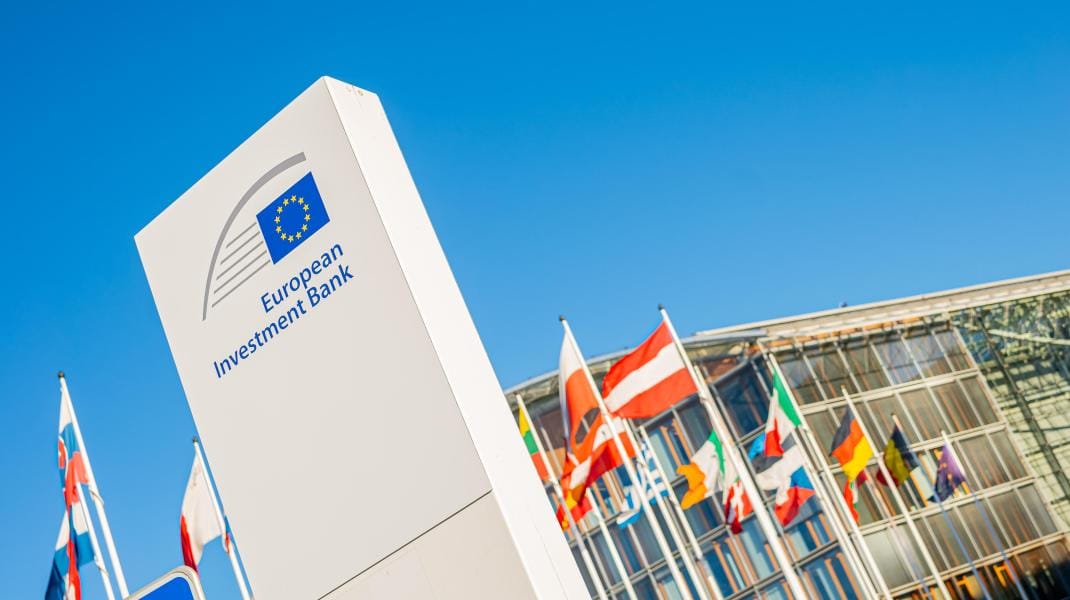
EIB’s Green Gambit: A Structural Shift Challenging Oil & Gas Investment Thesis
The European Investment Bank (EIB) has unveiled the second phase of its ambitious Climate Bank Roadmap, committing to a substantial doubling of climate adaptation finance to €30 billion between 2026 and 2030. This strategic pivot, coupled with an immediate €11 billion earmarked for grid financing this year and a €17 billion initiative to help 350,000 small and medium-sized enterprises (SMEs) cut energy costs, signifies a profound recalibration of Europe’s economic priorities. For oil and gas investors, this isn’t merely a headline about environmental spending; it represents a powerful, policy-driven force accelerating the green transition and creating new long-term headwinds for traditional fossil fuel demand. Our analysis, leveraging proprietary market data and investor insights, delves into the implications for portfolios navigating this evolving energy landscape.
Market Volatility Reflects Underlying Demand Erosion Fears
The EIB’s sharpened focus on green infrastructure and energy efficiency arrives at a period of pronounced market volatility. As of today, Brent crude trades at $90.38 per barrel, registering a significant daily decline of -9.07% within a day range of $86.08 to $98.97. Similarly, WTI crude sits at $82.59, down -9.41% for the day. This recent price action is not an isolated event; our proprietary tracking shows Brent crude having shed nearly 20% of its value, dropping from $112.78 on March 30th to its current level. While immediate market movements are influenced by a myriad of factors, including supply dynamics and geopolitical tensions, the EIB’s explicit commitment to redirecting massive capital towards decarbonization adds a potent structural demand-side pressure. The €11 billion dedicated to bolstering Europe’s electricity grids in 2024, already accounting for 40% of the continent’s grid investment, directly facilitates greater renewable energy integration, reducing the need for fossil fuel-derived power. Furthermore, the €17 billion initiative aimed at driving energy efficiency upgrades for hundreds of thousands of SMEs creates an immediate, tangible reduction in energy consumption across a broad economic base. These are not just green initiatives; they are direct, large-scale interventions designed to diminish Europe’s reliance on traditional energy sources, fundamentally altering the long-term demand outlook that underpins oil and gas valuations.
Investor Concerns Intersect with Europe’s Green Transition
Our proprietary investor intent data reveals that market participants are keenly focused on the future trajectory of energy markets, frequently asking about the prediction for oil prices per barrel by the end of 2026 and the performance outlook for integrated energy companies like Repsol. The EIB’s latest actions provide crucial context for these inquiries. A continent doubling down on climate adaptation finance to €30 billion and mobilizing €250 billion for clean technology innovation through programs like TechEU by 2027 sends an unequivocal signal: Europe is actively working to reduce its dependence on imported fossil fuels. This strategic shift will inevitably exert downward pressure on long-term oil price forecasts. For companies like Repsol, which have significant exposure to European markets and are in various stages of their own energy transition, the EIB’s roadmap underscores the urgency of diversification. The Bank’s support for power purchase agreements, supply chain reinforcement for cleantech, and deployment of affordable renovation loans and cleantech leasing for households means that the competitive landscape is rapidly evolving. Companies with robust green energy strategies, investments in carbon capture, or a strong push into renewables will be better positioned to navigate this policy-driven environment, while those heavily reliant on upstream crude production in the European context face increasing headwinds.
Upcoming Events: Short-Term Dynamics Against a Long-Term Green Backdrop
While the EIB’s climate agenda sets a long-term strategic direction, the oil and gas market will continue to react to immediate supply-demand indicators and geopolitical developments. Investors should closely monitor upcoming events, understanding how they might intersect with Europe’s accelerating green transition. The OPEC+ Ministerial Meeting on April 19th is a critical date, where decisions on production quotas will be made. Our data shows a consistent investor interest in OPEC+’s current production targets, and their choices will directly impact global supply. However, any short-term production adjustments by OPEC+ will increasingly contend with the structural demand erosion driven by European policies. Similarly, the API Weekly Crude Inventory reports on April 21st and 28th, along with the EIA Weekly Petroleum Status Reports on April 22nd and 29th, will provide crucial insights into physical market balances. Persistent inventory builds in key regions could signal weakening demand, further validating the EIB’s policy impact. The Baker Hughes Rig Count on April 24th and May 1st will indicate producer sentiment and future supply intentions. While these events dictate near-term price movements, investors must recognize that the EIB’s commitment to channeling over half of its annual financing towards climate action and environmental sustainability injects a persistent, fundamental pressure on demand that cannot be ignored when evaluating short-term market reactions.
Opportunities and Risks for O&G Investors in a Decarbonizing Europe
The EIB’s intensified commitment to its Climate Bank Roadmap presents both significant risks and nuanced opportunities for oil and gas investors. The explicit goal of doubling climate adaptation finance, responding to substantial economic losses from extreme weather (Europe’s summer alone saw €43 billion in short-term damage), underscores the tangible economic imperative behind these policies. For upstream and pure-play oil companies, the message is clear: European demand is structurally declining, necessitating a pivot towards regions or technologies less susceptible to these policy pressures. However, the EIB’s agenda also emphasizes energy security and industrial competitiveness, indicating a transitional role for certain fossil fuels, particularly natural gas, in the short to medium term as Europe phases out coal and scales up renewables. Furthermore, the massive investment in grid infrastructure and cleantech supply chains requires vast quantities of raw materials, manufacturing capacity, and engineering expertise – areas where diversified energy companies or their subsidiaries might find new revenue streams. Investors should scrutinize companies’ strategies for hydrogen production, carbon capture and storage (CCS), and renewable energy development, as these will be key determinants of long-term value in a continent where policy is so aggressively driving decarbonization. The EIB’s commitment to simplifying access to finance for businesses and households further accelerates the adoption of green technologies, creating a self-reinforcing cycle of energy transition that oil and gas investors must actively adapt to.


